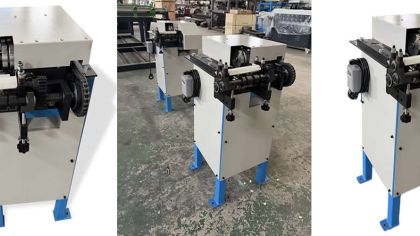
Used Versus New Standing Seam Machines
- Used Versus New Standing Seam Machines
- Benefits of a new machine
- Benefits of a used machine
- What to inspect on a used machine
- Quality Control When Producing Standing Seam Panels
- Before production
- During production
- After production
- Common Mistakes When Buying Roofing Equipment
- Mistake 1: Selecting by price alone
- Mistake 2: Buying without a profile drawing
- Mistake 3: Ignoring material strength
- Mistake 4: Assuming every machine is portable
- Mistake 5: Ignoring cold-weather operation
- Mistake 6: Forgetting supporting equipment
- Mistake 7: Promising roof performance based on the machine
- Comparison Table: New vs Used Standing Seam Machines
-
- Standing Seam Machines and Business Efficiency
- Does a Standing Seam Machine Make Sense for Small Roofing Companies?
- Portable Standing Seam Machines for Remote Canadian Projects
- How StanGroup Supports Canadian Equipment Buyers
- Questions to Ask Before Requesting a Quote
- Frequently Asked Questions
- What is the best standing seam machine for Canada?
- Can a standing seam machine operate in cold weather?
- Is a standing seam metal roof suitable for heavy snow?
- Does metal roofing automatically prevent ice dams?
- What metal can be formed on a standing seam machine?
- What is a portable standing seam machine?
- Can standing seam panels be produced directly at a construction site?
- What is the difference between snap-lock and mechanically seamed panels?
- What is a double-lock standing seam?
- How wide are standing seam panels?
- Can one machine produce roofing and wall panels?
- How long can standing seam panels be?
- Why are sliding clips used?
- Does a wider panel increase production speed?
- What causes oil canning?
- Can a roll former damage painted steel?
- Is a decoiler necessary?
- Should I buy a new or used standing seam machine?
- How much does a standing seam machine cost in Canada?
- Does StanGroup manufacture standing seam machines?
- What information should I send StanGroup?
- Final Thoughts
Used Versus New Standing Seam Machines
Both new and used equipment can be appropriate.

Before comparing new and used equipment, read our complete Canadian buyer's guide: Standing Seam Machines for Canadian Climate
Benefits of a new machine
A new machine may offer:
- Current control systems;
- Manufacturer warranty;
- Available training;
- Known maintenance history;
- Custom configuration;
- New tooling;
- Modern safety features;
- Easier parts identification.
Benefits of a used machine
A used machine may offer:
- Lower initial cost;
- Faster availability;
- Proven profile design;
- Opportunity to enter the market with less capital;
- Good value when professionally inspected.
What to inspect on a used machine
Ask for:
- Serial number;
- Year of manufacture;
- Operating hours if recorded;
- Maintenance history;
- Videos of the machine running;
- Sample panels;
- Tooling photographs;
- Control-system information;
- Electrical voltage and phase;
- Hydraulic condition;
- Replacement-part availability;
- Original manuals;
- Profile drawings;
- Included accessories.
A sample panel should be measured, inspected and tested with the intended clips and seaming tools.
Used roofing equipment should not be purchased only from exterior photographs. The condition of the forming rolls, bearings, shafts, guides and controls is more important than cosmetic appearance.
Quality Control When Producing Standing Seam Panels
Production quality depends heavily on machine configuration. Learn which specifications have the greatest impact: What Features Matter in a Standing Seam Machine for Canada
Consistent quality protects both the roofing project and the contractor’s reputation.
A practical production checklist should include the following.
Before production

- Verify the coil material and colour;
- Confirm metal thickness;
- Inspect the coil for damage;
- Clean the machine;
- Check guides and roll stations;
- Confirm profile settings;
- Test the cutoff;
- Enter the correct length and quantity;
- Review the project panel schedule.
During production
- Measure the first panel;
- Check coverage width;
- Measure seam height;
- Inspect both panel edges;
- Check for scratches;
- Confirm panel straightness;
- Test clip fit;
- Verify seaming;
- Monitor cut length;
- Recheck dimensions periodically.
After production
- Label panel bundles;
- Protect surfaces;
- Separate panels from wet ground;
- Support long panels properly;
- Secure bundles for transport;
- Record material batch information;
- Store panels with drainage and ventilation;
- Protect panels from standing water.
Wet storage stain can develop when moisture becomes trapped between tightly stacked metal sheets or panels. Correct storage and handling procedures are essential, particularly during winter and spring.
Common Mistakes When Buying Roofing Equipment
Mistake 1: Selecting by price alone
The lowest machine price does not always mean the lowest production cost.
Poor accuracy, slow setup, difficult maintenance or unavailable parts can quickly eliminate the original savings.
Mistake 2: Buying without a profile drawing
“Standing seam” is not one universal profile. The machine must produce the exact seam required by the roofing system.
Mistake 3: Ignoring material strength
Two coils with the same nominal thickness may form differently because of material hardness and yield strength.
Mistake 4: Assuming every machine is portable
A machine may be physically small but still unsuitable for regular transportation. Weight, lifting points, frame rigidity and setup procedure all matter.
Mistake 5: Ignoring cold-weather operation
Outdoor winter production introduces challenges involving lubrication, power, condensation, operator safety and metal behaviour.
Mistake 6: Forgetting supporting equipment
Without proper decoiling, handling and run-out support, even a high-quality roll former can become inefficient.
Mistake 7: Promising roof performance based on the machine
A standing seam machine produces panels. It does not replace engineering, code compliance or professional installation.
Comparison Table: New vs Used Standing Seam Machines
| Feature | New Standing Seam Machine | Used Standing Seam Machine |
|---|---|---|
| Initial Investment | Higher | Lower |
| Warranty | Manufacturer warranty included | Usually limited or unavailable |
| Tooling Condition | New tooling | Depends on wear and maintenance |
| Maintenance History | Known from new | Must be verified |
| Control System | Latest technology | May use older controls |
| Operator Training | Commonly available | May require additional learning |
| Spare Parts Availability | Generally easier | Depends on machine model and age |
| Machine Configuration | Can be customized | Limited to existing setup |
| Production Reliability | High when properly maintained | Depends on inspection and condition |
| Best For | Growing roofing companies | Contractors entering the market with limited budget |
Standing Seam Machines and Business Efficiency
For Canadian roofing companies, owning a standing seam machine can change the way projects are planned.
Potential business advantages include:
- Greater control over panel availability;
- Ability to produce custom lengths;
- Reduced dependence on third-party production schedules;
- Faster response to field changes;
- Lower transport risk for long panels;
- More control over material inventory;
- Ability to offer additional panel profiles;
- Improved scheduling during peak roofing season;
- Opportunity to supply other contractors;
- Better management of replacement panels.
However, equipment ownership also creates responsibilities.
The business must manage:
- Operator training;
- Coil purchasing;
- Inventory;
- Quality control;
- Maintenance;
- Safety;
- Machine transportation;
- Storage;
- Production scheduling;
- Warranty obligations to customers.
A machine becomes profitable when it is integrated into an organized production system.
Does a Standing Seam Machine Make Sense for Small Roofing Companies?

It can, depending on project volume and business strategy.
A small contractor may benefit from portable equipment when the company regularly installs standing seam roofs and currently pays another supplier to form panels.
The investment may also make sense when:
- Projects require unusual panel lengths;
- Delivery delays affect scheduling;
- The company serves remote areas;
- Custom production creates a competitive advantage;
- The contractor plans to supply panels to other installers;
- The company has enough seasonal demand.
It may not make sense when standing seam work is occasional or when the company lacks space, trained operators and coil-handling equipment.
A realistic return-on-investment calculation should include labour, financing, waste, maintenance and utilization rate—not only the difference between purchased and self-produced panel prices.
Portable Standing Seam Machines for Remote Canadian Projects
Discover why standing seam roofing systems are widely used across Canadian regions with snow, ice and significant seasonal temperature changes: Standing Seam Roofing in Canadian Winter: Snow, Ice and Thermal Expansion
Canada’s geography creates unique production challenges. Projects may be located far from major fabrication centres.
Transporting finished panels over long distances can be expensive and risky. Long panels may require specialized trailers, careful route planning and additional handling.
A portable roll former can allow production closer to the project.
This may be useful for:
- Agricultural buildings;
- Remote commercial facilities;
- Northern construction;
- Rural homes;
- Warehouses;
- Community buildings;
- Repair projects;
- Long rural roof sections.
Job-site production still requires planning.
The machine needs:
- Stable ground;
- Weather protection;
- Reliable power;
- Safe coil loading;
- Adequate panel run-out space;
- Trained operators;
- Communication with the installation crew;
- Procedures for wind and snow;
- Proper material storage.
Long panels can be difficult to control in strong wind. Production and lifting may need to stop when weather conditions make handling unsafe.
How StanGroup Supports Canadian Equipment Buyers
StanGroup supplies roll-forming and sheet-metal equipment for customers in Canada.
Our role is to help buyers evaluate available machines and select equipment that fits their production requirements. We are a supplier, not the manufacturer of every machine shown in our catalogue.
This distinction is important.
A responsible supplier should not simply claim that one machine is suitable for every contractor. The supplier should gather project information, compare specifications and identify possible limitations.
When contacting StanGroup about a standing seam machine, customers should provide:
- Desired panel profile;
- Panel drawing;
- Metal type;
- Material thickness;
- Coil width;
- Required panel widths;
- Expected production volume;
- Preferred production location;
- Electrical requirements;
- Province or delivery location;
- Need for portable or fixed installation;
- Required accessories;
- Budget range;
- Target delivery schedule.
Based on this information, the available equipment can be reviewed more accurately.
StanGroup’s catalogue includes roofing and custom roll-forming machinery, including standing seam equipment and related sheet-metal machines.
Questions to Ask Before Requesting a Quote
Before asking for the price of a standing seam machine, prepare answers to the following questions:
- Which standing seam profile do you need?
- Do you have a panel drawing?
- What is the required coverage width?
- What seam height is required?
- Will the panel be snap-lock or mechanically seamed?
- Which metal types will be formed?
- What material thickness range is required?
- Will the machine operate in a shop or on site?
- Does the machine need to be trailer-mounted?
- What electrical supply is available?
- What panel lengths are typical?
- How many panels will be produced per day?
- Is automatic length control required?
- Is automatic cutting required?
- Will panel width change frequently?
- Is a decoiler required?
- Are run-out tables required?
- Is winter outdoor production expected?
- What level of operator training is needed?
- What delivery location should be quoted?
The more detailed the initial request, the more accurately a supplier can identify suitable options.
Frequently Asked Questions
What is the best standing seam machine for Canada?
There is no single best machine for every Canadian roofing company. The correct choice depends on the panel profile, metal thickness, production volume, climate conditions, project type and whether panels will be produced in a shop or at the job site.
Can a standing seam machine operate in cold weather?
Some machines can operate in cold conditions, but the permitted temperature range depends on the machine’s electrical, hydraulic and mechanical components. The operating manual and supplier recommendations should be followed. A heated enclosure may be required during severe winter weather.
Is a standing seam metal roof suitable for heavy snow?
Standing seam roofing can be used successfully in snow regions when the structure, panel system, clips, fasteners, slope, snow retention and complete roof assembly are properly designed. Snow-load requirements must be determined under the applicable building code and project engineering.
Does metal roofing automatically prevent ice dams?
No. Ice dams are commonly associated with heat loss, air leakage, insulation, ventilation and roof geometry. Metal panels alone do not correct these building-envelope problems.
What metal can be formed on a standing seam machine?
Depending on the machine, materials may include coated steel, galvanized steel, aluminum, copper or zinc. The buyer must confirm the approved material type, thickness and strength with the equipment supplier.
What is a portable standing seam machine?
A portable standing seam machine is designed to be transported between production locations or job sites. It can help contractors produce long panels near the installation area.
Can standing seam panels be produced directly at a construction site?
Yes, provided the site has suitable space, power, coil-handling equipment, weather protection and trained operators. Safe procedures are especially important for long panels and windy conditions.
What is the difference between snap-lock and mechanically seamed panels?
Snap-lock panels connect by pressing one panel edge over the other. Mechanically seamed panels are closed using hand or powered seaming tools. The appropriate system depends on roof slope, design loads, specifications and project requirements.
What is a double-lock standing seam?
A double-lock seam is mechanically folded to create a more fully closed connection. It is commonly considered for demanding roofing applications, but suitability must be verified for the specific system and project.
How wide are standing seam panels?
Panel widths vary by machine and roofing system. Many machines produce one fixed width, while adjustable models can produce several widths within a specified range.
Can one machine produce roofing and wall panels?
Some standing seam profiles can be used for both roofing and wall cladding. Other machines may produce additional profiles with tooling changes. Compatibility must be confirmed before purchase.
How long can standing seam panels be?
A roll former can theoretically produce very long continuous panels, but practical length is limited by engineering, thermal movement, handling, transportation, site space and installation safety.
Why are sliding clips used?
Sliding clips allow panels to move as the metal expands and contracts. The required clip type and fixed-point arrangement depend on the roofing system and panel length.
Does a wider panel increase production speed?
A wider panel covers more roof area per panel, but it may not be appropriate for every load, appearance or material condition. Panel width should be selected according to the system design rather than speed alone.
What causes oil canning?
Oil canning is visible waviness in flat metal areas. It may be influenced by material properties, panel width, forming stress, substrate irregularities, clip installation, thermal movement and handling. Stiffening ribs or striations may reduce its visibility but do not always eliminate it.
Can a roll former damage painted steel?
Incorrect setup, dirty tooling, damaged rolls or trapped debris can scratch or mark coated steel. Regular cleaning, inspection and correct alignment help protect the finish.
Is a decoiler necessary?
A decoiler supports and feeds the coil into the machine. The correct decoiler improves safety and production consistency. Its weight capacity must match the intended coils.
Should I buy a new or used standing seam machine?
A new machine may provide warranty, modern controls and known condition. A used machine may reduce the initial investment. Used equipment should be inspected, and sample panels should be tested before purchase.
How much does a standing seam machine cost in Canada?
The price depends on the profile, automation, material capacity, portability, cutting system, controls, accessories, condition, shipping and support. A detailed specification is necessary for an accurate quote.
Does StanGroup manufacture standing seam machines?
StanGroup is a Canadian machinery supplier. We offer equipment from available manufacturers and machinery sources, help customers compare configurations and support the equipment-selection process. We do not claim to manufacture every machine in our catalogue.
What information should I send StanGroup?
Send the panel drawing, metal type, thickness range, panel widths, expected volume, electrical supply, production location and delivery destination. This allows the equipment options to be reviewed more accurately.
Final Thoughts
A standing seam roof intended for the Canadian climate must be treated as a complete system.
Heavy snow, ice, wind, moisture and large temperature changes affect the structure, insulation, ventilation, underlayment, clips, fasteners, flashings and metal panels.
The standing seam machine plays an important role because it creates the panel geometry used in that system. Accurate seams, repeatable dimensions, controlled forming and suitable material capacity help roofing contractors produce consistent panels.
However, buyers should avoid selecting equipment based only on speed, price or general claims about winter performance.
Before investing in a standing seam machine in Canada, define:
- The exact panel profile;
- Material type and thickness;
- Production volume;
- Required panel lengths;
- Shop or job-site operation;
- Cold-weather conditions;
- Automation level;
- Supporting equipment;
- Service and parts requirements;
- Total cost of ownership.
For Canadian contractors, the right roofing equipment can improve control over production, reduce dependence on outside forming schedules and support long-panel manufacturing for residential, commercial, agricultural and architectural projects.
StanGroup supplies standing seam machines and other sheet-metal equipment to Canadian businesses. By providing detailed production requirements, buyers can receive more relevant equipment options and avoid purchasing a machine that does not match their actual work.
Need help choosing a standing seam machine for your roofing projects?
Send StanGroup your panel drawing, material specifications and expected production volume. Our team will help review available equipment options for your Canadian roofing operation.