Standing Seam Roofing in Canadian Winter: Snow, Ice and Thermal Expansion
- How a Standing Seam Machine Supports Cold-Climate Roofing
- 1. Consistent seam geometry
- 2. Accurate panel width
- 3. Repeatable panel shape
- 4. Controlled forming of coated metal
- 5. Production of long panels
- Comparison Table: How a Standing Seam Machine Supports Roofing in Canada's Climate
-
- Canadian Winter Challenge No. 1: Heavy Snow
- What the standing seam machine affects
- Snow shedding and public safety
- Canadian Winter Challenge No. 2: Freeze-and-Thaw Cycles
- Why panel and seam consistency matter
- Ice dams are not solved by metal panels alone
- Canadian Winter Challenge No. 3: Thermal Expansion and Contraction
- Why this matters when choosing a standing seam machine
- Canadian Weather Challenge No. 4: Strong Wind
- Machine accuracy and wind performance
- Canadian Weather Challenge No. 5: Rain, Moisture and Coastal Exposure
- Planning to purchase roofing equipment?
- FAQ – Standing Seam Machines for Canadian Climate
- 1. What is the purpose of a standing seam machine?
- 2. Does a standing seam machine make a roof resistant to snow?
- 3. Why is panel accuracy important in Canadian climates?
- 4. Can standing seam machines produce long roof panels?
- 5. Why are long roofing panels beneficial?
- 6. Do longer panels always perform better?
- 7. How do freeze–thaw cycles affect metal roofing?
- 8. Can a standing seam machine prevent ice dams?
- 9. What machine features are most important for Canadian contractors?
- 10. Why is seam consistency so important?
- 11. Does machine accuracy influence wind resistance?
- 12. What quality checks should contractors perform?
- 13. Can standing seam machines work with different metals?
- 14. Why is protecting the metal coating important?
- 15. What causes thermal expansion in metal roofing?
- 16. Are portable standing seam machines suitable for remote projects?
- 17. Does a standing seam machine determine roof lifespan?
- 18. Why are standing seam roofs popular in Canada?
- 19. What should contractors evaluate before purchasing a standing seam machine?
- 20. Is one machine suitable for every roofing project?
- 21. Can StanGroup help contractors choose the right machine?
- 22. Does StanGroup manufacture all the machines it supplies?
How a Standing Seam Machine Supports Cold-Climate Roofing
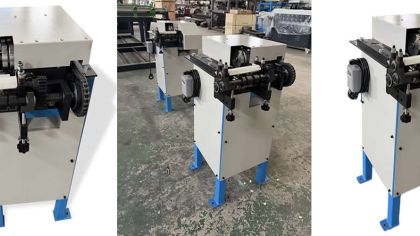
A standing seam machine does not directly resist snow or cold after the roof is installed. Its job is to produce panels with the dimensions and seam geometry required by the roofing system.
If you are selecting equipment for Canadian roofing projects, start with our complete guide: Standing Seam Machines for Canadian Climate
That production accuracy influences several important aspects of the finished roof.
1. Consistent seam geometry
Every panel must connect correctly with the next panel. If seam dimensions vary, the installer may have difficulty engaging clips, closing seams or maintaining panel alignment.
In winter conditions, inconsistencies can become more serious because the roof will repeatedly expand and contract. A well-formed seam provides a predictable connection that can perform as part of the designed roofing system.
2. Accurate panel width
A machine must maintain panel width across the full production run. Width inconsistency can cause accumulated alignment problems over a large roof area.
Accurate width is especially important on long commercial, agricultural and architectural roofs where small deviations can become visible or interfere with installation.
3. Repeatable panel shape
The ribs, striations, stiffening features and raised seams must remain consistent from one panel to the next.
Repeatability helps installers work more efficiently and reduces the risk of forcing panels into position. It can also improve the appearance of the finished roof.
4. Controlled forming of coated metal
Many Canadian roofing projects use pre-painted or coated steel. The roll-forming process should shape the metal without unnecessary scratching, marking or damaging the finish.
Protecting the coating matters because the coating is part of the material’s corrosion-resistance system. Machine cleanliness, tooling condition, roll alignment and correct setup all influence surface quality.
5. Production of long panels
Standing seam roll formers can produce panels in long continuous lengths, subject to handling, transportation and project requirements.
Long panels can reduce the number of transverse joints required on a roof. This can be useful for water management, but long panels also experience greater thermal movement. The clips, seams and roof design must accommodate that movement.

Comparison Table: How a Standing Seam Machine Supports Roofing in Canada's Climate
| Canadian Climate Challenge | How a Standing Seam Machine Helps | What Still Depends on Roof Design |
|---|---|---|
| Heavy Snow Loads | Produces accurate panel profiles and consistent seam geometry | Structural engineering, snow-load calculations, clip spacing and building design |
| Freeze–Thaw Cycles | Creates uniform seams that fit together consistently | Underlayment, insulation, flashing, ventilation and installation quality |
| Thermal Expansion & Contraction | Produces panels compatible with fixed or sliding clip systems | Expansion joints, attachment method and panel length design |
| Strong Winds | Maintains accurate seam dimensions required by tested roofing systems | Wind-load engineering, fasteners, deck design and perimeter details |
| Rain & Moisture | Produces precise panels that support efficient drainage | Roof slope, flashing, valleys, penetrations and waterproof detailing |
| Coastal Conditions | Compatible with coated steel, aluminum and corrosion-resistant materials | Selection of suitable metal coating and regular maintenance |
| Long Panel Production | Manufactures continuous panels directly on-site | Safe handling, transportation and installation procedures |
| Panel Consistency | Ensures repeatable width, seam height and profile accuracy | Quality installation and correct seaming process |
| Surface Protection | Proper roll forming helps protect painted metal coatings | Material quality and handling during installation |
| Project Flexibility | Portable machines allow production directly at the job site | Site logistics, contractor experience and project planning |
Canadian Winter Challenge No. 1: Heavy Snow
Snow load is one of the most obvious roofing concerns in Canada.
The weight of snow is not determined by depth alone. Dry, light snow and wet, compacted snow can create very different loads. Snow can also drift around roof steps, parapets, rooftop equipment, valleys and changes in elevation.
The National Building Code provides methods for determining specified roof snow loads, while local requirements and project-specific engineering must be considered for actual construction.
What the standing seam machine affects
The roll-forming machine affects the geometry and quality of the roof panel. It does not determine whether the building structure can support the snow load.
A contractor purchasing roofing equipment should therefore avoid claims such as “this machine produces a snow-proof roof.” No machine can make that guarantee.
Instead, the machine should produce a panel that conforms to the intended roofing system and its engineering requirements.
Important questions include:
- What panel profile is specified?
- What metal thickness is required?
- What seam height is needed?
- What clip spacing is used?
- Is the system tested for the intended loads?
- Are fixed or sliding clips required?
- What substrate and structural support will be used?
- Does the panel design work with the planned snow-retention system?
The roof structure, decking, purlins, clips, fasteners and panel system must be considered together.
Snow shedding and public safety
Smooth metal roofing can allow snow and ice to slide from a sloped roof. This can reduce long-term accumulation in some situations, but uncontrolled snow movement can create a hazard over entrances, sidewalks, parking areas, equipment and lower roof sections.
Snow guards or engineered snow-retention systems may be needed to control how snow leaves the roof. Such systems hold or divide the snow mass so that it releases more gradually rather than as a sudden slide.
The design of snow retention should be based on the project’s snow load, roof geometry, panel system and attachment method. It should not be treated as a decorative accessory.
When choosing a standing seam profile, contractors should confirm that compatible clamp-mounted or mechanically attached snow-retention solutions are available.
Canadian Winter Challenge No. 2: Freeze-and-Thaw Cycles
A freeze-and-thaw cycle occurs when snow or ice melts and the resulting water later freezes again.
This process may happen repeatedly during winter or during seasonal transitions. Sunlight can warm part of the roof while shaded areas remain frozen. Heat escaping from the building can also melt snow on upper roof areas while the eaves stay cold.
The water can refreeze near the edge of the roof and contribute to ice accumulation or ice dams.
Why panel and seam consistency matter
Standing seam panels are often chosen because their primary seams are raised above the drainage surface. However, water management still depends on the roof slope, seam type, underlayment, flashing and installation quality.
Panels with poorly formed seams can be difficult to connect or close correctly. Inconsistent profiles may increase the risk of installation defects.
A properly adjusted machine should produce:
- Uniform seam legs;
- Stable panel dimensions;
- Clean bends;
- Repeatable male and female edges;
- Correct clip-engagement geometry;
- Minimal panel twist;
- Controlled surface marking.
The panel profile should match the seaming tools and installation method used on the job.
Ice dams are not solved by metal panels alone
Ice dams are usually connected to heat loss, air leakage, insulation, ventilation and roof geometry. Changing the roof covering does not automatically eliminate the underlying causes.
A successful cold-climate roof assembly may require:
- Effective air sealing;
- Appropriate insulation;
- Balanced roof ventilation where applicable;
- Correct underlayment;
- Eave and valley protection;
- Proper flashing;
- Controlled interior humidity;
- Suitable drainage paths.
The roofing contractor should coordinate with designers, engineers and other trades when the project involves complex building-envelope conditions.

Canadian Winter Challenge No. 3: Thermal Expansion and Contraction
Metal expands when it becomes warmer and contracts when it becomes colder.
Machine accuracy plays a major role in producing reliable standing seam panels. Learn which specifications matter most: What Features Matter in a Standing Seam Machine for Canada
Canada’s seasonal temperature range can be significant. A roof panel may be installed during a warm summer day and later experience extreme winter cold. It may also heat rapidly in direct sunlight, even when the air temperature is moderate.
The longer the panel, the more movement must be considered.
Why this matters when choosing a standing seam machine
The panel produced by the machine must be compatible with a system that allows the required thermal movement.
Depending on the roof design, this may involve:
- Sliding clips;
- Fixed points;
- Controlled panel anchoring;
- Specific seam geometry;
- Expansion joints;
- Appropriate panel lengths;
- Carefully designed transitions and penetrations.
A machine that can produce very long panels provides useful flexibility, but maximum possible panel length is not always the correct installed panel length.
Long panels must be engineered, handled and attached properly. Otherwise, thermal movement may contribute to oil canning, noise, fastener stress, clip failure, distortion or damage around penetrations.
Before selecting equipment, ask the machinery supplier what panel systems the machine can produce and whether those systems support fixed and sliding clip arrangements.
The final decision about panel length and attachment must be made according to the roofing system specifications and project design.
Canadian Weather Challenge No. 4: Strong Wind
High winds can place significant uplift pressure on roof edges, corners and field areas. The most demanding zones are not always the same across the roof.
Coastal regions, open prairie sites, elevated locations and exposed commercial or agricultural buildings can face particularly challenging wind conditions.
The wind resistance of a standing seam roof depends on the complete assembly, including:
- Structural deck or purlins;
- Clip type;
- Clip spacing;
- Fastener selection;
- Edge and perimeter details;
- Panel width;
- Seam type;
- Seam closure;
- Metal thickness;
- Substrate;
- Roof geometry;
- Tested system performance.
Machine accuracy and wind performance
The machine does not determine the wind rating by itself. However, it must produce the panel profile used in the tested or engineered system.
If tooling is worn or incorrectly adjusted, seam dimensions may change. This could affect clip engagement or mechanical seaming.
Contractors should establish quality-control procedures for production. These may include:
- Measuring panel width;
- Checking seam height;
- Verifying male and female seam dimensions;
- Producing sample panels before each run;
- Testing seam engagement;
- Inspecting the coating;
- Confirming cut length;
- Recording setup parameters;
- Checking machine alignment.
Production checks are especially important after transporting a portable machine to a job site.
Canadian Weather Challenge No. 5: Rain, Moisture and Coastal Exposure
Not every Canadian roofing challenge comes from snow.
British Columbia’s coastal regions, Atlantic Canada and many urban areas experience significant rain, humidity or wind-driven moisture. Roofs must also handle spring meltwater and rain-on-snow events.
Standing seam systems can support effective drainage because the raised longitudinal seams are located above the main panel surface. However, the roof must still have an appropriate slope and correctly detailed transitions.
Potential water-entry points include:
- Eaves;
- Ridges;
- Valleys;
- Sidewalls;
- End walls;
- Roof penetrations;
- Curbs;
- Skylights;
- Chimneys;
- Changes in slope;
- Panel end laps;
- Incorrectly closed seams.
Producing a high-quality panel is only the first step. Flashing and installation details remain critical.
In coastal or corrosive environments, material and coating selection also require careful attention. The panel machine should be suitable for the selected metal and finish.
Planning to purchase roofing equipment?
Compare the advantages of new and used machines: Used Versus New Standing Seam Machines
FAQ – Standing Seam Machines for Canadian Climate
1. What is the purpose of a standing seam machine?
A standing seam machine forms flat metal coil into roofing panels with raised seams that are used in standing seam metal roofing systems.
2. Does a standing seam machine make a roof resistant to snow?
No. The machine produces accurately shaped panels, but snow performance depends on the complete roof assembly, engineering and installation.
3. Why is panel accuracy important in Canadian climates?
Accurate panels create consistent seams that improve installation quality and help the roofing system perform as intended during freeze–thaw cycles and thermal movement.
4. Can standing seam machines produce long roof panels?
Yes. Many machines manufacture continuous panels directly on-site, reducing transportation issues and minimizing panel joints.
5. Why are long roofing panels beneficial?
Long panels reduce transverse joints, improve installation efficiency and may support better water management when properly engineered.
6. Do longer panels always perform better?
Not necessarily. Longer panels experience greater thermal expansion and must be properly designed with suitable clips and attachment systems.
7. How do freeze–thaw cycles affect metal roofing?
Repeated freezing and thawing causes metal panels to expand and contract, making accurate panel geometry and proper installation especially important.
8. Can a standing seam machine prevent ice dams?
No. Ice dams are usually caused by heat loss, insulation, ventilation and roof design rather than the roofing machine itself.
9. What machine features are most important for Canadian contractors?
Consistent panel dimensions, accurate seam geometry, compatibility with coated metals, portability and reliable production quality.
10. Why is seam consistency so important?
Uniform seams allow proper clip engagement, easier mechanical seaming and a more reliable roofing installation.
11. Does machine accuracy influence wind resistance?
Indirectly. Accurate panels help create the roofing profile used in tested roofing systems, but overall wind performance depends on the complete roof assembly.
12. What quality checks should contractors perform?
Panel width, seam height, coating condition, machine alignment, cut length and sample panel inspections should all be verified before production.
13. Can standing seam machines work with different metals?
Yes. Most machines process galvanized steel, Galvalume®, aluminum and other coated sheet metals within their specified thickness range.
14. Why is protecting the metal coating important?
The protective coating contributes to corrosion resistance, especially in coastal and humid Canadian environments.
15. What causes thermal expansion in metal roofing?
Metal naturally expands when heated and contracts when cooled. Canadian temperature swings make this an important design consideration.
16. Are portable standing seam machines suitable for remote projects?
Yes. Portable machines are commonly used throughout Canada to manufacture panels directly at construction sites.
17. Does a standing seam machine determine roof lifespan?
No. Roof longevity depends on materials, engineering, installation quality, maintenance and environmental exposure.
18. Why are standing seam roofs popular in Canada?
They provide continuous roofing panels with concealed fasteners and are commonly used in residential, commercial, agricultural and industrial construction.
19. What should contractors evaluate before purchasing a standing seam machine?
Panel profiles, material compatibility, production capacity, portability, service support, tooling options and spare parts availability.
20. Is one machine suitable for every roofing project?
Not always. The machine should match the intended roofing profile, metal type, seam design and production requirements.
21. Can StanGroup help contractors choose the right machine?
Yes. StanGroup helps Canadian roofing contractors compare available equipment, understand production requirements and select machinery suited to their specific roofing applications.
22. Does StanGroup manufacture all the machines it supplies?
No. StanGroup is a Canadian supplier of sheet metal and roll-forming equipment that helps customers choose machinery from trusted manufacturers based on their production needs.