Standing Seam Machines for Canadian Climate
- Standing Seam Machines for Canadian Climate: Choosing Roofing Equipment for Snow, Cold and Changing Weather
- What Is a Standing Seam Machine?
-
- Which Machine Features Matter Most in Different Canadian Regions
-
- Why Contractors Choose Portable Standing Seam Machines
-
- Why Standing Seam Roofing Is Relevant to the Canadian Climate
- FAQ – Standing Seam Machines for Canadian Climate
- 1. What is a standing seam machine?
- 2. Why are standing seam machines popular in Canada?
- 3. Can one standing seam machine be used across all Canadian provinces?
- 4. Which metals can standing seam machines process?
- 5. Do standing seam machines make roofs waterproof?
- 6. Why are standing seam roofs suitable for snowy regions?
- 7. Does a standing seam machine improve roof durability?
- 8. What machine features are important for Canadian contractors?
- 9. What is the advantage of producing roofing panels on-site?
- 10. Are portable standing seam machines suitable for remote Canadian projects?
- 11. How do freeze–thaw cycles affect metal roofing?
- 12. Can standing seam machines produce different panel profiles?
- 13. Does the machine determine snow load capacity?
- 14. Are standing seam machines suitable for commercial buildings?
- 15. What should contractors consider before purchasing a standing seam machine?
- 16. Why is accurate panel geometry important?
- 17. Can one machine process different metal thicknesses?
- 18. How does Canadian weather influence equipment selection?
- 19. What are the benefits of concealed fasteners?
- 20. How long can standing seam roofing systems last?
- 21. Does StanGroup manufacture standing seam machines?
- 22. Can StanGroup help choose the right machine for my roofing business?
Standing Seam Machines for Canadian Climate: Choosing Roofing Equipment for Snow, Cold and Changing Weather
Learn how snow, ice, freeze–thaw cycles and thermal expansion influence standing seam roofing systems in our detailed guide: Standing Seam Roofing in Canadian Winter: Snow, Ice and Thermal Expansion
Canadian roofing contractors work in conditions that can test both the finished roof and the equipment used to produce it. A roofing system may face deep winter frost, heavy snow, freezing rain, strong winds, rapid temperature changes, spring moisture and hot summer sun—sometimes within the same region.
For this reason, choosing a standing seam machine in Canada is not simply a question of production speed or price. The machine must be suitable for the metal, panel profile, seam geometry, project scale and working conditions required by Canadian roofing businesses.
A properly selected standing seam roll-forming machine helps contractors produce long, accurately shaped metal roof panels with consistent seams. These panels can then become part of a roofing system designed to manage snow, water, wind and thermal movement.
However, the machine alone does not make a roof suitable for a cold climate. Roof performance also depends on structural engineering, insulation, ventilation, underlayment, clips, fasteners, snow-retention systems and professional installation.
This article explains how standing seam machines support roofing work in the Canadian climate, which machine features matter most, how weather affects metal panels and what contractors should evaluate before purchasing roofing equipment.
StanGroup is a Canadian supplier of sheet-metal and roll-forming equipment. We do not manufacture every machine offered through our company. Our role is to help Canadian customers compare equipment, clarify production requirements and select machinery that fits their roofing operations.
What Is a Standing Seam Machine?

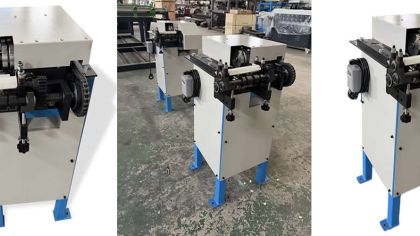
A standing seam machine is a type of roll-forming equipment used to shape flat metal coil or sheet into long roofing panels with raised side seams.
During production, the metal passes through a series of forming stations. Each station gradually bends the material until the required panel profile is created. The resulting panels are installed side by side, and their raised edges are connected or mechanically seamed to form the roof surface.
Depending on the selected system, the machine may produce:
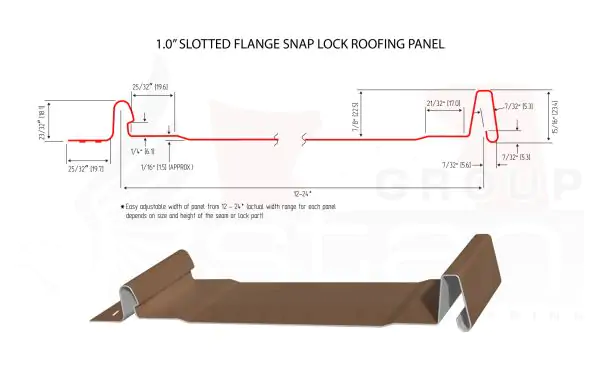
- Snap-lock standing seam panels;
- Mechanically seamed panels;
- Single-lock or double-lock profiles;
- Nail-strip panels;
- Panels with fixed or sliding clip systems;
- Roofing and wall-cladding profiles;
- Straight or tapered panels;
- Panels intended for on-site or factory production.
The raised seam is positioned above the main drainage plane of the roof. This is one of the characteristics that makes standing seam systems widely used for residential, commercial, agricultural and architectural projects.
A standing seam machine Canada contractors select should match the exact panel system they intend to install. Panel width, seam height, clip design, material thickness and machine tooling must work together.
| Feature | Standard Roll Forming Machine | Standing Seam Machine for Canadian Climate |
|---|---|---|
| Performance in Heavy Snow | Suitable only for moderate snow loads | Designed for regions with heavy snow accumulation |
| Freeze–Thaw Resistance | Average | Excellent – panels maintain integrity through repeated freeze–thaw cycles |
| Water Tightness | Depends on exposed fasteners | Concealed fastening system minimizes water penetration |
| Wind Resistance | Moderate | High resistance to strong Canadian winds and storms |
| Thermal Expansion Handling | Limited | Floating clips and standing seams allow natural expansion and contraction |
| Roof Slope Compatibility | Medium to steep roofs | Suitable even for low-slope roofing systems |
| Corrosion Protection | Depends on material | Compatible with galvanized steel, Galvalume®, aluminum and coated metals |
| Panel Length Production | Often limited by transport | Produce continuous panels directly on-site |
| Installation Speed | Moderate | Fast on-site production reduces installation time |
| Maintenance Requirements | Periodic fastener inspection | Minimal maintenance due to concealed fastening system |
| Expected Roof Lifespan | 20–30 years | 40–60+ years with proper installation |
| Energy Efficiency | Standard | Better weather sealing improves building energy efficiency |
| Best Applications | Residential & light commercial | Residential, commercial, industrial and agricultural buildings across Canada |
| Suitability for Remote Canadian Projects | Transportation of finished panels required | Portable machines manufacture panels directly at the job site |
| Long-Term Cost of Ownership | Lower initial cost, higher maintenance | Higher initial investment with significantly lower lifetime operating costs |
Which Machine Features Matter Most in Different Canadian Regions
| Canadian Region | Main Climate Challenge | Recommended Standing Seam Machine Features |
|---|---|---|
| British Columbia | Heavy rainfall, coastal humidity | Superior seam sealing, corrosion-resistant materials |
| Alberta | Strong winds, hail | High-strength panel profiles, accurate roll forming |
| Saskatchewan | Extreme temperature swings | Flexible clip system, thermal expansion capability |
| Manitoba | Heavy snow and freezing winters | High standing seams, durable steel compatibility |
| Ontario | Snow, ice, freeze–thaw cycles | Precision profiling and leak-resistant seams |
| Quebec | Ice dams and severe winters | Double-lock compatible profiles, accurate panel geometry |
| Atlantic Canada | Salt air and strong coastal winds | Corrosion-resistant coatings and robust seam design |
Why Contractors Choose Portable Standing Seam Machines
| Benefit | Business Impact |
|---|---|
| On-site panel production | Eliminates transportation damage |
| Custom panel lengths | Reduces waste and improves fit |
| Faster project completion | More roofing projects completed each season |
| Lower logistics costs | No need for oversized freight deliveries |
| Better quality control | Panels are produced immediately before installation |
| Greater flexibility | Ideal for remote Canadian construction sites |
| Increased profitability | Less material waste and reduced labor costs |
Why Standing Seam Roofing Is Relevant to the Canadian Climate
Canada does not have one uniform climate. Conditions in Vancouver are different from conditions in Winnipeg, Calgary, Toronto, Montréal, Halifax or northern communities.
Nevertheless, roofing systems throughout the country commonly need to manage one or more of the following conditions:
- Prolonged freezing temperatures;
- Heavy or drifting snow;
- Freeze-and-thaw cycles;
- Ice accumulation;
- Strong winds;
- Wind-driven rain;
- Coastal moisture;
- Hail;
- Large seasonal temperature changes;
- High summer temperatures;
- Rapid weather transitions.
Standing seam metal roofing can be well suited to these conditions when the complete roof assembly is properly designed.
The National Building Code of Canada treats snow and rain loads as important structural design considerations. Actual roof loads depend on the location, roof shape, exposure, accumulation, drifting and other factors. Therefore, roof design must be based on the applicable provincial or territorial code and reviewed by qualified professionals where required.

Metal roofing is often selected for snow regions because it can form a continuous, relatively lightweight roof covering with raised seams and long panels. Industry guidance also recognizes metal roofing as a common option for cold-climate and snow-area construction.
The important point is that climate performance begins before installation. It begins with selecting the correct panel profile and producing that profile accurately.
Still deciding which equipment to purchase?
Read our complete comparison: Used Versus New Standing Seam Machines
FAQ – Standing Seam Machines for Canadian Climate
1. What is a standing seam machine?
A standing seam machine is roll-forming equipment that converts flat metal coil into standing seam roofing panels with raised seams for residential, commercial, industrial and agricultural roofing projects.
2. Why are standing seam machines popular in Canada?
Canadian contractors value standing seam machines because they can produce long, accurate roof panels suitable for projects that experience snow, freezing temperatures, wind and seasonal weather changes.
3. Can one standing seam machine be used across all Canadian provinces?
Yes, but the machine should match the roofing profile, metal type and project requirements. Climate conditions vary significantly between British Columbia, Alberta, Manitoba, Ontario, Quebec and Atlantic Canada.
4. Which metals can standing seam machines process?
Most machines are compatible with galvanized steel, Galvalume®, aluminum and other coated sheet metals, depending on machine specifications.
5. Do standing seam machines make roofs waterproof?
No. The machine forms accurate roofing panels, but the roof's weather resistance also depends on proper installation, seam quality, clips, underlayment, flashing and overall roof design.
6. Why are standing seam roofs suitable for snowy regions?
Standing seam roofing systems have raised seams and concealed fasteners that help manage snow, water drainage and thermal movement when properly designed and installed.
7. Does a standing seam machine improve roof durability?
The machine contributes by producing consistent panel geometry. Long-term roof durability depends on quality materials, engineering, installation and maintenance.
8. What machine features are important for Canadian contractors?
Key features include accurate roll forming, compatibility with multiple metals, portable production, adjustable panel widths, reliable drive systems and consistent seam formation.
9. What is the advantage of producing roofing panels on-site?
On-site production reduces transportation damage, allows custom panel lengths, minimizes waste and improves installation efficiency.
10. Are portable standing seam machines suitable for remote Canadian projects?
Yes. Portable machines are widely used where transporting very long finished panels would be difficult or expensive.
11. How do freeze–thaw cycles affect metal roofing?
Repeated expansion and contraction place stress on roofing systems. Proper panel design, floating clip systems and professional installation help accommodate thermal movement.
12. Can standing seam machines produce different panel profiles?
Yes. Many machines can produce snap-lock, mechanically seamed, single-lock, double-lock and other standing seam profiles depending on tooling.
13. Does the machine determine snow load capacity?
No. Snow load capacity is determined by the complete roof system and structural design, not by the roll-forming machine alone.
14. Are standing seam machines suitable for commercial buildings?
Yes. They are commonly used for commercial, industrial, agricultural and residential roofing applications throughout Canada.
15. What should contractors consider before purchasing a standing seam machine?
They should evaluate panel profile requirements, material compatibility, production volume, portability, service support, tooling options, training and spare parts availability.
16. Why is accurate panel geometry important?
Consistent panel dimensions help ensure proper seam engagement, easier installation and uniform roof appearance.
17. Can one machine process different metal thicknesses?
Many machines support a range of metal gauges, but the acceptable thickness depends on the specific machine configuration.
18. How does Canadian weather influence equipment selection?
Regions with heavy snow, coastal moisture, strong winds or extreme temperature fluctuations may require different panel profiles and machine configurations.
19. What are the benefits of concealed fasteners?
Concealed fastening systems reduce the number of roof penetrations and contribute to a cleaner appearance while helping protect fasteners from weather exposure.
20. How long can standing seam roofing systems last?
When properly designed, manufactured from quality materials and professionally installed, standing seam roofing systems can provide decades of service. Actual lifespan depends on materials, environment and maintenance.
21. Does StanGroup manufacture standing seam machines?
No. StanGroup is a Canadian supplier of sheet metal and roll-forming equipment. We help customers compare machinery, select suitable equipment and find solutions that match their production requirements.
22. Can StanGroup help choose the right machine for my roofing business?
Yes. StanGroup works with Canadian contractors to identify the most suitable standing seam equipment based on roofing profiles, materials, production needs and project requirements.