What Features Matter in a Standing Seam Machine for Canada?
- 1. Compatible Metal Types and Thicknesses
- 2. Panel Profile and Seam Type
- 3. Adjustable Panel Width
- 4. Portable or Factory-Based Production
- Portable standing seam machines
- Factory-based machines
- 5. Cold-Weather Operation
- 6. Drive System and Production Speed
- 7. Cutting System
- 8. Length Measurement and Automation
- 9. Tooling Quality and Surface Protection
- 10. Service, Parts and Technical Support
- Comparison Table: Choosing the Right Standing Seam Machine
-
- How to Select the Correct Standing Seam Machine
- Step 1: Define the projects you want to complete
- Step 2: Define the exact panel profile
- Step 3: Confirm the metal specification
- Step 4: Estimate production volume
- Step 5: Decide where panels will be produced
- Step 6: Review supporting equipment
- Step 7: Calculate total cost of ownership
- FAQ – How to Choose a Standing Seam Machine
- 1. What should be the first step when choosing a standing seam machine?
- 2. Why is material compatibility important?
- 3. Can one machine process galvanized steel, aluminum and copper?
- 4. What information should I provide before requesting a quotation?
- 5. What is the difference between snap-lock and mechanically seamed panels?
- 6. Is an adjustable panel-width machine worth the investment?
- 7. Should I choose a portable or factory-based standing seam machine?
- 8. What are the advantages of portable standing seam machines?
- 9. Can standing seam machines operate during Canadian winters?
- 10. Why is cold-weather operation important?
- 11. Is production speed the most important factor?
- 12. Which cutting system is best?
- 13. Why is digital length measurement useful?
- 14. Does automation improve productivity?
- 15. How important is tooling quality?
- 16. Can poor tooling damage painted steel?
- 17. Why should Canadian contractors evaluate service support?
- 18. What should be included when calculating total ownership cost?
- 19. What additional equipment is commonly used with standing seam machines?
- 20. Should I purchase the fastest machine available?
- 21. Can StanGroup help compare different machine configurations?
- 22. Why is choosing the correct standing seam machine a long-term investment?
Canadian buyers should evaluate standing seam equipment according to their actual business model rather than selecting only by price or maximum production speed.
This article expands on our complete buyer's guide: Standing Seam Machines for Canadian Climate
The following features deserve particular attention.
1. Compatible Metal Types and Thicknesses
Standing seam panels may be produced from materials such as:
- Galvanized steel;
- Galvalume or aluminum-zinc-coated steel;
- Pre-painted steel;
- Aluminum;
- Copper;
- Zinc;
- Other architectural sheet metals.
Not every machine is designed for every material.
Copper, aluminum and coated steel behave differently during forming. Material hardness, yield strength, thickness and surface finish all affect machine setup and tooling requirements.
A prospective buyer should provide the supplier with:
- Material type;
- Material thickness or gauge;
- Coil width;
- Coating type;
- Desired panel width;
- Seam height;
- Required profile drawing;
- Expected annual production volume.
The machinery supplier can then confirm whether the proposed equipment configuration is appropriate.
Do not assume that a machine advertised for one material will process every other material without tooling or setup changes.
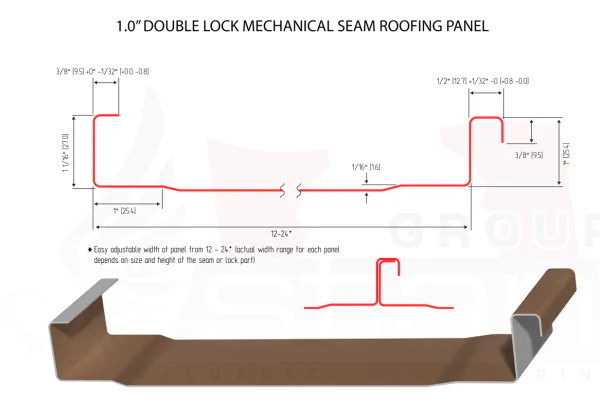
2. Panel Profile and Seam Type
The term “standing seam” covers many different panel systems.
Common profile considerations include:
- Snap-lock versus mechanical seam;
- Single-lock versus double-lock;
- Seam height;
- Panel width;
- Flat pan or stiffened pan;
- Clip-relief geometry;
- Nail-strip configuration;
- Concealed-fastener design;
- Straight or tapered panel capability.
A mechanically seamed profile may be preferred for some low-slope, high-wind or demanding applications, while snap-lock panels may be appropriate for other projects.
The correct choice depends on the system design—not on one profile being universally superior.
The buyer should obtain a clear profile drawing and confirm that the machine, clips, seaming tools and installation details are compatible.
3. Adjustable Panel Width
Some standing seam machines are configured for one fixed panel width. Others can be adjusted to produce multiple widths.
Adjustability can be valuable for contractors working on varied projects. Narrower panels may be used for architectural appearance, curved surfaces or high-design applications, while wider panels may improve production efficiency on large roof areas.
However, adjustable machines may require more setup knowledge and careful calibration.
Before purchasing, determine:
- How often panel width will change;
- How long adjustment takes;
- Whether both sides move symmetrically;
- Which tools are required;
- How repeatability is maintained;
- Whether saved settings or digital indicators are available;
- How test panels are verified.
4. Portable or Factory-Based Production
One of the most important decisions is whether panels will be produced in a workshop or directly at the job site.
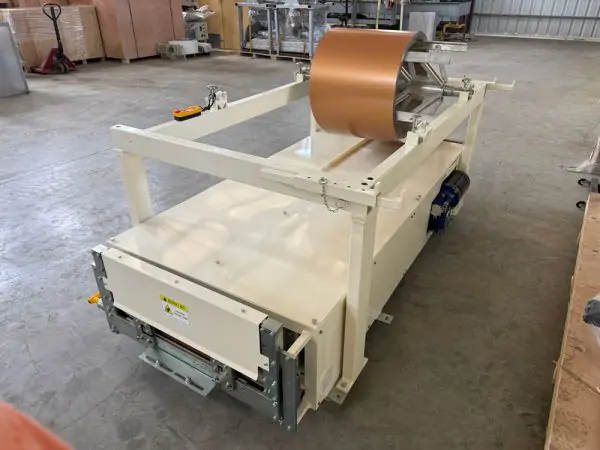
Portable standing seam machines
A portable machine can be transported to the project and used to produce panels near the building.
Potential advantages include:
- Production of long panels;
- Reduced dependence on transporting finished panels;
- Faster response to field measurements;
- Less risk of damaging long panels during road transport;
- Ability to produce replacement panels on site;
- Flexibility for remote projects.
Potential challenges include:
- Exposure to winter weather;
- Machine loading and unloading;
- Stable power requirements;
- Level setup;
- Coil handling;
- Site safety;
- Protecting metal and tooling from snow, moisture and debris;
- Maintaining consistent production conditions.
Factory-based machines
A fixed production line may provide:
- Controlled indoor conditions;
- Better organization of coil inventory;
- Easier integration with decoilers and handling systems;
- Repeatable workflow;
- Reduced exposure of the machine to weather;
- Centralized quality control.
However, long panels may be difficult to transport. The contractor must plan packaging, loading, route restrictions and job-site handling.
Some companies use both approaches: factory production for standard orders and portable equipment for long-panel or remote projects.
5. Cold-Weather Operation
Not every machine is designed to sit outdoors in severe winter conditions.
If production will occur on site during cold weather, the buyer should discuss:
- Recommended operating temperature;
- Hydraulic-fluid requirements;
- Gearbox and lubrication specifications;
- Electrical-component temperature ratings;
- Control-screen performance in cold conditions;
- Pneumatic-system moisture management;
- Condensation risk;
- Storage and warm-up procedures;
- Protection from snow and freezing rain;
- Metal-coil temperature;
- Safe startup and shutdown.
Cold metal may form differently than material stored in a heated shop. Lubricants can thicken, condensation can develop and electrical components may respond differently in extreme conditions.
The operating manual and supplier recommendations should be followed. A heated enclosure or controlled production area may be necessary for reliable winter work.
Learn why Canadian winters require careful consideration of snow loads, thermal movement and roof performance: Standing Seam Roofing in Canadian Winter
6. Drive System and Production Speed
Standing seam machines may use electric, hydraulic or combined systems.
Production speed matters, but it should not be evaluated alone.
A machine that runs quickly but produces inconsistent panels will not improve profitability. Actual output depends on:
- Coil loading;
- Machine setup;
- Measuring and cutting;
- Material handling;
- Packaging;
- Crew experience;
- Quality checks;
- Job-site logistics;
- Downtime;
- Profile changes.
For many contractors, controlled and repeatable production is more valuable than the highest advertised speed.
Ask whether the listed speed represents continuous forming under ideal conditions or realistic production including cutting and handling.
7. Cutting System
The cutoff system affects panel-end quality and production efficiency.
Possible options include:
- Manual shear;
- Hydraulic shear;
- Flying cutoff;
- Pre-cut system;
- Post-cut system;
- Profile-specific guillotine;
- Saw cutting.
The correct system depends on the panel profile, material and required finish.
A clean cut can make installation easier and improve end details. Buyers should ask whether the cutting method creates burrs, distorts the seam or requires secondary trimming.
For portable equipment, also consider cutting safety and scrap management at the job site.
8. Length Measurement and Automation
Accurate panel length reduces waste and installation delays.
Useful controls may include:
- Digital length measurement;
- Programmable batch quantities;
- Automatic stop;
- Automatic cutting;
- Saved production recipes;
- Error diagnostics;
- Remote support capability;
- Material counters;
- Production reporting.
Automation can be valuable for high-volume work, but it should remain understandable to the operators.
A simple, reliable control system may be preferable to a complex system that cannot be supported locally.
9. Tooling Quality and Surface Protection
Roll-forming tooling directly contacts the material. Tooling design, finish and alignment affect the completed panel.
Potential problems include:
- Scratches;
- Pickup from coated metal;
- Roll marks;
- Uneven bends;
- Edge wave;
- Twist;
- Oil canning;
- Incorrect seam dimensions.
Tooling should be cleaned and inspected regularly. Debris trapped on the rolls can damage large quantities of material before the operator notices the problem.
When processing pre-painted steel, the buyer should ask how the machine protects the finish and what cleaning procedures are recommended.
10. Service, Parts and Technical Support
Roofing equipment is a business asset. Downtime during the construction season can delay multiple projects.
Before purchasing a machine, evaluate:
- Availability of replacement parts;
- Electrical documentation;
- Hydraulic diagrams;
- Operating manuals;
- Setup instructions;
- Training options;
- Remote troubleshooting;
- Warranty procedure;
- Typical parts lead times;
- Availability of consumable or wear components;
- Support within Canada.
A lower purchase price may not produce the lowest long-term cost if parts and support are difficult to obtain.
As a Canadian equipment supplier, StanGroup helps customers review machine specifications, available configurations, delivery requirements and support considerations before purchase. Buyers should still examine the warranty and service terms for the specific machine being considered.
Comparison Table: Choosing the Right Standing Seam Machine
| Selection Factor | What to Evaluate | Why It Matters |
|---|---|---|
| Metal Compatibility | Steel, Galvalume®, aluminum, copper, zinc | Ensures the machine can form the intended material without damaging the finish |
| Material Thickness | Supported gauge range | Prevents forming defects and improves panel consistency |
| Panel Profile | Snap-lock, mechanical seam, single-lock, double-lock | The machine must match the specified roofing system |
| Adjustable Panel Width | Fixed or adjustable widths | Greater flexibility for residential, commercial and architectural projects |
| Production Location | Portable or factory-based | Determines logistics, transportation and production efficiency |
| Cold-Weather Operation | Temperature ratings, lubrication, electrical systems | Important for reliable winter production in Canadian climates |
| Drive System | Electric, hydraulic or hybrid | Affects productivity, maintenance and operating costs |
| Cutting Method | Hydraulic shear, flying cutoff, pre-cut or post-cut | Influences panel-end quality and installation speed |
| Automation Features | Digital length control, batch programming, automatic cutting | Improves production accuracy and reduces material waste |
| Tooling Quality | Roll finish, alignment and coating protection | Helps maintain consistent panel quality and protects painted metal |
| Technical Support | Parts availability, training, warranty and Canadian support | Reduces downtime and long-term operating costs |
| Total Cost of Ownership | Purchase, installation, maintenance and spare parts | Provides a more realistic investment comparison than purchase price alone |
How to Select the Correct Standing Seam Machine
The best machine is not necessarily the largest, fastest or most automated model. It is the machine that fits the company’s material, panel system, production volume and project type.
Use the following process.
Step 1: Define the projects you want to complete
List the main applications:
- Residential roofing;
- Commercial roofing;
- Agricultural buildings;
- Industrial facilities;
- Architectural cladding;
- Remote northern projects;
- Heritage restoration;
- Custom metal work;
- Curved roofing;
- Long-panel production.
A contractor focused on residential projects may need different equipment from a fabricator supplying large commercial roofs.
Step 2: Define the exact panel profile
Provide a drawing whenever possible.
The drawing should identify:
- Overall panel width;
- Coverage width;
- Seam height;
- Male and female seam geometry;
- Clip relief;
- Pan stiffening;
- Edge details;
- Material thickness;
- Tolerances.
Avoid purchasing based only on a photo or general description.
Step 3: Confirm the metal specification
State the intended material type and thickness range.
Canadian contractors often work with pre-painted steel, but a company may also need aluminum, copper or zinc for architectural projects.
The machine must be approved for the actual material—not simply a similar thickness.
Step 4: Estimate production volume
Consider both current demand and realistic future growth.
Estimate:
- Panels per day;
- Square feet or square metres per month;
- Average panel length;
- Number of profile changes;
- Number of active roofing crews;
- Seasonal production peaks;
- Custom-order volume.
High automation may be justified for continuous production. Smaller contractors may benefit more from portable, flexible equipment.
Step 5: Decide where panels will be produced
Compare factory and job-site production.
Include:
- Building space;
- Electrical supply;
- Crane or forklift access;
- Coil storage;
- Trailer requirements;
- Winter operation;
- Transportation limits;
- Crew availability;
- Site access;
- Safety procedures.
Step 6: Review supporting equipment
The standing seam machine is only one part of the production system.
Additional equipment may include:
- Decoiler;
- Coil car;
- Loading cradle;
- Recoiler;
- Slitter;
- Sheet-metal shear;
- Panel-support tables;
- Run-out stands;
- Protective-film applicator;
- Forklift attachments;
- Coil lifter;
- Seaming machine;
- Hand-seaming tools;
- Material-handling carts.
The complete workflow should be planned before the main machine arrives.
Step 7: Calculate total cost of ownership
Look beyond the purchase price.
Include:
- Shipping;
- Customs or brokerage where applicable;
- Installation;
- Training;
- Power requirements;
- Trailer or transport system;
- Supporting equipment;
- Spare parts;
- Consumables;
- Maintenance;
- Insurance;
- Financing;
- Production labour;
- Expected downtime;
- Resale value.
A more expensive machine may be the better investment when it improves reliability, reduces waste and has accessible support.
Still comparing equipment options?
Read: Used Versus New Standing Seam Machines
FAQ – How to Choose a Standing Seam Machine
1. What should be the first step when choosing a standing seam machine?
Start by identifying the types of roofing projects your company completes, including residential, commercial, agricultural or industrial applications.
2. Why is material compatibility important?
Different metals behave differently during roll forming, so the machine must be configured for the specific material and thickness being processed.
3. Can one machine process galvanized steel, aluminum and copper?
Some machines can, but only if they are designed and configured for those materials and their respective thickness ranges.
4. What information should I provide before requesting a quotation?
Material type, thickness, coil width, panel profile, seam height, desired panel width and estimated production volume.
5. What is the difference between snap-lock and mechanically seamed panels?
Snap-lock panels are installed by snapping adjacent panels together, while mechanically seamed panels require mechanical seaming after installation for a stronger seam.
6. Is an adjustable panel-width machine worth the investment?
It can be beneficial for contractors handling different project types because it offers greater production flexibility.
7. Should I choose a portable or factory-based standing seam machine?
That depends on your workflow. Portable machines are ideal for on-site production, while factory systems provide controlled production conditions.
8. What are the advantages of portable standing seam machines?
They produce long panels directly at the job site, reduce transportation risks and improve flexibility for remote projects.
9. Can standing seam machines operate during Canadian winters?
Many machines can, provided they are used within the manufacturer's recommended operating conditions and maintained correctly.
10. Why is cold-weather operation important?
Low temperatures affect hydraulic fluids, electrical components, lubrication and metal forming performance.
11. Is production speed the most important factor?
No. Consistent panel quality and reliable production are generally more valuable than maximum advertised speed.
12. Which cutting system is best?
The best option depends on the roofing profile, production volume and required panel-end quality.
13. Why is digital length measurement useful?
It improves panel accuracy, reduces waste and helps ensure consistent production.
14. Does automation improve productivity?
Automation can reduce operator errors, improve repeatability and increase production efficiency, particularly for high-volume manufacturing.
15. How important is tooling quality?
Very important. Proper tooling protects coated metals, maintains accurate panel geometry and reduces defects.
16. Can poor tooling damage painted steel?
Yes. Worn or contaminated rollers may scratch protective coatings and affect corrosion resistance.
17. Why should Canadian contractors evaluate service support?
Fast access to spare parts and technical support minimizes downtime during the roofing season.
18. What should be included when calculating total ownership cost?
Purchase price, shipping, installation, training, maintenance, spare parts, supporting equipment and operating expenses.
19. What additional equipment is commonly used with standing seam machines?
Decoilers, slitters, shears, run-out tables, seamers, coil handling equipment and material carts.
20. Should I purchase the fastest machine available?
Not necessarily. The best machine is the one that matches your production volume, roofing system and business requirements.
21. Can StanGroup help compare different machine configurations?
Yes. StanGroup assists Canadian contractors in comparing equipment specifications, production capabilities and available support before purchase.
22. Why is choosing the correct standing seam machine a long-term investment?
A properly selected machine improves production quality, reduces waste, supports future business growth and lowers overall operating costs.