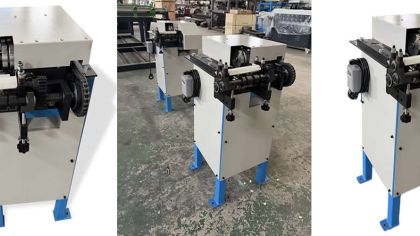
The Backbone of HVAC Fabrication: A Deep Dive into the TDFC Lock & Cleats Roll-Former
In the vast and critical world of Heating, Ventilation, and Air Conditioning (HVAC) ductwork fabrication, precision and efficiency are paramount. Across Canada and North America, sheet metal contractors rely on specialized machinery to create the airtight and structurally sound duct sections that define a modern air handling system. Among the most essential tools in any sheet metal shop is the lockformer, and a prime example of modern efficiency is the TDFC TDCF Lock & Cleats roll-former. This article provides a comprehensive look at this machine, its peers, its technical specifications, and its indispensable role in duct construction.
Understanding the TDFC/TDCF Flange System
The TDFC (Transverse Duct Flange Connection) system represents a significant advancement over older methods like the Pittsburgh lock when it comes to joining large, rectangular duct sections. Instead of relying solely on cleats and seams for the connection, the TDFC system roll-forms an integrated flange directly onto the end of the sheet metal duct. This flange is then joined to a corresponding flange using corners and a TDFC cleat or 'S' & Drive Cleat setup.
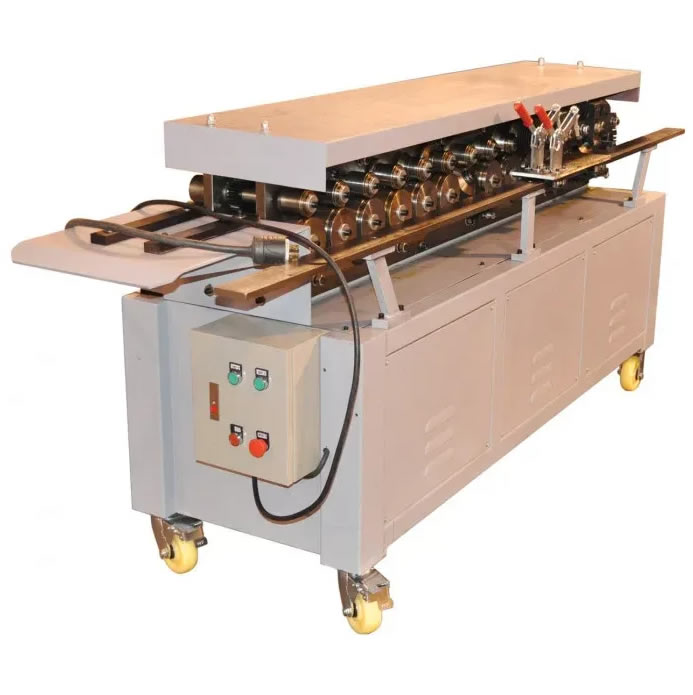
The machine, often simply called a TDFC lockformer, is a dual-purpose heavy-duty roll-forming unit. The model mentioned (StanGroup's TDFC Lock & Cleats Former) highlights this versatility. Its primary role is to create the T.D.C.F. forming flange profile on one side, and the Drive Cleat/S-Cleat profile on the other. This particular model boasts 15 forming passes for the flange and 14 passes for the cleat side, demonstrating the complex, yet precise, multi-stage cold-forming process required.
Key Characteristics and Specs (TDFC Lockformer):
The technical parameters underscore the machine's industrial-grade performance:
-
Capacity (Flange): Handles material from 18 to 24 gauge (galvanized steel), which covers the majority of commercial ductwork requirements.
-
Capacity (Cleat): Processes material up to 22 gauge.
-
Roll-forming Speed: Efficient at approximately 45 feet per minute (FPM), enabling high-volume production.
-
Motor Power: Typically driven by a robust 5 Hp / 220–240V / 60Hz / 3 phase industrial motor.
-
Size & Weight: A substantial piece of equipment, around 110" L x 30" W x 48" H, weighing 2,100 lbs, ensuring stability during high-speed forming.
-
Special Feature: An integrated entrance slitter on the cleat side is a major cost-saver, allowing long and wide metal leftovers to be quickly converted into TDFC cleaps or drive cleats simply by feeding the scrap through the slitter before the forming rolls.

One notable feature of the modern TDFC machine is the ability to produce a convertible flange—allowing an operator to switch between a standard flat flange and a grooved, enforced flange simply by replacing two forming rollers. The grooved profile adds rigidity and creates a recess for a sealant, ensuring a superior, leak-resistant connection, which is vital for energy efficiency in Canadian climate conditions.
A Look at Different Lockforming Machinery
While the TDFC lockformer excels in flange production for rectangular ducts, the term "lockformer" encompasses a range of machines, each designed for a specific type of metal seam or joint. Understanding the differences is key to optimizing a shop’s workflow.
The main operational difference lies in their output. The Pittsburgh lockformer creates the classic "pocket" (female lock) on the duct body, which is then closed with a second piece of sheet metal. By contrast, the T.D.C.F. forming process creates the entire flange joint on the duct end, making the connection faster and stronger, especially for large ducts. For those looking for a budget-friendly or secondary option, searching for a used TDCF machine or used lockformer is common practice in the industry.
| Machine Type | Primary Function/Output | Gauge Capacity (Typical) | Key Advantage |
| TDFC TDCF Lock & Cleats roll-former | Integrated Flange & Drive Cleats | 18–24 Ga. (Flange) | High-speed, integrated flange for structural joints; no separate flange material needed. |
| Pittsburgh Lock Former | Pittsburgh Lock (the “pocket”) | 16–28 Ga. | Most common lock; highly versatile for various duct shapes and fittings. |
| Snap Lock Machine | Button Punch Snap Lock/Reeves Lock | 20–26 Ga. | Used for forming airtight longitudinal seams on round or rectangular pipe. |
| Cleatformer (S & Drive Cleat Machine) | S-Cleat and Drive Cleats | 20–28 Ga. | Produces the connecting pieces used for joining standard or flanged duct ends. |
| Standing Seam Machine | Standing Seam Lock | 16–22 Ga. | Used for strong, reinforced longitudinal joints, often on heavy-gauge ducts. |
The Operation Process: From Sheet to Flange
The process of forming a duct flange using a TDFC lockformer is a model of automation designed to replace labour-intensive manual work—like cutting four separate flanges, smoothing, matching corners, and securing them with screws or welding.
-
Preparation and Notching: The sheet metal (typically 18 to 24 gauge) is first cut to size. Crucially, the corners of the sheet are notched (removed) before feeding, as the flange must stop short of the corner to accommodate pre-manufactured corner pieces (compatible with Cornermatic, VDCI, or Cornermate corners).
-
Roll-Forming: The operator feeds the notched, straight edge of the sheet metal into the flange side of the TDFC lockformer. The sheet passes through 15 stages (forming passes) of hardened steel rollers. Each pair of rollers progressively bends and shapes the metal until the integrated TDF/TDC flange profile is achieved.
-
Cleat Production: Separately, if TDFC cleaps or drive cleats are needed, the cleat side of the machine is used. Raw sheet metal strips (up to 22 gauge) are fed into the cleat channel (14 forming passes) to quickly roll-form the connecting cleat profile. The entrance slitter on this side is a major labour-saver, allowing shop personnel to utilize scrap materials to quickly produce cleats.
-
Folding: The sheet with the integrated flange is then moved to a specialized pneumatic air brake or folding machine, which bends the sheet into the final L, U, or box shape of the duct.
-
Corner Assembly: The pre-manufactured corners are inserted into the flange profiles at the notched corners.
-
Final Closure: When two duct sections are brought together, their TDFC flanges are aligned, the corners are fastened (often clinched), and the entire joint is sealed and reinforced by sliding a completed drive cleat (or bar cleat) over the four flanges.
Market and Investment: Lockformer on Sale
Investing in this type of equipment is a major decision for any fabrication shop. The specialized nature of the TDFC lockformer means it delivers unparalleled efficiency for high-volume rectangular duct production. It is a machine built for durability, featuring heavy-duty components designed for continuous industrial use. The cost-saving aspect is significant: by automating the flange-forming process, the machine is cited to save "about two digit amount per joint" in labour and material costs, a crucial factor in competitive bidding across North America. Searches for lockformer on sale or TDCF used lockformer often indicate shops looking to upgrade or expand their production capacity without the full cost of a brand-new unit.
The TDFC TDCF Lock & Cleats roll-former stands as a testament to modern HVAC manufacturing, simplifying a critical step in duct fabrication and ensuring Canadian construction projects benefit from robust, standardized, and efficient ductwork systems.
TDFC TDCF Lock & Cleats roll-former, TDFC lockformer, TDFC cleaps, used TDCF machine, used lockformer, lockformer on sale, T.D.C.F. forming, T.D.C.F. machine, TDCF used lockformer, TDFC flange forming machine, HVAC duct machine, roll forming speed, lockformer specs, pittsburgh lockformer comparison, duct fabrication machine