Roll Forming Machines in Canada: Complete Buyer’s Guide for Roofing, Standing Seam & Siding
- What Is a Roll Forming Machine?
- What materials can be roll formed?
- Main Types of Roll Forming Machines for Roofing and Siding
- Standing Seam Roll Forming Machines
- How does a standing seam machine work?
- Standing Seam vs Snap Lock Roof Panels
- Who Needs a Standing Seam Roll Former?
- Metal Roof Panel Roll Forming Machines
- Roof panel machine vs standing seam machine
- Siding and Wall Panel Roll Forming Machines
- Why profile flexibility matters
- Portable Roll Forming Machines
- Shop Production vs Job-Site Roll Forming
- Why Produce Roof Panels at the Job Site?
- Multi-Profile Roll Forming Equipment
- Custom Roll Forming Machines and Custom Metal Profiles
- How to Choose the Right Roll Forming Machine
- 1. Panel Profile
- 2. Material and Thickness
- 3. Required Panel Width
- 4. Production Volume
- 5. Portable or Stationary Production
- 6. Tooling and Future Profiles
- 7. Cutting and Notching
- 8. Controls
- 9. Coil Handling
- Which Roll Forming Machine Fits Your Application?
- Explore Roll Forming Machines by Application
- SS4E-PRO Multi-Profile Roll Forming Machine
- SS4E-HD Hydraulic Roof and Wall Panel Machine
- 1.0-Inch Double Lock Standing Seam Machine
- 1.5-Inch Double Lock Standing Seam Machine
- 1.5-Inch Slotted Flange Snap Lock Machine
- 1.0-Inch Slotted Flange Snap Lock Machine
- SS4E-PRO Board and Batten Siding Machine
- SS4E-PRO 1.5-Inch Snap Lock Roofing Machine with Clip
- SS4E-15 Standing Seam Roof Panel Machine
- SS4E Junior Portable Roof Panel Machine
- Not Sure Which Roll Forming Machine You Need?
- Buying a Roll Forming Machine in Canada
- Why Canadian Support Matters
- Roll Forming Machine Manufacturer vs Canadian Equipment Supplier
- Roll Forming Equipment Available Through StanGroup
- Roll Forming Equipment for Canadian Roofing Businesses
- Frequently Asked Questions About Roll Forming Machines
- What is a roll forming machine?
- What is a roof panel machine?
- What is a standing seam roll forming machine?
- What is the difference between a roof panel machine and a standing seam machine?
- What is a snap lock roof panel machine?
- Can one roll forming machine produce different profiles?
- What is a portable roll forming machine?
- Can metal roofing panels be formed at the job site?
- Why would a roofing contractor use a portable roll former?
- Can galvanized steel be roll formed?
- Can roll forming machines process aluminum?
- What is a siding roll forming machine?
- What is a metal panel roll forming machine?
- What is a custom roll forming machine?
- What information should I provide when requesting roll forming equipment?
- Should I choose a portable or stationary roll forming machine?
- What should Canadian buyers check before purchasing a roll forming machine?
- Can I buy a standing seam machine in Canada?
- Does StanGroup manufacture roll forming machines?
- Does StanGroup supply portable standing seam roll forming machines?
- Does StanGroup supply machines for both roofing and siding?
- Does StanGroup provide equipment support in Canada?
- Why is replacement-parts availability important?
- How do I choose the right standing seam roll former?
- Where should I start?
- Choosing Roll Forming Equipment for Your Business
For Canadian roofing contractors, sheet metal shops and metal building companies, bringing panel production in-house can provide greater control over how and when roofing and siding products are made. The key is choosing the right roll forming machine for the profiles, materials, production volume and working environment of your business.
A roll forming machine in Canada may be used to produce standing seam roofing, snap-lock panels, metal roof panels, Board and Batten siding, wall panels and other formed sheet metal profiles. Depending on the equipment, production can take place inside a shop, from a trailer or directly at the job site.
But not every roof panel machine works the same way. Some machines are dedicated to one profile, while others use interchangeable tooling. Some are designed primarily for shop production, while portable systems can be taken closer to the project. Cutting, notching, controls, coil handling and automation also vary considerably from one system to another.
This guide explains the major types of roll forming equipment, how they work, what Canadian buyers should consider and how to choose between standing seam, roof panel, siding, portable and custom roll forming solutions.
Stan Roll Forming Machines Inc. (StanGroup) is a Canadian supplier of roll forming and sheet metal machinery. We are a machinery supplier, not the manufacturer of every machine in our catalogue. Our role is to help customers evaluate equipment, select appropriate configurations and access delivery, training, warranty, parts and technical support in Canada.
What Is a Roll Forming Machine?
A roll forming machine converts flat sheet metal or coil into a continuous formed profile by passing the material through a sequence of forming stations.
Instead of creating the complete shape in a single operation, each set of rollers progressively bends a specific part of the metal. By the time the material reaches the final forming stations, it has been transformed into the required profile.
This manufacturing process is commonly called roll forming or metal roll forming.
A typical production sequence can be summarized as:
Metal coil → material feeding → progressive roll forming → profile formation → measurement → cutting → finished panel
The exact process depends on the sheet metal roll former. More advanced systems may add automatic length measurement, hydraulic cutting, pre-notching, programmable controls and other functions.
For roofing and siding contractors, the finished product may be a standing seam roof panel, snap-lock panel, wall panel, Board and Batten panel or another architectural profile.
For industrial users, sheet metal roll forming machines can also be configured for a wide variety of custom profiles.
What materials can be roll formed?
Depending on the machine and tooling, roll forming can be used with materials such as galvanized steel, pre-painted steel, aluminum, copper and certain stainless steels.
However, material compatibility should never be assumed.
When considering roll forming galvanized steel or another material, verify:
- material type;
- thickness or gauge;
- yield strength;
- coil width;
- coating;
- required finished profile;
- tooling compatibility.
A machine capable of forming one material or thickness is not automatically suitable for another. The specifications of the individual machine and tooling should always be checked before ordering.
Main Types of Roll Forming Machines for Roofing and Siding
The phrase roll forming machine covers many different types of equipment.
For roofing and exterior metal construction, the most common categories include:
| Type of equipment | Typical application | Common users |
|---|---|---|
| Standing seam roll forming machine | Standing seam roofing panels | Roofing contractors, metal shops |
| Snap lock roof panel machine | Snap-lock roofing | Architectural roofing contractors |
| Roof panel roll forming machine | Metal roofing panels | Roofing and fabrication companies |
| Portable roll forming machine | On-site or mobile panel production | Roofing contractors |
| Siding roll forming machine | Siding and wall profiles | Siding contractors, metal shops |
| Multi-profile roll former | Multiple roofing and siding profiles | Growing production businesses |
| Custom roll forming machine | Specialized metal profiles | Fabricators and industrial businesses |
The right choice depends less on the general name of the machine and more on what you need to produce.
Standing Seam Roll Forming Machines
A standing seam roll forming machine forms sheet metal into long roofing panels with raised seams running along the sides of each panel.
Standing seam roofing is widely used in residential, commercial and architectural applications. For contractors that install this type of roofing regularly, producing panels in-house can provide greater control over panel dimensions and production scheduling.
A standing seam machine typically takes coil material and progressively forms the edges required for the specified seam profile.
The finished panels are then installed side by side on the roof, where their seams are connected according to the roofing system being used.
How does a standing seam machine work?
Although machine designs vary, the basic process is straightforward.
The sheet metal enters the roll former at a controlled width. Multiple forming stations progressively shape the edges of the sheet while maintaining the flat centre section of the panel.
The finished profile exits the machine and is cut to the required length.
Depending on the standing seam roll former, the system may incorporate:
- adjustable panel widths;
- length controls;
- interchangeable tooling;
- manual or powered cutting;
- hydraulic cutting;
- panel notching;
- PLC controls;
- wireless controls;
- different drive systems;
- trailer or mobile configurations.
This is why buyers comparing a standing seam machine for sale should look beyond the basic machine name.
Two machines may both produce standing seam panels while offering very different levels of portability, automation and profile flexibility.
Standing Seam vs Snap Lock Roof Panels
One important decision is the type of seam your roofing projects require.
A snap lock roof panel machine produces panels designed to connect using a snap-lock style joint. Depending on the roofing system, this can simplify installation because the seam configuration is designed to engage with the adjoining panel.
Mechanical standing seam systems use profiles designed for mechanical seaming after installation.
Neither system should automatically be considered the correct choice for every project. Panel selection depends on the roof design, engineering requirements, specified roofing system, project conditions and installation method.
StanGroup's current roofing equipment catalogue includes 1-inch and 1.5-inch mechanical double-lock options as well as several snap-lock configurations, including slotted-flange and clip-style profiles.
If your company works with several roofing systems, profile flexibility becomes particularly important when choosing a standing seam roof panel machine.
Who Needs a Standing Seam Roll Former?
A standing seam roof roll forming machine can be particularly useful for businesses that regularly install or supply metal roofing.
Potential users include:
- roofing contractors;
- architectural sheet metal contractors;
- metal fabrication shops;
- roofing and siding companies;
- companies producing panels for their own projects;
- businesses operating mobile panel-production setups.
For a contractor, the key question is not simply, “Should I buy a standing seam machine?”
A better question is:
“Which standing seam profile do we need to produce, from which materials, at what volume, and where will the panels be formed?”
Those answers help determine the appropriate machine.
Metal Roof Panel Roll Forming Machines
A roof panel machine is a broad category of roll forming equipment used to produce metal panels for roofing applications.
Search terms such as metal roof panel machine, roof panel roll forming machine, roof roll forming machine and metal roof roll forming machine are often used interchangeably. In practice, however, the actual panel profile is what matters.
A metal roofing roll former can be configured for a specific roofing system or, in some cases, multiple profiles through interchangeable tooling.
The required equipment will depend on factors such as:
- roof panel profile;
- panel width;
- seam height;
- metal type and thickness;
- required production speed;
- cutting method;
- panel length;
- production location;
- level of automation.
Roof panel machine vs standing seam machine
A roof panel machine is the broader term.
A standing seam roll forming machine is a type of roof panel machine specifically configured to produce standing seam profiles.
This distinction matters when searching for equipment.
A contractor looking for a roll forming machine for roofing sheet should first identify the exact roofing profile required rather than selecting a machine simply because it is described as a roofing roll former.
Siding and Wall Panel Roll Forming Machines
Roll forming is not limited to roofing.
A siding roll forming machine or wall panel machine can be used to produce exterior wall and architectural panel profiles.
Depending on the tooling and machine configuration, these can include:
- Board and Batten siding;
- flush wall panels;
- soffit panels;
- J-channel;
- architectural wall panels;
- underdeck panels;
- other formed exterior profiles.
StanGroup's current catalogue, for example, includes SS4E-PRO Board and Batten equipment and a 4-6 Siding and J-channel Rollformer in addition to its roofing systems.
Why profile flexibility matters
For a company that works on both roofing and siding projects, purchasing a separate machine for every profile may not always be the preferred approach.
Some roof & wall panel machines use interchangeable tooling, allowing the base roll former to produce different profiles when compatible tooling packages are installed.
The SS4E-PRO and SS4E-HD are examples within the current StanGroup offering that support interchangeable profile tooling. The SS4E-HD page lists available configurations including mechanical standing seam, snap lock, Board and Batten, flush wall, soffit, underdeck and custom panel profiles.
This does not mean that every roll former can make every profile. Compatibility must be confirmed for the individual machine.
Portable Roll Forming Machines
For many Canadian roofing contractors, one of the biggest decisions is whether panels should be produced at a central shop or closer to the job site.
A portable roll forming machine is designed to make mobile production practical.
Depending on its size and configuration, a portable machine may be transported to the project and used to form panels according to actual job requirements.
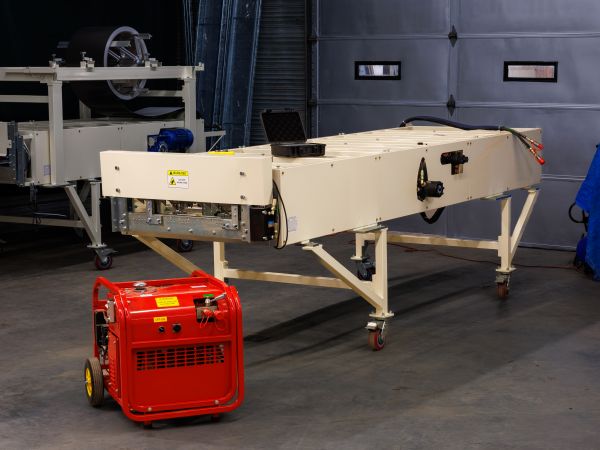
StanGroup's current category includes the SS4E Junior, described as a portable roof panel machine, as well as SS4E-PRO systems suitable for mobile configurations.
Shop Production vs Job-Site Roll Forming
| Consideration | Shop production | Job-site production |
|---|---|---|
| Production location | Fixed facility | At or near project |
| Finished panel transportation | Required | Can be reduced |
| Project-specific lengths | Produced from measurements provided to shop | Can be produced closer to installation |
| Working environment | More controlled | Depends on site conditions |
| Machine mobility | Less important | Important |
| Typical user | Fabricator or centralized panel producer | Roofing contractor/mobile crew |
Neither method is universally better.
A shop provides a controlled production environment and may be better suited to centralized manufacturing.
A portable standing seam roll forming machine, on the other hand, can make sense for contractors who want the ability to produce panels closer to where they will be installed.
Why Produce Roof Panels at the Job Site?
Canada presents some practical logistical challenges for roofing businesses: projects can be separated by long distances, and contractors may work outside major urban centres.
Producing panels at or near a project can potentially reduce the amount of finished-panel handling and give the contractor greater control over production timing.
Possible advantages include:
- producing panels for project-specific dimensions;
- reducing handling of long finished panels;
- responding to field measurements;
- reducing dependence on scheduled deliveries of finished panels;
- coordinating production more closely with installation.
A portable metal roof roll forming machine is therefore not simply a smaller version of a shop machine. Mobility itself can be an important part of the production strategy.
For Canadian contractors comparing portable roll forming machines, dimensions, weight, power source, coil handling and trailer configuration should all be considered alongside the panel profile.
Multi-Profile Roll Forming Equipment
Some businesses begin with one roofing profile and later expand into additional roofing or siding products.
A multi-profile approach can allow compatible tooling to be changed on the same base machine.
For example, the current SS4E-PRO system used in StanGroup's RSF package supports interchangeable tooling. The package combines Board and Batten or Flush Wall siding tooling with a choice of Snap-Lock or Mechanical Standing-Seam roofing tooling.
This type of setup can be useful for contractors who want to expand their product range without necessarily purchasing an entirely separate base roll former for each compatible profile.
Before choosing this approach, ask:
How long does a tooling change take?
Which profiles are actually compatible with the machine?
What additional tooling is required?
Does changing profiles require adjustments?
Are the cutting and notching systems compatible with the new profile?
These practical questions can matter as much as production speed.
Custom Roll Forming Machines and Custom Metal Profiles
Standard roofing and siding profiles do not cover every application.
Businesses searching for custom metal roll forming or a custom roll forming machine may need equipment configured around a particular profile.
Before discussing a custom roll forming solution with a supplier, prepare as much technical information as possible.
Important information can include:
- profile drawing;
- finished dimensions;
- material type;
- material thickness;
- coil width;
- required tolerances;
- desired production volume;
- required production speed;
- cutting requirements;
- punching or notching requirements;
- electrical requirements;
- available shop space;
- whether the equipment will be stationary or mobile.
A drawing is particularly valuable.
Instead of describing a profile only by name, providing dimensions and a drawing helps the equipment supplier understand what the finished part actually needs to look like.
StanGroup can help customers source and configure roll forming equipment for standard and custom profile requirements. StanGroup acts as the equipment supplier and project contact; it should not be confused with the manufacturer of every machine offered.
How to Choose the Right Roll Forming Machine
Choosing the right metal roll forming machine requires more than comparing production speeds.
The following factors should be defined before ordering equipment.
1. Panel Profile
Start with the finished product.
Do you need:
- mechanical standing seam;
- snap lock;
- slotted-flange snap lock;
- Board and Batten;
- flush wall panels;
- siding;
- soffit;
- another custom profile?
The required profile determines the tooling and can influence the entire machine configuration.
2. Material and Thickness
Identify the material before selecting equipment.
Do not assume that a sheet metal roll former designed for one gauge of steel can process every other gauge or material.
Provide your supplier with the actual material specifications you expect to run.
3. Required Panel Width
Panel width can be fixed or adjustable depending on the machine.
If your projects require several widths, confirm the machine's finished-panel width range and the corresponding input material requirements.
4. Production Volume
A contractor producing panels occasionally may have very different equipment requirements from a dedicated panel producer operating every day.
Production volume can influence the required:
- drive system;
- cutting system;
- automation;
- material handling;
- controls;
- tooling-change strategy.
5. Portable or Stationary Production
Determine where the machine will actually operate.
For shop use, floor space, electrical service and coil handling may be priorities.
For mobile production, consider:
- machine dimensions;
- weight;
- power requirements;
- trailer configuration;
- coil transport;
- setup time;
- protection from weather;
- movement between projects.
6. Tooling and Future Profiles
Think beyond your first profile.
If you expect your company to expand from roofing into siding, or from one standing seam system into another, ask whether the machine supports additional tooling.
Purchasing a machine that fits today's work but cannot support tomorrow's product range may limit future flexibility.
7. Cutting and Notching
Cutting systems vary considerably.
Some equipment uses a manual shear, while more advanced machines may use powered or hydraulic cutting.
Notching can also reduce manual preparation for certain profiles.
For example, StanGroup's SS4E-HD listing describes PLC-controlled automatic pre-notching and hydraulic cutting. The notching system can prepare panel ends during production rather than leaving all end preparation for manual work afterward.
The correct level of automation depends on your workflow.
8. Controls
Controls can range from relatively simple length controls to PLC-based systems.
Consider what your operators actually need.
Automation can be valuable when it eliminates repetitive production steps, but a more sophisticated control system should also be supported by appropriate training and technical assistance.
9. Coil Handling
The roll former is only one part of the production process.
Coil has to be stored, supported, loaded and fed safely into the machine.
Depending on the operation, additional equipment may include:
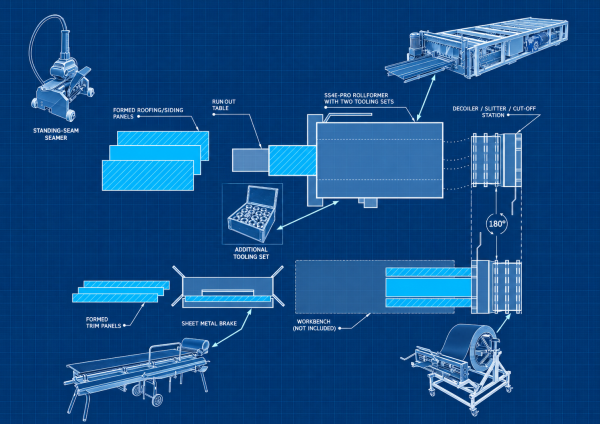
- decoilers;
- coil cradles;
- slitters;
- cut-to-length equipment;
- run-out tables;
- sheet metal brakes.
A well-planned workflow considers the path of the material from raw coil to finished panel.
Which Roll Forming Machine Fits Your Application?
A simple application-based comparison can help narrow the options.
| Production goal | Equipment to consider |
|---|---|
| Produce standing seam roofing | Standing seam roll forming machine |
| Produce snap-lock panels | Snap lock roof panel machine |
| Produce metal roofing panels | Roof panel roll forming machine |
| Produce panels at different job sites | Portable roll forming machine |
| Produce siding and wall profiles | Siding / wall panel roll former |
| Produce roofing and siding profiles | Compatible multi-profile roll forming system |
| Produce a specialized profile | Custom-configured roll forming equipment |
There is no single roll forming machine that is correct for every roofing or siding business.
The appropriate configuration depends on the required profile, material, production volume, mobility, tooling, cutting system, controls and level of automation.
Explore Roll Forming Machines by Application
Choosing a roll forming machine starts with the panel you need to produce. StanGroup supplies roll forming equipment for standing seam roofing, snap-lock panels, siding, wall panels and mobile job-site production across Canada. The machines below represent different production approaches, from compact portable roof panel equipment to multi-profile hydraulic systems.
SS4E-PRO Multi-Profile Roll Forming Machine
For contractors who need flexibility between different roofing, siding and architectural panel profiles, explore the SS4E-PRO multi-profile roll forming machine. Interchangeable tooling allows the machine to be configured for different compatible profiles, making it suitable for workshop or mobile production.
SS4E-HD Hydraulic Roof and Wall Panel Machine
Businesses looking for a higher level of automation can consider the SS4E-HD hydraulic roof and wall panel machine. The system combines interchangeable profile tooling with hydraulic drive, automatic panel notching, hydraulic cutting and PLC-controlled production.
1.0-Inch Double Lock Standing Seam Machine
For production focused on 1-inch mechanical standing seam roofing, see the 1-inch double lock standing seam roll forming machine. This configuration forms metal coil into panels with a 1-inch Double Lock Mechanical Standing Seam profile.
1.5-Inch Double Lock Standing Seam Machine
For projects requiring a taller mechanical seam, explore the 1.5-inch double lock standing seam machine, designed for producing 1.5-inch mechanical standing seam roofing panels.
1.5-Inch Slotted Flange Snap Lock Machine
Contractors producing snap-lock roofing can review the 1.5-inch slotted flange snap lock panel machine. This SS4E-PRO configuration is designed specifically for producing 1.5-inch snap-lock roofing panels with a slotted flange.
1.0-Inch Slotted Flange Snap Lock Machine
For a lower 1-inch snap-lock profile, see the 1-inch slotted flange snap lock roofing machine. It provides another profile option for contractors producing architectural metal roofing from coil.
SS4E-PRO Board and Batten Siding Machine
For companies expanding beyond roofing into exterior wall systems, explore the Board and Batten siding roll forming machine. This SS4E-PRO configuration is intended for producing metal Board and Batten siding panels.
SS4E-PRO 1.5-Inch Snap Lock Roofing Machine with Clip
Another option for standing seam roofing production is the 1.5-inch snap lock roofing panel machine with clip. This configuration is useful for contractors whose roofing system requires a clip-style snap-lock profile.
SS4E-15 Standing Seam Roof Panel Machine
For businesses looking specifically for standing seam panel production, compare the SS4E-15 standing seam roof panel roll forming machine with the other standing seam configurations available through StanGroup.
SS4E Junior Portable Roof Panel Machine
For contractors who place a high priority on mobility, the SS4E Junior portable roof panel machine provides a compact option for producing standing seam roof panels in the shop or closer to the job site.
Not Sure Which Roll Forming Machine You Need?
The right machine depends on your required panel profile, material, metal thickness, panel width, production volume, cutting requirements and whether production will take place in a shop or at the job site.
StanGroup is a Canadian machinery supplier, not the manufacturer of every machine in its catalogue. Send us your panel profile or drawing, material specifications and production requirements, and our team can help you evaluate suitable roll forming equipment and available configurations.
Buying a Roll Forming Machine in Canada
When searching for a roll forming machine for sale in Canada, it is easy to focus primarily on the machine itself.
For Canadian buyers, however, the complete purchasing process matters.
A machine may need to be transported across a province or across the country. Operators may require training. Tooling may eventually need adjustment. Wear components and replacement parts will be required over the working life of the equipment.
Before ordering, a Canadian buyer should confirm:
What profiles does the machine produce?
Ask for exact profile specifications rather than relying on general descriptions such as “roof panel machine.”
What materials and gauges are supported?
Provide the material you actually intend to process.
Can the machine support additional tooling?
This can matter if your business plans to expand.
What power is required?
This is especially important for mobile operations and existing shops.
How will coil be handled?
Consider the entire workflow, not only the roll former.
What cutting system is included?
Manual and powered systems can create very different workflows.
What training is available?
Operators should understand machine setup, controls, tooling and routine maintenance.
What warranty applies?
Confirm the warranty terms for the specific machine in writing.
How are replacement parts supplied?
Parts availability can become extremely important after the machine enters production.
Who provides technical support?
Know who you will contact if your operators need assistance.
These considerations apply whether you are searching for a standing seam machine for sale, metal roof roll forming machine for sale, roof panel roll forming machine for sale or another type of production equipment.
Why Canadian Support Matters
Buying industrial machinery is different from purchasing a simple hand tool.
The relationship with the equipment supplier can continue well after delivery.
For a Canadian roofing contractor or fabrication business, useful supplier support may include:
Equipment selection - matching the machine and tooling to the required profile.
Delivery coordination - arranging transportation to the customer's location.
Startup assistance - helping the customer understand initial setup and operation.
Operator training - showing the crew how to operate the equipment correctly.
Tooling support - assistance with tooling changes and adjustments where applicable.
Troubleshooting - access to technical assistance when operational questions arise.
Replacement parts - a practical path for obtaining required components.
This is one reason the distinction between the equipment manufacturer and the machinery supplier matters.
Roll Forming Machine Manufacturer vs Canadian Equipment Supplier
People searching online frequently use terms such as roll forming manufacturer, roll forming machinery manufacturers, roll forming equipment manufacturer and roll forming tooling manufacturers.
But the manufacturer and supplier do not necessarily perform the same role.
A manufacturer builds the equipment or components.
A machinery supplier can help the customer identify suitable equipment, coordinate the purchase, arrange delivery and provide a local point of contact for training, warranty, parts and technical support.
Stan Roll Forming Machines Inc. is a Canadian machinery supplier. We do not represent ourselves as the manufacturer of every roll forming machine in our catalogue.
This distinction is particularly important for buyers comparing equipment from different sources.
The question should not only be:
“Who manufactures the machine?”
It should also be:
“Who will help us select, receive, learn, operate and support this machine in Canada?”
For a business that depends on its equipment for daily production, both questions matter.
Roll Forming Equipment Available Through StanGroup
StanGroup's current roofing and custom roll forming category covers considerably more than a single standing seam machine.
The catalogue includes dedicated mechanical standing seam equipment, multiple SS4E-PRO roofing and siding configurations, SS4E-HD hydraulic equipment, the portable SS4E Junior, SS4E-15, siding/J-channel equipment and machines for other metal-forming operations.
For businesses considering broader in-house production, StanGroup also supplies the STAN RSF Roofing Siding Factory package. Its current configuration combines an SS4E-PRO portable multi-profile roll former, interchangeable roofing/siding tooling, decoiling and slitting/cut-to-length equipment, with additional production options depending on configuration.
The important point is not to select a machine simply because it appears to have more features.
The correct solution is the equipment that matches your profiles, materials, production process and business requirements.
Roll Forming Equipment for Canadian Roofing Businesses
Canada is a large market geographically, and roofing contractors can operate under very different conditions.
A contractor working primarily from a fabrication shop in an urban market may prioritize a different setup from a company travelling between projects in rural areas.
For mobile contractors, a portable roof roll forming machine can allow panel production to move with the business.
For a shop supplying panels to several crews, centralized production may make more sense.
For a business offering both roofing and siding, interchangeable tooling or a coordinated production system may provide additional flexibility.
This is why buying roll forming equipment in Canada should begin with the business workflow-not simply with a machine model.
Frequently Asked Questions About Roll Forming Machines
What is a roll forming machine?
A roll forming machine progressively bends sheet metal or coil through multiple roller stations to create a continuous finished profile. Roll forming is commonly used for roofing panels, siding, wall panels and many other sheet metal products.
What is a roof panel machine?
A roof panel machine is roll forming equipment configured to produce metal roofing panels. The exact profile may be standing seam, snap lock or another roofing profile depending on the machine and tooling.
What is a standing seam roll forming machine?
A standing seam roll forming machine forms metal into roofing panels with raised longitudinal seams. The exact seam geometry depends on the installed tooling and roofing system.
What is the difference between a roof panel machine and a standing seam machine?
“Roof panel machine” is a broad term for equipment producing roofing panels. A standing seam machine is a specific type of roof panel roll former designed to produce standing seam profiles.
What is a snap lock roof panel machine?
A snap lock roof panel machine produces metal roofing panels with edges formed for a compatible snap-lock roofing system.
Can one roll forming machine produce different profiles?
Some machines can use interchangeable tooling to produce several compatible profiles. Others are dedicated to one profile. Always verify tooling compatibility for the specific machine.
What is a portable roll forming machine?
A portable roll forming machine is designed so that panel production can be moved closer to different projects rather than remaining permanently installed at one production facility.
Can metal roofing panels be formed at the job site?
Yes, suitable portable roll forming equipment can be used for job-site panel production. The exact setup depends on the machine, power source, coil handling and working conditions.
Why would a roofing contractor use a portable roll former?
Portable production can allow contractors to produce project-specific panel lengths closer to installation and potentially reduce handling and transportation of long finished panels.
Can galvanized steel be roll formed?
Yes, many roll forming machines can process galvanized steel, but allowable gauge, material strength and other specifications depend on the machine and tooling.
Can roll forming machines process aluminum?
Some machines can process aluminum. Compatibility and allowable thickness must be confirmed for the individual machine.
What is a siding roll forming machine?
A siding roll former creates metal profiles used for exterior siding and wall systems. Depending on tooling, profiles can include Board and Batten, flush wall panels and other siding configurations.
What is a metal panel roll forming machine?
A metal panel roll forming machine is equipment that progressively forms sheet metal into a continuous panel profile. The term can cover roofing, siding, wall and other architectural panel systems.
What is a custom roll forming machine?
A custom roll forming machine is equipment configured around a specialized profile or production requirement rather than only a standard catalogue profile.
What information should I provide when requesting roll forming equipment?
Provide the required profile or drawing, material type, thickness, coil width, finished dimensions, expected production volume, cutting requirements and whether production will take place in a shop or mobile environment.
Should I choose a portable or stationary roll forming machine?
It depends on your workflow. Centralized production can suit fabrication shops, while portable equipment can be useful for contractors who want to produce panels closer to job sites.
What should Canadian buyers check before purchasing a roll forming machine?
Confirm profile compatibility, material specifications, tooling, power requirements, cutting method, coil handling, delivery arrangements, training, warranty, replacement parts and technical support.
Can I buy a standing seam machine in Canada?
Yes. Canadian businesses can source standing seam roll forming equipment through machinery suppliers such as StanGroup. The appropriate machine depends on the required seam profile, material and production setup.
Does StanGroup manufacture roll forming machines?
Stan Roll Forming Machines Inc. is a Canadian supplier of roll forming and sheet metal machinery. StanGroup should not be described as the manufacturer of every machine in its catalogue. The company helps customers select and source equipment and provides Canadian sales and after-sales support.
Does StanGroup supply portable standing seam roll forming machines?
Yes. StanGroup's current catalogue includes portable and mobile-oriented roof panel production options, including SS4E equipment. Individual machine specifications should be checked to determine the appropriate configuration.
Does StanGroup supply machines for both roofing and siding?
Yes. The current catalogue includes standing seam and snap-lock roofing configurations as well as Board and Batten and other siding/wall-panel equipment.
Does StanGroup provide equipment support in Canada?
StanGroup positions itself as a Canadian sheet metal machinery supplier, and its current product information describes support around equipment selection and, for relevant packages, setup, operation, tooling changes and troubleshooting.
Why is replacement-parts availability important?
Roll forming machines are production equipment. Access to appropriate replacement parts can reduce delays when components eventually require service or replacement.
How do I choose the right standing seam roll former?
Start with the required seam profile, panel dimensions, material and thickness. Then determine production volume, required portability, tooling flexibility, cutting/notching requirements and the level of automation your operation needs.
Where should I start?
Start with the product you intend to make.
Send StanGroup your panel profile or drawing, material, thickness, required dimensions and expected production setup. This gives the equipment supplier the information needed to help identify an appropriate roll forming solution.
Choosing Roll Forming Equipment for Your Business
A roll forming machine should be selected around the product and workflow-not the other way around.
For one Canadian roofing contractor, the right solution may be a compact portable standing seam roll forming machine that travels from project to project. For another, it may be a multi-profile system producing roofing and siding in a dedicated shop. An industrial customer may require custom metal roll forming equipment for a completely different profile.
Before purchasing, define:
what you need to produce, what material you will use, where production will take place, how much you expect to produce, which tooling you need today and which profiles you may need tomorrow.
Then evaluate delivery, training, warranty, replacement parts and technical support alongside the machine specifications.
Stan Roll Forming Machines Inc. (StanGroup) is a Canadian supplier of roll forming, roofing and sheet metal machinery. The company supplies equipment for Canadian contractors and businesses and helps customers evaluate machinery and configurations for their production requirements.
For businesses looking for a roll forming machine in Canada, the goal should not simply be to buy a machine. It should be to build a production setup that fits the profiles you sell, the projects you complete and the way your company intends to grow.