Make a high-quality TDF Duct with Stan Roll Forming Machines
- Make a High-Quality TDF Duct with Stan Roll Forming Machines
- Step 1 – Prepare Your Material
- Step 2 – Make the Pittsburgh Lock
- Step 3 – Produce a TDF Flange
- Step 4 – Bend the Duct
- Step 5 – Close the Pittsburgh Seam
- Step 6 – Connect Your Ducts
- Machines Mentioned in This Article
- FAQ – TDF Duct Manufacturing
- What is a TDF flange in HVAC ductwork?
- What machines are required to produce TDF ducts?
- Why is the Pittsburgh Lock used in duct fabrication?
- What is the advantage of using a TDFC Lock Former?
- How long does it take to produce a rectangular HVAC duct?
- What type of metal is used for HVAC duct production?
- Why use a Pittsburgh Lock Seamer instead of a hammer?
- What are the benefits of the TDF duct connection system?
Make a High-Quality TDF Duct with Stan Roll Forming Machines
HVAC contractors use various technologies for ductwork manufacturing. One of the most popular solutions for transverse duct connection is the TDF flange system. Two ducts with this flange can be connected by inserting and fixing TDF corner pieces in each corner of the duct and then bolting them together. To make the connection even stronger, the two ducts are clamped with a TDF cleat.
As a result, you get a well-insulated, rigid and long-lasting duct system that is widely used in commercial HVAC installations and highly appreciated by contractors and their clients.
In this article, we will explain step-by-step how to produce and connect TDF rectangular ducts using professional equipment supplied by Stan Roll Forming Machines.
Step 1 – Prepare Your Material
The first step is simple but extremely important. Preparing your sheet metal by cutting small rectangular corners (3” x 1”) will help you avoid overlap between your longitudinal Pittsburgh lock and the transverse TDF flange.
After that, cut notches at the positions where the duct will be bent. All preparation operations can be easily performed with our automatic duct production system Auto Duct Folding Line ACKB [1].
This machine not only cuts corners and notches but also:
- Creates reinforcement beads on the duct
- Automatically bends the duct to the required size
- Improves overall production speed for rectangular HVAC ducts
To supply sheet metal to this system, you can use one of our professional decoilers. At Stan Roll Forming Machines we offer manual, motorized and hydraulic decoilers with different capacities. Our largest decoiler models can handle coils up to 115 inches wide.
Step 2 – Make the Pittsburgh Lock
When assembling a duct, you must create a strong longitudinal seam. Our Pittsburgh Lock Former [2] is the perfect machine for this job.
With this machine you can produce both the Pittsburgh lock seam and the 90-degree flange in approximately 20 seconds. This dramatically increases production speed while ensuring a tight and high-quality connection in your ductwork.
Step 3 – Produce a TDF Flange
One of the most popular HVAC machines in our lineup is the TDFC Lock Former [3].
This machine produces an extremely precise TDF flange profile and requires little to no adjustments even when working with different duct widths.
Additionally, the machine can produce the TDF Cleat profile, which is used to reinforce the connection between two duct sections.
Step 4 – Bend the Duct
After all locks and flanges are formed, the sheet metal must be folded into the rectangular duct shape.
For this operation we recommend using the TDF Pneumatic Brake [4].
This air brake is specifically designed for manufacturing TDF ducts and includes special slots in the lower beam that accommodate the TDF flange. This prevents flange deformation during the bending process and guarantees a precise rectangular shape.
At this point, your duct is already folded and almost ready.
Step 5 – Close the Pittsburgh Seam
Once the duct is folded, the Pittsburgh seam must be closed.
Traditionally many workshops close the seam using manual or electric hammers. However, at Stan Roll Forming Machines, one of our primary goals is to significantly reduce your production time.
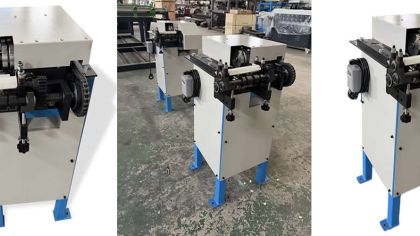
That is why we recommend using the Pittsburgh Lock Seamer. With this compact and powerful roll forming tool, you can close the Pittsburgh seam up to 90% faster compared to traditional hammer methods.
In addition to speed, this machine also improves quality because it applies controlled pressure to the metal. Unlike hammering, it avoids unnecessary deformation and produces a cleaner seam.
Step 6 – Connect Your Ducts
The final step is connecting the duct sections together.
As mentioned earlier, TDF ducts are connected using corner pieces. The fastest and most efficient way to install these corners is with the TDF Corner Fixing Machine.
Controlled from a tablet interface, this machine performs three operations automatically:
- Fixes the duct in position
- Installs corner pieces into each corner
- Secures the corners by seaming the flange
This simple process finalizes the duct assembly, and your rectangular HVAC duct is now fully ready for installation.
Machines Mentioned in This Article
[1] Auto Duct Folding Line ACKB
https://stangroup.ca/hvac-square-duct-work-machinery/hvac-auto-duct-folding-line-ackb
[2] Pittsburgh Lock Former
https://stangroup.ca/hvac-round-spiral-duct-making-machine/pittsburgh-lock-forming-machine
[3] TDFC Lock Former
https://stangroup.ca/hvac-square-duct-work-machinery/tdfc-lock-cleats-former
[4] TDF Air Brake
FAQ – TDF Duct Manufacturing
What is a TDF flange in HVAC ductwork?
A TDF flange (Transverse Duct Flange) is one of the most common connection systems used in rectangular HVAC duct fabrication. It allows two ducts to be connected using corner pieces and bolts, creating a rigid, airtight and durable duct joint widely used in commercial ventilation systems.
What machines are required to produce TDF ducts?
To manufacture high-quality TDF ducts, HVAC workshops typically use several machines including an Auto Duct Folding Line, Pittsburgh Lock Former, TDFC Flange Former, TDF Air Brake and a Pittsburgh Lock Seamer. Together, these machines allow contractors to produce ducts quickly and with consistent quality.
Why is the Pittsburgh Lock used in duct fabrication?
The Pittsburgh Lock is a longitudinal seam used to connect the edges of sheet metal ducts. It provides a strong and reliable connection that ensures airtight HVAC ducts and improves structural rigidity in ventilation systems.
What is the advantage of using a TDFC Lock Former?
A TDFC Lock Former produces precise TDF flanges and cleat profiles used for transverse duct connections. The main advantages are high production speed, minimal machine adjustments and consistent flange dimensions for professional duct manufacturing.
How long does it take to produce a rectangular HVAC duct?
With modern HVAC duct fabrication machinery such as the Auto Duct Folding Line and Pittsburgh Lock Former, a rectangular duct section can often be produced within a few minutes, depending on the duct size and metal thickness.
What type of metal is used for HVAC duct production?
Most HVAC ducts are manufactured from galvanized steel sheets due to their corrosion resistance and durability. Aluminum and stainless steel can also be used for specialized ventilation systems.
Why use a Pittsburgh Lock Seamer instead of a hammer?
A Pittsburgh Lock Seamer closes the Pittsburgh seam significantly faster and with better consistency compared to manual hammering. It reduces the risk of damaging the metal and improves production efficiency in HVAC workshops.
What are the benefits of the TDF duct connection system?
TDF duct connections offer several advantages including strong structural integrity, faster installation, better sealing and reduced labor during HVAC system assembly.