The Art and Science of Metal Coil Slitting: An In-Depth Look at Slitting Lines
- The Art and Science of Metal Coil Slitting: An In-Depth Look at Slitting Lines
- What are Longitudinal Slitting Machines?
- The Slitting Process: A Step-by-Step Breakdown
- Key Components of a Slitting Line
- Applications and Industries
- Materials and Precision
- Frequently Asked Questions (FAQ)
- What is the price of metal slitting services?
- Can I order slitting with my own custom parameters?
- What are the key benefits of using a slitting line?
- What is the difference between slitting and shearing?
The Art and Science of Metal Coil Slitting: An In-Depth Look at Slitting Lines
Metal coil slitting is a fundamental process in the metalworking industry, essential for preparing raw materials for a wide range of manufacturing applications. This process involves the longitudinal cutting of a large master coil of metal into narrower strips, known as "slits" or "strips." These strips are then used to produce various products, from building materials to automotive parts.
What are Longitudinal Slitting Machines?

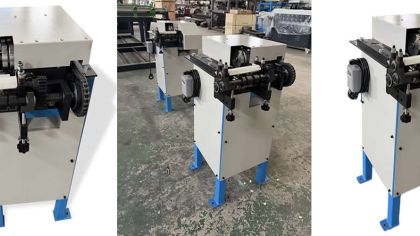
Longitudinal metal slitting machines, also known as slitting lines, are specialized industrial machines designed to cut rolled metal into narrower strips of a specific width. These lines are crucial for companies that need to process large metal coils efficiently and precisely. While some machines may perform only longitudinal cutting, advanced systems, often referred to as longitudinal and transverse cutting machines, can also perform cross-cutting to produce sheets of a specific length. This dual functionality offers great versatility.
The primary purpose of a slitting line is to take a wide coil of metal and convert it into smaller, more manageable coils. The strips can be of uniform or varying widths, and their length is practically unlimited. These machines are essential for businesses specializing in products like roofing and facade components, gutter systems, ventilation ducts, and fencing. Recently, the use of strips for manufacturing round and rectangular pipes on roll forming lines has also seen significant growth.
The Slitting Process: A Step-by-Step Breakdown

A typical metal slitting line operates through a series of coordinated steps to ensure a smooth and accurate cutting process. Understanding these steps is key to appreciating the engineering behind these complex machines.
-
Uncoiling: The process begins by mounting the large master coil of metal onto a special device called an uncoiler or decoiler. This machine safely unwinds the coil and feeds the flat metal sheet into the line.
-
Leveling and Feeding: The uncoiled metal sheet passes through a leveling device. This mechanism flattens any curvatures or imperfections from the coiling process, ensuring the sheet is perfectly flat and straight before it reaches the cutting knives. Once leveled, the sheet is fed toward the slitting head.
-
Slitting: This is the core of the process. The sheet passes through the slitting head, which consists of a pair of parallel, circular rotary slitter knives. These knives are positioned with precision to cut the metal longitudinally into the desired number of strips of a specific width. This is where the term "gang slitter" originates, referring to a "gang" of knives cutting multiple strips simultaneously.
-
Edge Trimming and Scrap Management: As the metal is slit, narrow strips of excess material, or "trim," are often created at the edges. These scrap pieces are automatically guided by edge trimmers and wound onto special scrap winders to keep the process clean and efficient.
-
Recoil: The newly created, narrower strips are then guided to a recoiler. This machine precisely and uniformly winds the individual strips into new, finished coils, ready for further processing, packaging, and shipping.
Key Components of a Slitting Line

The efficiency and precision of a slitting line are a result of its well-engineered components working in harmony.
-
Uncoiler (Decoiler): The initial machine that holds and unwinds the raw metal coil.
-
Leveling Device: A series of rollers that flatten the metal sheet before cutting.
-
Rotary Slitter Knives: The main cutting unit with a gang of circular blades that performs the longitudinal cut.
-
Scrap Winder: A system for neatly coiling the waste edge trim.
-
Recoiler: The final machine that winds the finished, narrow strips into new coils.
-
Control System: An automated system that manages the entire cutting process, allowing the operator to set parameters and monitor performance.
Applications and Industries
The products of longitudinal slitting lines are widely used across various industries, providing a versatile semi-finished product for numerous applications.

-
Construction: Slit coils are fundamental for creating roofing elements, wall panels, facade systems, and guttering components.
-
Ventilation and HVAC: They are used to produce air ducts, vents, and mounting brackets.
-
Automotive: Metal strips are used for stamping and forming various car body parts and structural components.
-
Roll Forming: Many manufacturers rely on accurately slit strips as input for roll forming lines that produce custom profiles, such as those used in frames, rails, and structural supports.
-
Metal Service Centers: These centers provide cut-to-size services for their clients, using slitting lines to prepare a wide range of metal sheets, strips, and tapes in various materials.
Materials and Precision
Modern slitting lines are capable of processing a diverse range of metals, including:

-
Galvanized Steel: Widely used for its corrosion resistance.
-
Stainless Steel: For applications requiring high strength and durability.
-
Painted Steel: For products requiring a pre-finished surface, such as siding or roofing.
-
Non-Ferrous Metals: Such as aluminum and copper, which are often used in specialty applications.
Precision is paramount. The accuracy of the cuts, typically within a tolerance of 1 mm, ensures that the finished strips meet the exact specifications required by downstream manufacturing processes. Each batch is carefully checked to guarantee consistent quality and geometry.
Frequently Asked Questions (FAQ)
What is the price of metal slitting services?
The cost depends on several factors, including the type of metal, its thickness, the width of the final strips, and the total volume of the order.
Can I order slitting with my own custom parameters?
Yes. Slitting lines are highly customizable. You can order strips of any width, typically in 1 mm increments, according to your specific technical requirements.
What are the key benefits of using a slitting line?
The main advantages are increased efficiency, reduced material waste, and the ability to produce a wide range of strip widths from a single master coil. This offers flexibility and cost savings.
What is the difference between slitting and shearing?
Shearing typically refers to the transverse, or cross, cutting of a sheet to produce smaller sheets. Slitting is the longitudinal cutting of a coil to produce narrower strips. While some modern machines can do both, they are distinct processes.
This article provides a comprehensive overview of longitudinal slitting lines, their function, components, and applications, making it suitable for both those new to the field and industry experts.