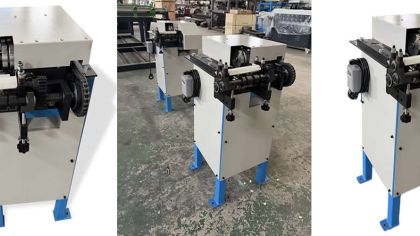
TDFC Duct Forming Machines for Professional HVAC Fabrication by Stan Roll Forming Machines Inc.
- Understanding the terminology: TDF vs TDC vs TDFC
- Machine 1: TDFC Lock & Cleats Former
- What it does
- Key technical characteristics
- What makes it unique / its advantages
- How the process works in the shop
- Machine 2: Pneumatic TDFC Corner Fixing Machine
- What it does
- Key technical characteristics
- What makes it unique / its advantages
- How the process works in the shop
- Machine 3: TDFC Air Brake
- What it does
- Key technical characteristics
- What makes it unique / its advantages
- How the process works in the shop
- How these machines work together in one line
- Comparative Table: Machines at a glance
In today’s HVAC duct manufacturing industry, rising labour costs and demand for precision mean production lines must be efficient, repeatable and flexible. Stan Roll Forming Machines Inc. offers a suite of machines tailored for square and rectangular duct fabrication — especially focusing on TDF/TDC/TDFC-style flange and connection profiles. These machines help fabricators reduce manual steps, improve joint quality, and increase throughput.
Three of the key machines in this range are:
-
the TDFC Lock & Cleats Former
-
the Pneumatic TDFC Corner Fixing Machine
-
the TDFC Air Brake
Each addresses a dedicated step in the duct fabrication line: flange/cleat forming, corner fixing, and bending/folding. Using them in sequence can create a streamlined, semi-automated production line optimized for TDFC flange systems.
Understanding the terminology: TDF vs TDC vs TDFC
Before diving into each machine, it’s worth clarifying the terminology as it drives what the equipment does.
-
TDF stands for Transverse Duct Flange: a flange profile where the hem is turned in a particular direction (for example outward) to provide a safe edge and easy joining.
-
TDC stands for Transverse Duct Connection: a profile variant where the hem might be turned the opposite way (for example inward) often used on fittings and sections.
-
TDFC stands for Transverse Duct Flange Convertible (or equivalent): a flange system designed for flexibility, allowing convertible profiles (flat or grooved flange) that can accommodate corners, cleats, locks and higher-performance joints.
In practice, when fabricating rectangular HVAC ductwork, the duct ends must have flanges to allow joining, cleats or locks to secure connections, and corners (90°, etc) to assemble the sections. Without machines dedicated to each of these steps, the process tends to be labour-intensive, inconsistent, and slower. Stan’s machines are engineered specifically for TDFC-style workflows, enabling a more efficient production line.
Machine 1: TDFC Lock & Cleats Former
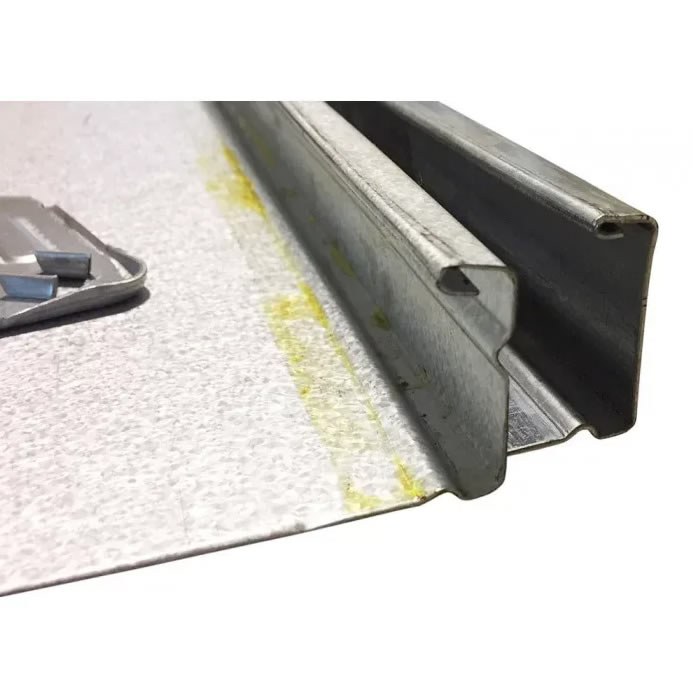
This machine is designed for roll-forming the flange and the compatible cleats/locks on duct ends. It is a foundational piece of equipment if you are adopting the TDFC system.
What it does
-
It roll-forms the integrated flange on a sheet or duct end, compatible with standard TDC/TDF corner systems.
-
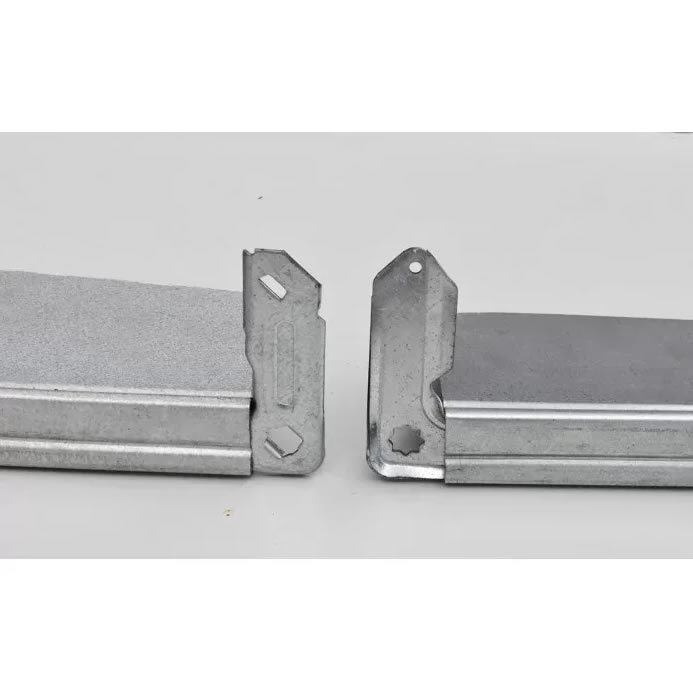
It also forms the cleats or locks that will secure duct sections together.
-
The machine supports a convertible flange: you can switch tooling to produce either a standard flat flange or a grooved reinforced flange (the groove offers added strength or a gasket channel).
-
Additionally, it includes a slitter entrance for cleat material: leftover metal strips can be fed and converted into cleats, reducing waste.
Key technical characteristics
From the manufacturer’s specifications:
-
Roll-forming speed: ~ 45 feet per minute.
-
Number of forming passes: 15 for flange, 14 for cleat.
-
Capacity: flange gauge 18-24 gauge; cleat gauge 22 gauge.
-
Motor: 5 Hp, 220-240 V, 60 Hz, 3-phase.
-
Dimensions: approx. L 110″ × W 30″ × H 48″.
-
Weight: ~ 2,100 lbs.
-
Convertible flange: with simple roller change-out you can switch to grooved flange.
What makes it unique / its advantages
-
The ability to combine flange forming and cleat/lock forming in one machine saves space and time.
-
The convertible flange means you don’t need two separate machines for flat vs grooved flange; you can adapt tooling.
-
The slitter for cleat input means less wasted coil or sheet metal and flexibility in cleat width or material.
-
It reduces manual labour: instead of hand-cutting flange pieces, manually forming, welding or screwing, the process is mechanised.
How the process works in the shop
-
Take a piece of sheet metal (or a duct end) that will become a duct section.
-
Feed it into the Lock & Cleats Former; the machine roll-forms the flange profile along the edge. Simultaneously or sequentially the cleats/locks are formed and output.
-
If the flange needs to be grooved, swap in the extra forming rollers, and run the sheet again.
-
The finished duct end now has the proper flange profile, cleats/locks are ready, and it is ready for the next stage of assembly (corner insertion or bending).
-
Because the flange and cleat formation are consistent and mechanised, the downstream operations (corner fixing, bending, joining) are more efficient and reliable.
Machine 2: Pneumatic TDFC Corner Fixing Machine
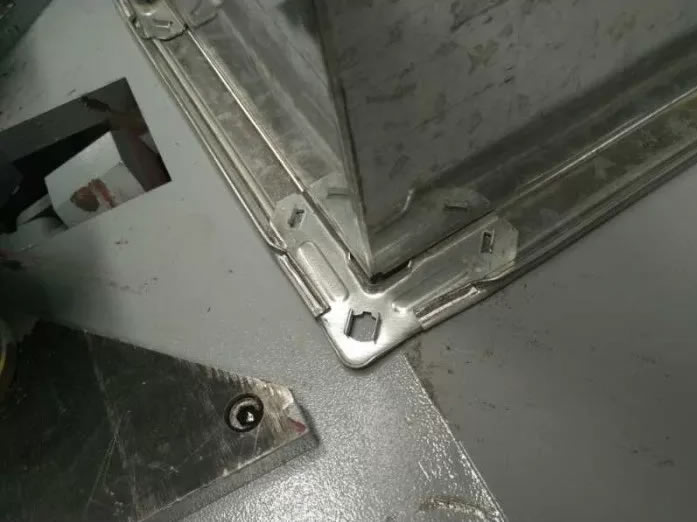
This machine automates the insertion and fixing of corners into flanged duct ends, a critical step in ensuring accurate, airtight, strong HVAC duct joints.
What it does
-
After a duct end has the TDFC flange (and cleats/locks) formed, the piece is placed into this machine.
-
The machine uses pneumatic actuation to rapidly insert the corner (for example a 90° corner connector) into the flanged profile and crimp/fix it securely.
-
The cycle is fast: the operator simply positions the piece, initiates the machine (foot pedal or button) and the corner is set in a matter of seconds.
Key technical characteristics
As specified by the manufacturer:
-
Material gauge capacity: approximately 16-26 gauge.
-
Power: 110 V electrical plus pneumatic air supply (70-100 psi).
-
Footprint: approx. 60″ × 30″ × 40″.
-
Weight: ~ 660 lbs.
-
Low operator input: one operator can run the machine with minimal adjustment.
What makes it unique / its advantages
-
Automation of a previously manual, labour-intensive step (corner insertion/fixing) greatly improves operator throughput.
-
Consistent insertion and crimping means fewer rejects, better sealing, fewer misfits.
-
Compact footprint and single-operator design mean it can be easily integrated into a duct shop without huge space demands.
-
The pneumatic mechanism ensures repeatability and faster cycle times.
How the process works in the shop
-
After flange/cleat formation, move the duct piece to the corner-fixing station.
-
Place the flanged end into the machine and align the corner insertion point.
-
Initiate the machine (via a button or foot pedal). The pneumatic system drives the corner piece into position and crimps/fixes as required.
-
Remove the finished section. The corner is now securely joined into the flange, ready for bending, joining, assembly or installation.
-
Because this station is fast and reliable, large volumes of duct ends can be processed with minimal operator effort.
Machine 3: TDFC Air Brake
This machine handles the bending or folding of ductwork — specifically ducts with pre-formed flanges (TDFC style) that require bending to shape (for example wrappers, L-shapes, rectangular segments).
What it does
-
The Air Brake uses pneumatic pressure to bend sheet metal or ductwork up to ~120° (according to specification).
-
It is designed to handle ductwork with flanges already formed (for example by the Lock & Cleats Former) so that the flange remains intact and accurate after bending.
-
The operator aligns the part, triggers the bend, and the machine carries out the fold reliably.
Key technical characteristics
Typical specifications include (depending on model):
-
Maximum bending angle: up to 120°.
-
Maximum gauge capacity: e.g., 18-gauge mild steel in some models.
-
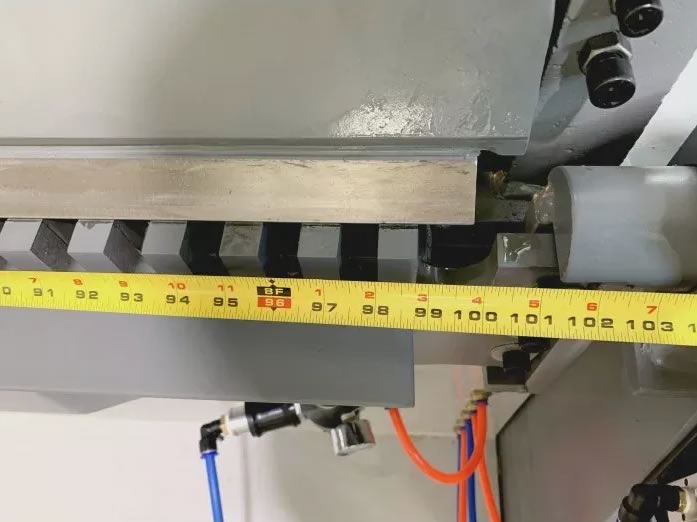
Operational width: for example up to ~100″ (8.2 ft) for wide model; also smaller width models available.
-
Pneumatic requirement: an air compressor supplying maybe 5 cfm at 80 psi (for certain models).
-
Foot or hand switch operation; minimal change-over for typical bending operations.
What makes it unique / its advantages
-
It is built specifically to handle flanged ductwork, preserving the flange geometry during bending — many generic brakes may distort the flange.
-
The large width capability means fewer segments for wide ducts.
-
The minimal setup and change-over mean faster bending cycle times.
-
One operator can manage it, reducing labour cost and bottlenecks.
How the process works in the shop
-
After flange formation (via the Lock & Cleats Former) and after any corner insertion (via the Corner Fixing Machine), the duct section enters the bending station.
-
The operator aligns the bend line using an alignment blade or stop, places the part on the machine bed or back gauge.
-
The machine is triggered (hand or foot) and the bend is performed to required angle (up to ~120°).
-
The part is removed, now bent with its flange intact and corners fixed.
-
The section can proceed to joining/assembly (using the cleats/locks formed earlier) or shipping.
How these machines work together in one line
One of the major benefits of Stan’s machines is how they complement each other to form a semi-automated duct production line for TDFC flange systems. Here’s a typical workflow:
-
Flange & Cleats Forming: Using the Lock & Cleats Former, duct ends are roll-formed with the appropriate TDFC flange and the matching cleats/locks are produced.
-
Corner Fixing: Once flanged, duct ends move to the Corner Fixing Machine, where corners (90° or others) are inserted and crimped quickly.
-
Bending / Folding: After corners are fixed (if applicable), the duct section goes to the Air Brake to bend the sheet/duct into the desired shape (wrapper, L-shape, etc) with the flange and corners intact.
-
Assembly / Joining: Cleats/locks produced in step 1 allow the duct sections to be joined together easily. Because flange, corners and bends are precisely formed, assembly is faster, joints are tighter and quality improves.
-
Shipping / Installation: With high-quality fabrication upstream, fewer errors and less rework occur, improving on-site performance.
This integrated approach reduces labour-intensive steps, minimises manual fabrication, and increases throughput. Shops that adopt the full sequence benefit from a smoother production line and better product quality.
Comparative Table: Machines at a glance
| Machine | Primary Function | Material / Capacity | Operator Requirement | Key Advantage |
|---|---|---|---|---|
| Lock & Cleats Former | Form flange + cleats/locks on duct ends | Flange: 18-24 gauge; Cleat: 22 gauge | Single operator feed | Integrated flange/cleat forming, convertible flange option |
| Corner Fixing Machine | Insert & crimp corners into flanged ends | ~16-26 gauge material | One operator with foot/button control | Fast corner fixing, consistent joints, one-step operation |
| Air Brake | Bend/fold duct sections (with flange) up to ~120° | Example capacity up to 18 gauge; wide widths | One operator | Preserves flange geometry during bending; large width capability |
For duct fabrication shops in Canada (or elsewhere) looking to upgrade their line for speed, repeatability and quality, Stan Roll Forming Machines Inc. offers powerful tools focused on the TDFC flange system: the Lock & Cleats Former, the Corner Fixing Machine and the Air Brake. Each machine addresses a specific step in the production chain, and when used together they form an efficient and effective workflow.
By mechanising flange forming, corner insertion and bending, you reduce manual labour, increase throughput, enhance joint quality and ensure your ductwork meets modern HVAC standards. If you are fabricating rectangular ducts, especially with TDFC flanges, investing in these machines makes strong sense for long-term operational efficiency and quality assurance.
TDFC duct forming machines, TDFC Air Brake, Pneumatic TDFC Corner Fixing Machine, TDFC Lock & Cleats Former, HVAC duct equipment, TDF machines, TDC flange machine, duct fabrication tools, square duct lock former, standing S machine, S cleat machine, Pittsburgh lockformer, lock formers for HVAC, pneumatic TDFC folding machine, lock HVAC machine, Stan Roll Forming Machines Inc., HVAC manufacturing line, sheet metal forming equipment, Canada duct forming machinery