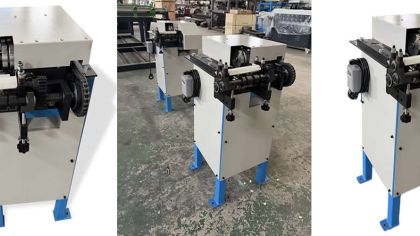
Spiral Duct Machines: A Canadian Expert's Guide to HVAC Pipe Production
- The Unseen Engineering: A Deep Dive into High-Performance Spiral Duct Manufacturing
- The Operating Principle: Beyond the Basics
- Purpose and Application in the Modern World
- Key Components and Advanced Production Technology
- Unseen Advantages: The Engineering of the Helical Seam
- Production Directions: The Future of Metal Forming
- The Stan Roll Forming Machines Inc. Product Range
- FAQ — Frequently Asked Questions
The Unseen Engineering: A Deep Dive into High-Performance Spiral Duct Manufacturing
In the realm of modern HVAC systems, the seemingly simple spiral air duct is a marvel of engineering, a product of precision manufacturing that ensures the efficient and silent flow of air. The key to their excellence lies in the machinery used to create them: the spiral duct machine, the hvac spiral duct forming machine, and the powerful spiral tube making machine for ventilation duct pipe forming. These machines, often seen as mere tools, are in fact the heart of an industry driven by speed, accuracy, and innovation.
The Operating Principle: Beyond the Basics
The operation of a spiral duct machine is a symphony of mechanical precision. While the fundamental principle is simple, the execution is highly technical. A coiled metal strip, typically galvanized steel or aluminum, is first fed from a decoiler, which ensures a smooth, consistent tension. The strip then enters the forming head, where a series of rollers bend and shape the edges to create a specific profile—the single or double lock seam. This seam is the duct's signature feature, providing both an airtight seal and incredible structural rigidity.
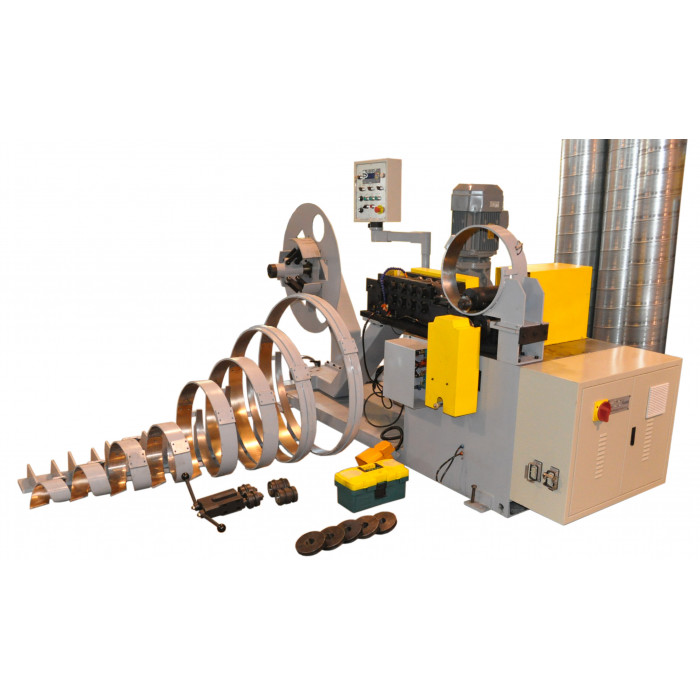
The most critical part of this process is the spiral winding. As the pre-formed strip is helically wound, a spinning forming wheel continuously locks the seam, creating a perfectly cylindrical and rigid tube. The machine's programming precisely controls the pitch of the spiral and the speed of the winding, guaranteeing a uniform and flawless product. This complex dance of metal and machine is what differentiates a high-quality air pipe machine from a simple former. The final step is an automated cutter that trims the duct to the exact length, completing the high-speed process.
Purpose and Application in the Modern World
The applications of ducts produced by machines for ventilation pipes extend far beyond basic air circulation. Their advantages make them the preferred choice for a variety of demanding environments:
-
Commercial and Office Spaces: The smooth interior surface and the spiral seam significantly reduce air resistance, which translates to lower fan energy consumption and a quieter operation—a critical factor for employee comfort and productivity.
-
Healthcare Facilities: The airtightness and ease of cleaning of spiral ducts make them ideal for hospitals and clinics where hygiene is paramount.
-
Industrial Settings: Their exceptional strength allows them to withstand high pressures and demanding conditions without deforming, making them a top choice for industrial exhaust and dust collection systems.
-
Architectural Design: In modern architecture, exposed spiral ducts have become a stylistic choice, appreciated for their clean lines and industrial aesthetic. This trend makes the visual quality of the product, and thus the precision of the hvac spiral air duct machine, more important than ever.
Key Components and Advanced Production Technology
A complete duct production line is a sophisticated ecosystem of machinery. Beyond the primary spiral duct forming machine, a full setup includes:
-
Decoilers and Straighteners: These machines are the first step, ensuring the raw material is perfectly flat and ready for forming.
-
Beading Machines: These create a raised circular bead along the length of the finished duct. This simple addition significantly increases the duct’s rigidity, preventing "oil-canning" (collapsing under pressure) and making long sections more stable.
-
Crimpers and Flanging Machines: Used to finish the ends of the ducts, preparing them for easy, secure, and airtight connection with fittings, elbows, and other sections.
-
Control Systems: Modern systems are no longer manual. Advanced software allows operators to program different lengths, diameters, and materials. This precision and automation are what define the modern hvac spiral duct machine.

Unseen Advantages: The Engineering of the Helical Seam
What truly sets a product from a spiral wind pipe machine apart is its unique helical seam. This isn't just a design choice; it's a fundamental engineering advantage.
-
Structural Integrity: The spiral lock seam acts like a continuous external rib. It drastically increases the duct's rigidity and torsional strength, allowing for longer sections to be made from thinner gauge metal without compromising durability. This saves on material costs and reduces the weight, making installation easier and safer.
-
Improved Aerodynamics: The helical seam actually creates a slight swirling motion in the airflow. While this sounds like it would increase resistance, in reality, it can reduce turbulence and smooth the flow of air, especially at high velocities. This unique aerodynamic property, combined with the smooth inner wall of the round duct, contributes to the overall energy efficiency of the HVAC system.
This subtle but profound detail is a testament to why the spiral duct machine is a superior tool for a superior product.
Production Directions: The Future of Metal Forming
The future of the industry lies in smart, sustainable, and integrated manufacturing. Key trends include:
-
Full Automation: The move towards fully-automated lines where a single operator can manage an entire spiral tube making machine from a control panel, with machines automatically adjusting to different specifications.
-
Sustainable Manufacturing: Reducing waste through precise cutting and using recycled materials are becoming key selling points.
-
Data-Driven Operations: Integration with ERP systems to track production, manage inventory, and predict maintenance needs is the next frontier. A modern wind pipe machine is not just a tool; it's a data-generating asset.
The Stan Roll Forming Machines Inc. Product Range
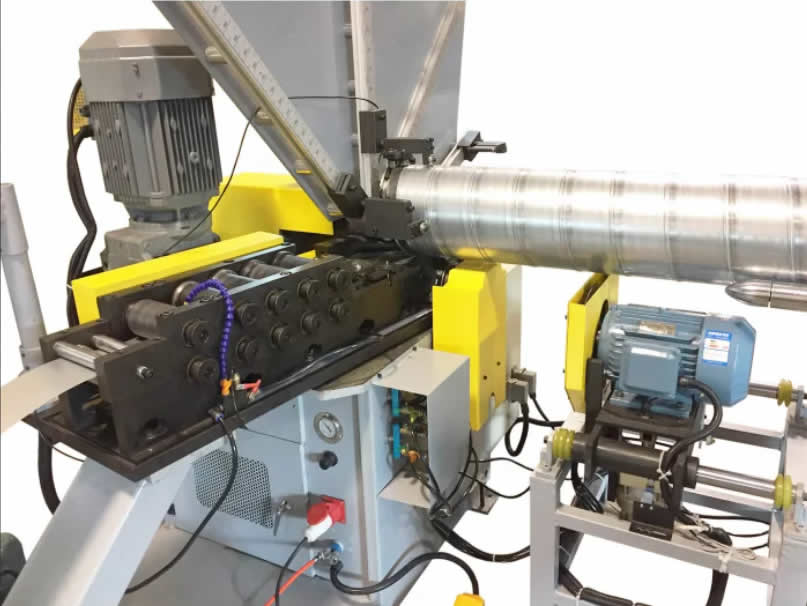
The Stan Roll Forming Machines Inc. offers a comprehensive lineup of metal forming and HVAC machinery designed for professional use. Their products cover a wide range of needs, from basic metal preparation to advanced duct production. The product list includes:
-
HVAC Round Spiral Duct Making Machine: The cornerstone for producing durable, round ventilation ducts.
-
Industrial Spiral Tube Former TF1500S: An advanced model of a spiral wind pipe machine for high-volume manufacturing.
-
Elbow Making Machines: Equipment for creating round and square duct elbows, crucial for complex installations.
-
HVAC Square Duct-work Machinery: Specialized equipment for producing square and rectangular ducting.
-
Lockforming Machinery: Essential tools for creating the lock seams that hold ductwork together.
-
Decoilers: Machinery used to efficiently uncoil metal strips, providing a smooth feed for wind pipe machine and air pipe machine operations.
-
Downspout and Roofing Machines: A variety of roll forming and metal-bending machines for exterior construction.
-
Metal Cutting and Shearing Equipment: Necessary tools for preparing sheet metal to the required dimensions.
FAQ — Frequently Asked Questions
How does a double lock seam differ from a single seam? A double lock seam provides a stronger, more rigid connection, making it suitable for larger diameter ducts or applications with higher internal pressure. The extra fold of metal provides a significant boost in structural integrity.
What is the minimum and maximum diameter a machine can produce? This varies by model, but most industrial machines can produce ducts from as small as 80 mm up to 2000 mm, covering a vast range of commercial and industrial needs.
What kind of maintenance do these machines require? Regular maintenance is minimal but crucial. It typically involves lubricating moving parts, checking for wear on rollers and cutters, and ensuring the control system is updated.
Why should a company invest in its own spiral duct forming machine? Investing in an in-house machine allows a company to significantly reduce costs by eliminating the need to purchase ducts from external suppliers. It also provides flexibility to produce custom sizes on demand, leading to shorter project timelines and greater control over quality.