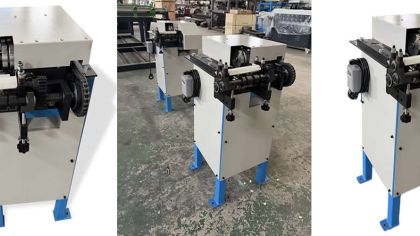
Roll Forming Multi-Panel Roofing Machines in Canada: Complete Buying Guide for Steel Roof Manufacturers
- What Is a Roll Forming Multi-Panel Roofing Machine?
- How a Steel Roof Roll Forming Machine Works
- Coil Feeding System: The Starting Point
- Additional Machines to Enhance the Line (Available from Stan Roll Forming Machines Inc.)
- Common Materials Used in Canadian Roll Forming Lines
- Comparison Table: Roofing Machines from Stan Roll Forming Machines Inc.
- Why Canadian Roofers Choose Stan Roll Forming Machines Inc.
- Final Thoughts
In Canada’s diverse climate and competitive construction industry, efficiency, precision, and customization are key. Whether you're based in Ontario, Alberta, or British Columbia, investing in a high-quality Roll Forming Multi-Panel Roofing Machine or a Steel Roof Roll Forming Metal Roofing Sheet Making Machine is essential for producing durable, cost-effective metal roof systems for residential, commercial, and industrial buildings.
What Is a Roll Forming Multi-Panel Roofing Machine?
A Roll Forming Multi-Panel Roofing Machine is an advanced roll forming line designed to manufacture multiple metal roofing panel profiles — including corrugated, ribbed, standing seam, and trapezoidal — using interchangeable tooling or modular stations.

These machines are ideal for Canadian companies looking to maximize production flexibility and serve various architectural styles and regional roofing standards.
How a Steel Roof Roll Forming Machine Works
Steel roof roll forming machines follow a continuous, automated process:
-
Decoiling the Coil: Metal coils (usually galvanized steel or aluminum) are fed into the machine using a coil feeding system.
-
Guiding and Levelling: A straightener ensures smooth entry by removing coil set and misalignment.
-
Roll Forming: A series of rollers gradually shapes the steel into the desired profile.
-
Cutting: Hydraulic shearing or flying saw systems cut the formed panels to exact lengths.
-
Output/Stacking: Finished panels are automatically discharged and stacked.
The result: high-volume production with precise, repeatable profiles — perfect for Canada’s rigorous building codes and extreme weather conditions.
Coil Feeding System: The Starting Point
To ensure a seamless forming process, the coil must be properly unrolled and guided. The most common feeding systems include:
-
Manual Decoilers – Budget-friendly option for small operations.
-
Hydraulic Decoilers – Ideal for heavy-duty coils and high-speed lines.
-
Double-Head Decoilers – Perfect for multi-panel machines that require frequent coil changes.
-
Automatic Levelers – Smooth out imperfections and ensure even thickness before forming.
Stan Roll Forming Machines Inc. offers various feeding and decoiling solutions tailored to your production scale.

Additional Machines to Enhance the Line (Available from Stan Roll Forming Machines Inc.)
To create a complete roofing sheet production line, the following equipment from Stan Group can be added:
-
Hydraulic Shears – Precise, clean cuts for all panel types.
-
Stacking Units – Automated panel collection and organization.
-
Embossing Machines – For aesthetic textures or anti-slip surfaces.
-
Bending Units – For drip edges, flashing, or trim forming.
-
Portable Standing Seam Machines – For on-site or mobile production.
All equipment is modular and can be easily integrated into your existing production line.
Common Materials Used in Canadian Roll Forming Lines
To manufacture steel roofing panels, the following materials and inputs are commonly used:
| Specification | Typical Value Used in Canada |
|---|---|
| 1. Raw Material | Galvanized steel, Galvalume, aluminum |
| 2. Material Thickness | 0.3 – 1.0 mm |
| 3. Machine Frame | Welded steel H-beam |
| 4. Machine Construction | Modular roll forming system |
| 5. Roller Material | GCr15 steel with hard chrome |
| 6. Forming Stations | 12 – 24 stations |
| 7. Shaft Diameter | 70 – 90 mm |
| 8. Shaft Material | 40Cr hardened steel |
| 9. Forming Speed | 10 – 30 m/min |
| 10. Voltage | 575V / 3 Phase / 60 Hz |
| 12. Gear Material | 20CrMnTi alloy steel |
| 16. Advantage | High speed, multi-profile capability |
| 17. Power Consumption | 10 – 22 kW |
Comparison Table: Roofing Machines from Stan Roll Forming Machines Inc.
| Machine Type | Profiles Supported | Speed | Voltage | Mobility | Best Use Case |
|---|---|---|---|---|---|
| Multi-Panel Roll Forming Machine | Corrugated, Ribbed, Trapezoidal | 20–30 m/min | 575V, 3 Phase | Stationary | Large-volume production in factory |
| Portable Standing Seam Machine | Snap-Lock, Mechanical Lock | 10–15 m/min | 220–240V | Mobile/Portable | On-site installations |
| Custom Design Roofing Roll Former | Based on customer needs | Variable | Custom | Stationary | Specialized architectural profiles |
All machines are designed for cold-weather operation and compliance with CSA electrical and safety standards.

Why Canadian Roofers Choose Stan Roll Forming Machines Inc.
✅ Designed for the Canadian Market
Machines are optimized for CSA voltage (575V) and designed to withstand temperature swings from -40°C to +35°C.
✅ Modular & Upgradeable
Start with a base machine and add forming stations or cutting units as your business grows.
✅ Local Support
Parts, service, and consulting are available across Canada — from Calgary to Montreal.
✅ Custom Profiles
Support for custom tooling based on regional or architectural standards.
Final Thoughts
A Roll Forming Multi-Panel Roofing Machine or a steel roof roll forming machine is more than just a piece of equipment — it’s a long-term investment in quality, capacity, and business growth.
If you're in Toronto, Vancouver, Edmonton, or anywhere in between, Stan Group has the right tools to help you scale your roofing panel production with precision and reliability.
👉 Explore full specs, request a quote, or schedule a live demo today at stangroup.ca