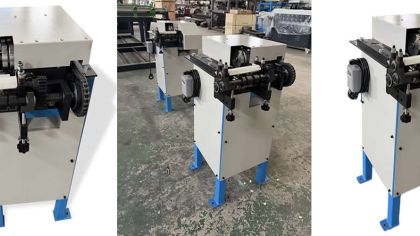
Ribbed & Corrugated Profile Rollformers for Metal Roofing and Siding
- What Is a Ribbed and Corrugated Profile Rollformer?
- How Roll Forming Machines Work
- Basic Roll Forming Process
- Materials Used in Corrugated and Ribbed Rollforming
- Common Materials
- Typical Processing Capabilities
- Types of Ribbed and Corrugated Profiles
- Common Ribbed Profiles
- Common Corrugated Profiles
- Popular Profile Types
-
-
- Corrugated vs Ribbed Panels
- Industries That Use Rollforming Equipment
- Roofing Manufacturers
- Siding and Cladding Companies
- Agricultural Construction Companies
- Portable Roofing Contractors
- Advantages of Modern Roll Forming Machinery
- High Production Speed
- Consistent Profile Quality
- Reduced Labour Requirements
- Lower Material Waste
- Scalability
- Flexible Profile Production
- Custom Profile Roll Forming
- Custom Profile Applications
- Automation and PLC Control Systems
- How Roofing Contractors Use Portable Rollformers
- Benefits for Contractors
- How Agricultural Builders Use Corrugated Rollformers
- How Commercial Manufacturers Use Ribbed Panel Machines
- Choosing the Right Rollforming Machine
- Important Factors
- Why Manufacturers Choose Stan Group
- Key Advantages
- Future Trends in Roll Forming Machinery
- Frequently Asked Questions
- What is a corrugated roll forming machine?
- What is the difference between corrugated and ribbed panels?
- What materials can be processed?
- Can rollforming machines produce custom profiles?
- What industries use rollforming equipment?
- Are portable rollforming machines worth it?
- How fast can a rollformer produce panels?
- What gauge steel can be processed?
- Can aluminum coils be used?
- How long do rollforming rollers last?
- Conclusion
Modern ribbed and corrugated profile rollforming machines are the backbone of today’s metal roofing and siding industry. These machines are designed to continuously transform flat metal coil into durable roofing panels, corrugated sheets, wall cladding profiles, agricultural panels, and custom architectural metal products.
A ribbed or corrugated roll forming machine works by feeding steel or aluminum coil through a series of precision forming rollers. Each forming station gradually shapes the material into the final profile without damaging the coating or structural integrity of the metal.
Today, roll forming machinery is used by roofing manufacturers, steel building suppliers, siding contractors, agricultural construction companies, portable roofing crews, and custom metal panel manufacturers across Canada.
At Stan Group https://stangroup.ca, businesses can source industrial ribbed and corrugated profile rollforming equipment for reliable production, long service life, profile flexibility, and high-volume manufacturing environments from trusted machinery suppliers and manufacturing partners. These machines are designed to help businesses reduce labour costs, improve production speed, maintain profile consistency, and manufacture roofing and siding panels directly from metal coil.
What Is a Ribbed and Corrugated Profile Rollformer?

A ribbed and corrugated profile rollformer is an industrial sheet metal forming machine used to manufacture continuous metal panels from coil-fed steel or aluminum.
The machine gradually bends flat sheet metal through multiple forming stations until the desired roofing or siding profile is produced.
Unlike stamping or press forming, roll forming is a continuous manufacturing process. This allows manufacturers to produce long roofing panels with high consistency, reduced waste, and significantly higher production speeds.
Typical machine components include:
- Decoiler
- Coil feeding system
- Roll forming stations
- Precision rollers
- PLC control system
- Encoder measurement system
- Cutting shear
- Run-out tables
- Stacker systems
Modern corrugated and ribbed rollforming machines can manufacture:
- Corrugated roofing sheets
- Ribbed metal siding
- Agricultural panels
- Trapezoidal profiles
- Structural cladding panels
- Commercial roofing systems
- Industrial wall panels
- Custom architectural profiles
How Roll Forming Machines Work
The roll forming process begins with a steel or aluminum coil mounted on a decoiler.
The metal strip is gradually fed into the machine where a sequence of rollers progressively bends the material into the desired shape.
Each forming station performs a small portion of the bending process. This progressive shaping minimizes stress on the metal and helps maintain coating integrity.
Once the profile reaches its final geometry, the panel is cut to programmed length using a hydraulic or flying shear system.
Basic Roll Forming Process
|
Step |
Description |
|
Decoiling |
Coil is loaded onto hydraulic or manual decoiler |
|
Feeding |
Material enters guiding system |
|
Forming |
Roll stations gradually shape metal |
|
Profiling |
Final panel geometry is completed |
|
Cutting |
Hydraulic shear cuts finished panel |
|
Stacking |
Panels collected for packaging or installation |
This process allows manufacturers to produce thousands of linear feet of roofing or siding panels per shift.

Materials Used in Corrugated and Ribbed Rollforming
Modern rollforming equipment can process a wide range of coated and uncoated metals.
Common Materials
|
Material |
Typical Applications |
|
Galvanized steel |
Roofing, siding, agricultural panels |
|
Galvalume steel |
Commercial roofing systems |
|
Painted steel |
Residential roofing and cladding |
|
Aluminum |
Coastal applications, architectural projects |
|
Copper |
Premium architectural roofing |
Most rollforming systems support multiple gauge ranges depending on profile depth and application requirements.
Typical Processing Capabilities
|
Parameter |
Typical Range |
|
Material thickness |
26–20 gauge |
|
Coil width |
Custom depending on profile |
|
Panel length |
Virtually unlimited |
|
Production speed |
30–120 ft/min |

Types of Ribbed and Corrugated Profiles
Different industries require different panel geometries.
Some profiles are designed for roofing strength, while others prioritize drainage, appearance, structural rigidity, or ease of installation.
Common Ribbed Profiles
Ribbed panels typically feature stronger structural ribs and are commonly used in:
- Commercial buildings
- Industrial facilities
- Agricultural buildings
- Warehouses
- Equipment storage structures
Common Corrugated Profiles
Corrugated panels use repeating wave-like shapes that provide excellent drainage and traditional industrial appearance.
Corrugated sheets are widely used for:
- Barns
- Rural buildings
- Residential accents
- Industrial roofing
- Decorative architectural facades
Popular Profile Types
|
Profile Type |
Common Uses |
|
Corrugated panels |
Roofing and siding |
|
Ribbed panels |
Structural wall systems |
|
Trapezoidal profiles |
Commercial roofing |
|
AG panels |
Agricultural buildings |
|
Standing seam compatible panels |
Architectural roofing |
|
Custom profiles |
Specialized industrial projects |
Corrugated vs Ribbed Panels
Although these terms are often used interchangeably, corrugated and ribbed profiles serve different applications.
|
Feature |
Corrugated Panels |
Ribbed Panels |
|
Shape |
Rounded waves |
Angular ribs |
|
Appearance |
Traditional industrial look |
Modern commercial look |
|
Structural rigidity |
Moderate |
Higher |
|
Drainage performance |
Excellent |
Excellent |
|
Typical applications |
Barns, siding, roofing |
Commercial roofing, wall systems |
|
Architectural flexibility |
Medium |
High |
Corrugated panels are often preferred for agricultural and rural applications, while ribbed profiles dominate commercial and industrial construction.
Industries That Use Rollforming Equipment
Roll forming machinery is used across a wide range of industries where metal roofing, siding, structural panels, or custom profiles are required.
Roofing Manufacturers
Metal roofing manufacturers use corrugated and ribbed rollforming systems to produce:
- Residential roofing panels
- Commercial roofing systems
- Standing seam roofing
- Agricultural roofing
- Industrial roof cladding
Large manufacturers often run high-speed automated production lines capable of producing thousands of panels daily.
Siding and Cladding Companies
Architectural siding manufacturers use custom ribbed profiles to create:
- Commercial facades
- Wall cladding systems
- Industrial siding panels
- Decorative architectural surfaces
Modern architectural projects increasingly rely on custom metal profiles for unique building aesthetics.
Agricultural Construction Companies
Agricultural builders are among the largest users of corrugated metal panel machinery.
These companies manufacture roofing and wall panels for:
- Barns
- Grain storage facilities
- Livestock buildings
- Equipment sheds
- Pole barns
- Farm workshops
Corrugated profiles remain extremely popular in agricultural applications because they provide durability, easy installation, and excellent drainage performance.
Portable Roofing Contractors
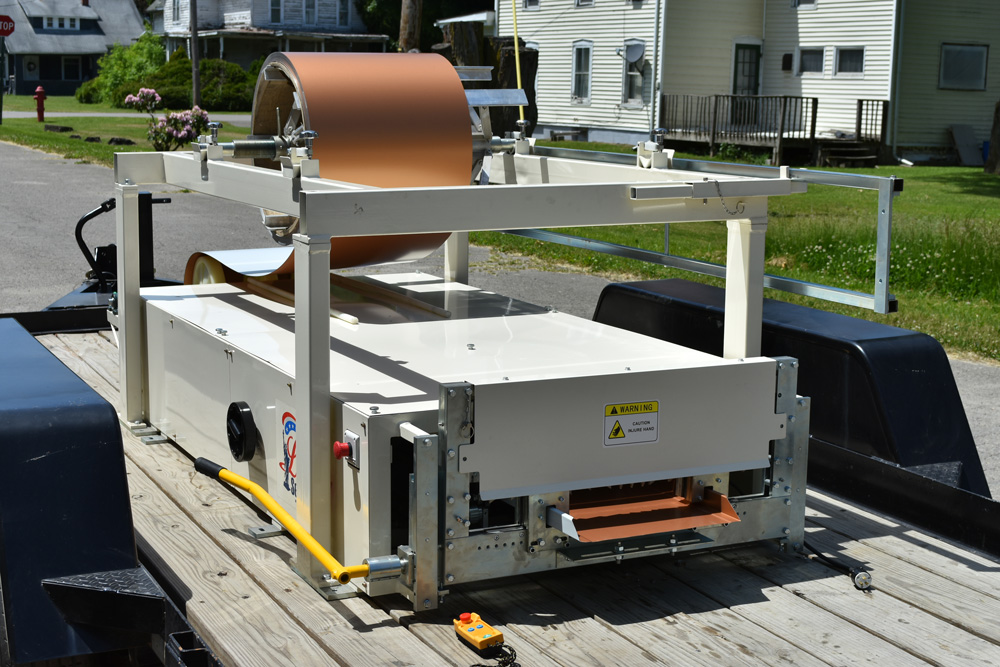
Portable rollforming equipment allows contractors to manufacture roofing panels directly at the job site.
This is especially valuable for:
- Remote construction projects
- Long panel runs
- Large agricultural buildings
- Commercial roofing installations
- Custom panel lengths
On-site manufacturing reduces shipping costs, minimizes panel damage during transportation, and allows exact-length panel production.
Advantages of Modern Roll Forming Machinery
Modern rollforming equipment offers major operational advantages compared to traditional fabrication methods.
High Production Speed
Continuous forming allows manufacturers to produce large quantities of panels with minimal downtime.
Consistent Profile Quality
Precision rollers ensure repeatable profile geometry and accurate dimensions.
Reduced Labour Requirements
Automated PLC controls significantly reduce manual handling.
Lower Material Waste
Continuous processing minimizes scrap and improves coil utilization.
Scalability
Manufacturers can increase production volumes without proportionally increasing labour costs.
Flexible Profile Production
Many systems support interchangeable tooling or custom profile development.
Custom Profile Roll Forming
Custom profile manufacturing is one of the fastest-growing sectors in the metal fabrication industry.
Many contractors, architects, and manufacturers require unique metal panel geometries that are not available from standard roofing systems.
Through Stan Group https://stangroup.ca/rollforming-roofing-and-custom-design-machinery, customers can source custom rollforming systems engineered according to:
- Technical drawings
- Sample profiles
- CAD files
- Structural requirements
- Architectural specifications
Custom Profile Applications
|
Industry |
Application |
|
Commercial construction |
Custom wall cladding |
|
Industrial facilities |
Structural metal panels |
|
Agricultural sector |
Specialized roofing |
|
Architectural projects |
Decorative facades |
|
Metal buildings |
Structural siding systems |
Custom rollforming solutions help businesses differentiate themselves in highly competitive construction markets.
Automation and PLC Control Systems
Modern rollforming equipment increasingly relies on automation to improve production consistency and operational efficiency.
Advanced PLC systems allow operators to:
- Set panel lengths
- Control production speed
- Monitor production counts
- Store profile recipes
- Reduce operator error
- Improve repeatability
Automation also improves production safety and reduces setup time.
How Roofing Contractors Use Portable Rollformers
Portable rollforming machinery has transformed the roofing industry across Canada.
Instead of shipping long roofing panels from factories, contractors can now manufacture panels directly at the construction site.
Benefits for Contractors
|
Advantage |
Impact |
|
On-site manufacturing |
Reduced shipping costs |
|
Custom panel lengths |
Reduced waste |
|
Faster installation |
Improved project timelines |
|
Less panel damage |
Better finished quality |
|
Remote project capability |
Greater flexibility |
Portable machines are especially common in:
- Rural construction
- Agricultural roofing
- Remote industrial projects
- Large commercial roofs
- Long-span panel systems
How Agricultural Builders Use Corrugated Rollformers
Agricultural construction companies remain one of the largest markets for corrugated roofing equipment.
Farm buildings require durable, weather-resistant roofing and siding systems capable of handling:
- Snow loads
- Wind exposure
- Moisture
- Temperature fluctuations
- Corrosive agricultural environments
Corrugated steel panels are widely used because they offer:
- Long lifespan
- Low maintenance
- Fast installation
- Excellent drainage
- Cost-effective production
Many agricultural contractors operate portable rollforming systems directly on farms or construction sites.
How Commercial Manufacturers Use Ribbed Panel Machines
Commercial and industrial manufacturers often require high-strength ribbed panels for:
- Warehouses
- Distribution centers
- Manufacturing plants
- Office buildings
- Retail developments
- Logistics facilities
Ribbed profiles provide enhanced rigidity and modern architectural appearance.
Large manufacturers typically use stationary automated rollforming lines integrated with:
- Coil handling systems
- Automated stackers
- Flying shears
- Packaging systems
- ERP production software
Choosing the Right Rollforming Machine
Selecting the right machine depends on production goals, materials, profile requirements, and operational scale.
Important Factors
|
Factor |
Why It Matters |
|
Production volume |
Determines machine speed requirements |
|
Material thickness |
Impacts roller design |
|
Profile complexity |
Affects number of forming stations |
|
Portability |
Important for field production |
|
Automation level |
Impacts labour efficiency |
|
Coil width |
Determines machine configuration |
|
Cutting system |
Influences production speed |
Businesses planning long-term growth should prioritize machine durability, technical support, and future profile flexibility.
Why Manufacturers Choose Stan Group
Canadian manufacturers and contractors require reliable machinery, local support, and long-term serviceability.
Stan Group https://stangroup.ca supplies and distributes rollforming equipment designed for production environments.
Key Advantages
|
Advantage |
Benefit |
|
Canadian support |
Faster communication and service |
|
Custom engineering |
Tailored profile solutions |
|
Industrial-grade components |
Long service life |
|
Technical expertise |
Better project planning |
|
Profile flexibility |
Future production scalability |
|
Machinery inventory |
Faster project timelines |
Equipment supplied by Stan Group is used by:
- Roofing manufacturers
- Agricultural builders
- Siding producers
- Industrial fabricators
- Metal building suppliers
- Portable roofing contractors
Future Trends in Roll Forming Machinery
The rollforming industry continues to evolve toward:
- Greater automation
- Faster production speeds
- Smart factory integration
- Improved energy efficiency
- Custom architectural profiles
- Portable manufacturing systems
Demand for metal roofing and siding continues to grow across Canada due to durability, energy efficiency, and long service life.
This growth is driving increased demand for:
- Portable roofing machines
- Automated production lines
- Custom profile systems
- High-efficiency rollforming equipment
Frequently Asked Questions
What is a corrugated roll forming machine?
A corrugated roll forming machine is industrial equipment used to manufacture corrugated metal roofing or siding panels from steel or aluminum coil.
What is the difference between corrugated and ribbed panels?
Corrugated panels use rounded wave shapes, while ribbed panels use angular ribs that provide higher structural rigidity.
What materials can be processed?
Most machines support galvanized steel, galvalume, painted steel, aluminum, and copper.
Can rollforming machines produce custom profiles?
Yes. Modern systems can be engineered to produce custom roofing, siding, and architectural profiles.
What industries use rollforming equipment?
Roofing manufacturers, siding companies, agricultural builders, and metal building suppliers commonly use rollforming machinery.
Are portable rollforming machines worth it?
Portable systems are highly valuable for contractors who manufacture roofing panels directly on-site.
How fast can a rollformer produce panels?
Production speeds vary, but many systems operate between 30 and 120 feet per minute.
What gauge steel can be processed?
Typical systems process steel ranging from 26 to 20 gauge depending on profile design.
Can aluminum coils be used?
Yes. Many rollforming systems support aluminum for architectural and coastal applications.
How long do rollforming rollers last?
High-quality rollers can last for many years when properly maintained and operated within recommended specifications.
Conclusion
Ribbed and corrugated profile rollforming machinery plays a critical role in modern metal roofing, siding, and industrial panel manufacturing.
From agricultural construction and portable roofing systems to high-volume industrial production, these machines provide the speed, flexibility, and consistency required by today’s construction industry.
As demand for durable metal roofing and siding continues to grow across Canada and North America, manufacturers increasingly rely on advanced rollforming systems to improve efficiency, reduce waste, and expand production capabilities.
Whether producing corrugated agricultural panels, commercial ribbed siding, or custom architectural profiles, modern rollforming equipment allows businesses to manufacture high-quality metal panels with precision and reliability.
For contractors, manufacturers, and industrial fabricators seeking dependable rollforming solutions, Stan Group https://stangroup.ca provides industrial machinery supply, technical expertise, equipment sourcing, and production guidance for real-world rollforming applications across Canada.