Portable Roll Forming: The Complete Guide to On-Site Metal Panel Fabrication
Roll Forming: Discovering Its Multiple Benefits
Explore the most comprehensive guide on roll forming available online — now tailored to portable roll forming applications.
Overview
Roll forming is a continuous bending process in which sheet metal is gradually shaped into a desired profile using a series of precisely aligned rollers. It is a cornerstone of modern metal fabrication, particularly in the roofing, siding, and construction sectors.
Portable roll forming systems have taken this technology to a whole new level. These mobile units allow users to produce custom-length panels and components on-site, reducing transportation costs, minimizing waste, and increasing operational efficiency — all without needing a full-scale production line.
What Is Roll Forming?
At its core, roll forming transforms a flat coil of metal into a consistent, repeatable cross-sectional shape. Unlike press brakes or stamping operations, roll forming handles long lengths with smooth, uninterrupted bends.
In a standard roll forming line, the material is uncoiled, flattened, pre-processed (if needed), passed through a series of rollers, cut to length, and optionally post-processed. Portable machines condense many of these steps into a streamlined setup — ideal for roofing contractors, builders, and even smaller-scale fabricators.
The Roll Forming Process – Step by Step
Whether you're operating a large-scale stationary line or a mobile unit in the field, the process follows the same core stages:
1. Decoiling (Unwinding the Coil)
Every journey starts with a coil of sheet metal — typically steel, galvanized steel, aluminum, or copper. In mobile setups, smaller decoilers feed directly into the forming machine. The coil is unrolled and straightened to eliminate memory and ensure flatness before forming begins.
2. Pre-processing (Optional)
Depending on the design, the sheet may be pre-punched or slotted before entering the rollers. For example, fastener holes or ventilation slots may be added during this phase. On portable machines, this feature is either integrated or performed using auxiliary equipment beforehand.
3. Roll Forming
This is where the magic happens. The metal feeds through a series of roller stations — each one performing a small part of the total shape transformation. The progression of these roller profiles (known as a "flower pattern") determines the final geometry of the panel.
Portable roll formers typically include 10–24 roller stations and are optimized for specific panel types. For instance:
-
AG Panels – Agricultural-use panels with ribs for rigidity.
-
PBR Panels – Commercial roofing and siding panels.
-
Standing Seam Panels – High-end architectural roofing systems with concealed fasteners.
Thanks to programmable logic controllers (PLCs), even portable systems can automatically adjust to produce different lengths and profiles with millimetre precision.
4. Cutoff and Discharge
Once the profile is complete, a hydraulic or mechanical cutoff system slices the panel to the specified length. Modern portable roll formers use "flying" cutoff saws that work without stopping the line — ensuring smooth operation and minimal downtime.
5. Post-processing (Optional)
Although most portable systems focus on forming and cutting, additional steps such as minor bending, crimping, or hemming may be performed after the part is discharged. Some portable units include integrated tools for hemming panel edges or adding rib stiffeners.
Equipment Used in Portable Roll Forming
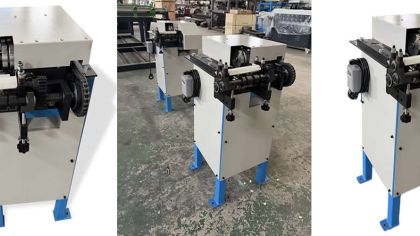
Unlike factory roll forming lines, portable systems consolidate multiple functions into a compact format that can be loaded into a trailer or truck. The core components include:
-
Uncoiler/Decoiler – Holds and feeds the metal coil.
-
Roll Forming Machine – Contains the roll stations and motorized drives.
-
Cutoff System – Cuts the profile at desired lengths, often hydraulically powered.
-
Run-out Tables – Support finished panels as they exit the machine.
-
Control Unit – Usually a touchscreen interface for inputting lengths, profiles, and batch settings.
Some portable machines also include:
-
Slitting attachments for adjusting panel width on site
-
Hem tools for finishing roof edges
-
Rib rollers for creating additional structural lines in roofing panels
Each machine is designed to perform as a standalone unit but can be paired with others for expanded capabilities.
Materials That Can Be Roll Formed
Portable roll forming accommodates a wide range of metals depending on the job:
-
Galvanized Steel – Excellent corrosion resistance, common in roofing
-
Aluminum – Lightweight and rustproof, perfect for coastal regions
-
Copper – Premium, architectural-grade finish with natural patina
-
Painted or Coated Metals – For aesthetic and functional applications
Thicknesses typically range from 26 to 20 gauge (0.014" to 0.036"), though heavier gauges are possible with reinforced equipment.
Lubrication & Surface Quality
Though lubrication is more critical in industrial-scale operations, friction management remains essential. In portable roll forming, maintaining clean rollers and choosing proper materials (e.g., pre-painted coil) helps prevent galling and preserves surface finish.
Eco-friendly coatings and precision roller alignment ensure consistent results, especially for visible profiles like standing seam roofing.
Key Advantages of Portable Roll Forming
✅ On-Site Customization
Produce panels to exact length without transporting long, awkward bundles. Greatly reduces waste and inventory.
✅ Lower Labour Costs
Automation and minimal setup reduce labour requirements.
✅ Mobility and Versatility
Move your equipment to the jobsite — whether for residential roofing or agricultural barns.
✅ Higher Precision
Programmable controls and automatic feeding systems deliver consistent, repeatable results.
✅ Reduced Lead Times
Produce finished components immediately, eliminating factory delays.
✅ Scalability
Start with one profile (like AG Panel) and expand to others with interchangeable tooling.
Technical Innovations in Modern Roll Forming
Today’s portable roll forming machines benefit from:
-
Touchscreen PLC controls with job memory
-
Servo motors for pinpoint accuracy
-
Quick-change tooling for switching profiles in minutes
-
Wireless integration for job tracking and remote operation
-
Battery or generator-ready configurations for off-grid work
As technology evolves, even small contractors can access manufacturing-grade capabilities right at the jobsite.
Conclusion: A Modern Solution for a Classic Process
Roll forming remains one of the most efficient and scalable ways to shape metal. With the advent of portable systems, its power is now in the hands of builders, roofers, and metalworkers of all sizes. Whether you're fabricating AG panels for a barn roof or installing architectural standing seam on a luxury home, portable roll forming brings flexibility, speed, and quality directly to your project.