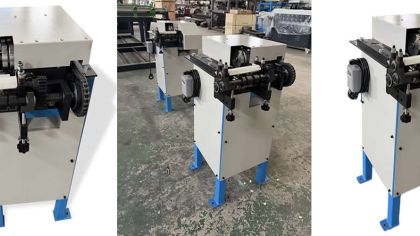
Portable Roll Forming: A Step-by-Step Guide
Portable Roll Forming: Complete Guide to a Mobile Metal Profiling System
Portable Roll Forming is a modular system designed to transform flat metal coils into ready-to-use shaped profiles—quickly, accurately, and directly at the point of use. This system is compact, easy to move, and does not require a full-scale factory setup. It is ideal for professionals in roofing, siding, and metal framing who want speed, flexibility, and control over production.
Let’s explore the full process step by step and explain how each component can be used independently or in combination.
Decoiler – Starting Point of the Line
The decoiler holds and feeds flat metal sheets from a coil. It ensures a consistent, controlled feed of material into the line.
Use Cases:
-
Can feed any sheet metal processing machine
-
Works standalone with shears or benders
Guiding Device – Ensures Proper Alignment
Centers and stabilizes the sheet before it enters the rollers. Prevents skewing or twisting.
Standalone Use:
Can be combined with cutting or punching units for high-accuracy projects.
Roll Forming System – Core of the Machine
This is the heart of the process. The metal sheet passes through multiple roller stations that gradually form it into a specific shape.
Popular Profiles:
-
AG Panel – Agricultural and residential roofing
-
PBR Panel – High-strength roofing and siding
-
Standing Seam Panel – Concealed-fastener roofing systems
Standalone Use:
The roll former can run independently when fed directly or manually.
Pressing Device – Adds Details and Reinforcements
Adds custom features like stiffening ribs, drainage grooves, or embossing. These details improve performance and appearance.
Flexible Use:
Can be added after other machines or used to emboss pre-cut flat sheets.
Cutting Device – Cut-to-Length Accuracy
Cuts the final profile to required lengths using a shear or hydraulic blade.
Benefits:
-
Precise length control
-
Clean, consistent cuts
-
Reduces waste
Modular Use:
Can cut pre-formed or flat sheets in a separate line.
Run-Out Tables – Receiving the Final Product
Finished profiles slide onto run-out tables after cutting. They are then stacked, packed, or transported.
Purpose:
-
Prevents damage or bending
-
Smooth handling of finished parts
Final Product Output
The machine produces ready-to-install metal profiles, shaped and cut to custom lengths. Depending on the roller set, you can make:
-
AG panels for barns, sheds, and homes
-
PBR panels for strong siding or roofing
-
Standing seam panels for high-end roofs
-
C/U channel profiles for framing
-
Metal siding and flashing components
Why Choose Portable Roll Forming?
-
✔️ Compact, easy to move
-
✔️ Can be used on construction sites
-
✔️ No need for permanent workshop
-
✔️ Low energy use
-
✔️ Works with small and large batches
-
✔️ Components can be used separately
Whether you operate the full line or just individual machines, portable roll forming offers flexibility and high-quality output for any custom or small-to-medium production run.
Conclusion
A portable roll forming line gives you the power to produce metal roofing panels and custom profiles anywhere. From the decoiler to the cutting system, every unit plays a key role in a seamless process. Thanks to its modular design, the system is adaptable, reliable, and ready for a variety of metal forming needs—on-site or in a mobile workshop.