Metal Roof vs. Shingle Roof
A Comparison of Roofing Reliability Under Various Weather Conditions
Introduction
What type of roofing materials exist now on the market? What are the pros and cons of each? That is a very interesting topic. After all, the roof is the hat of the house. Sometimes the longevity of life age of a house depends on roofing material selected by the original owner, and how well and timely the roof was maintained over time.
In this article we will take a closer look at two the most common roofing materials: asphalt roofing shingles and metal panels and we will focus on reliability under real weather conditions.
As the supplier of high-quality roll forming machines for roofing I should say that metal roofs are best from the best - forever. I should say that, but I can’t. Every coin has two sides. I won’t disregard the obvious benefits of shingle roofing and meantime I won’t be close my eyes on weaknesses of this roofing materials.
A Roofer's Wisdom
Let me begin with a story. I once met a seasoned roofing master in his mid-sixties while working as a window installer. He had been in the roofing business for as long as he could remember — working in the USA, Canada, and elsewhere. We crossed paths at a house where I was replacing basement windows, and he was assessing an old roof.
He had worked with shingles, metal panels, and even ancient wooden roofing materials. As I stood nearby, out of his line of sight, I overheard him talking to himself:
-“I can have my own opinion, yeah. I’ve seen it all — from the top of countless roofs, hammer in one hand, cigarette in the other.
Each roof has its own smell, its own sound... even its own soul. I love them all.
The lifespan of a roof depends on the craftsman’s care — and the homeowner’s too.
If the owner cleans it regularly and fixes even the smallest damage, the roof will last a lifetime.
But I’ve seen expensive roofs turn to junk simply because no one looked after them.”-
He flicked his cigarette, sending sparks into the air.
I never thought that two years later, I’d be writing an article on this very topic. But here I am.
Why Roof Materials Matter
Each roofing material makes sense at least because it exists on the roofing market and demanded by owners of houses and buildings. But sometimes we make a wrong decision simply due to lack of experience.
Let’s ask a question “What is the primary purpose of a roof?” The answer is protection. This is the first word that comes to my mind. The precipitations are a part of the weather conditions. And the first part of buildings that meets either snow, rain, hail or the strong wind is a roof. But it is hard to argue with the fact that different part of the World and sometimes even different areas within the same country have huge variety of climates. The roof structure depends on snow and wind load but the covering, the top layer, mostly consider based on annual amount of rain falling, freeze-thaw cycles and temperature fluctuations within short period of time. Metal roof and shingle roof experience the same external influences. The same rain drops on whole neighborhood. Sometimes it is pretty strong and durational shower. We should not be afraid of our house at least until the top roof layer does not have small cracks and others violations of the tightness. The list of the causes of damages is not too long and it gives us a chance to move through it within this article.

a. Freeze-Thaw Cycles.
This call is the most relevant for the climate with frequent temperature fluctuations. It makes sense especially when we have a deal with temperature fluctuations in diapason from below and above zero. It happens very often in spring and autumn period. While the day temperature is mostly has sign plus before numeric value, the night temperature falls far below zero. We perfectly know how these freeze-thaw cycles ruin even such a strong material as a concrete. The innocent drop of water from the fallen evening rain may turn into the ice and be a cause of tiny crack sometimes invisible from the first glance. But as time is goes on this crack becomes bigger and bigger and each day-night freeze-thaw cycle make it wider. The kind of weather described above is very common for Canada. Be honest with yourself metal materials slide rare become a victim of this natural phenomena, while shingle roofs suffer because of this happenings. That is why the specialist highly recommends checking shingle roof at least two times a year (spring and autumn times).
b. Rust Formation.
In fairness sake I would like to continue this list with the rust issue as this challenge roughly speaking never meet shingle roof, while unmaintained metal roof can be stroked by rust. It is always highly important to clean up all leaves and other debris that fall on the roof during autumn leaf fall and cased by storms. The spots under old leaves are the best place to form primary corrosion centers. That is why it is never hurt to choose galvanized or even coated metal when you are consider which kind of material will mostly fit to you purposes. The cleaning is an important procedure either for metal and shingle roof. The pile of old leaves is a dam for rain water and the place where the rust or freeze-thaw cracks start to grow.
c. Damage by Falling Branches.
Sometimes we get a branches fall instead of leaf fall. It happens quite often when storm or even tornado comes to our area. Think how often you see the storm that has fallen trees in your town or district. When strong wind push the torn off branch toward the roof it is not kind a jock. It is a real challenge for the roofing materials. In this competition won of course the roof built with using metal panels corrugated and concealed fastened. When storm is gone check your roof; the better chose is to ask to do that job the contractors who built or maintain your house.
d. Hail Damage
Hail itself is not a huge problem for roofs. But sometimes we experience such a big hail as egg-size hail boles. It is affordable for a new roof, but if the roof already has some kind of small damages the hail can reinforce influence of happenings that were mentioned above on paragraphs a, b, c. The big hail may leave prints on metal panels but it won’t be an obstacle for long term using these panels. The same situation with asphalt shingles. It is kind impossible to spotted this damages standing on a ground level. But checking the roof condition after each strong hail fall is mandatory.
e. Strong Winds.
Even if a house is located in the prairie area with no trees at all there is a possibility to get a roof trouble. It is more about how proficient a roof was built more that about material choice. But again if there are tiny damages throughout the roof that covering has gotten during freeze-thaw cycles, rust conditions, hail impact it is likely happens that the roof lose some part of itself. If you live in a region with a strong continues wind weather conditions it is better to double check and compare all material possibilities to get the most reliable result.
Conclusion
Although we have compared only five cases that affect the durability and enjoyment of these materials, we have illuminated a broader field for reflection.
It is not an ultimate truth, but just one of point of view.
In the next part of the article we will dive into an installation and maintenance process. We will compare the same roofing materials – metal panels and asphalt shingles.
Need Equipment?
If you’re interested in portable and professional roll forming machines, please contact:
📞 +1 584 888 5558
📧 alex.holubov@stangroup.ca
We supply high-quality equipment to produce:
-
Mechanical Double Lock Standing Seam
-
Board and Batten Siding Panel
-
Slotted Flange Roofing Panel
-
Flush Wall Panel
-
Snap Lock with Clip Roofing Panel
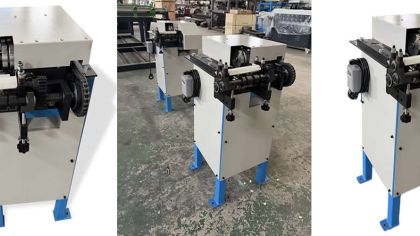
Our SS4E-PRO machine can serve as a base for all of the above — with interchangeable rolls for market flexibility.
Be Equipped – Use Stan Roll Forming Machines.