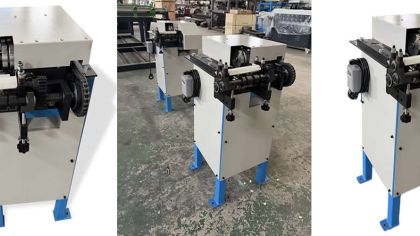
Metal Roll Forming Machines for Canadian Manufacturing Applications
- Metal Roll Forming Machine in Canada: Practical Insights from Real Manufacturing Experience
- Introduction
- Understanding Roll Forming as a Production Process
- How a Metal Roll Forming Machine Actually Works on the Shop Floor
- Standard vs. Custom Roll Forming Machines
- Standard Roll Forming Machines
- Custom Roll Forming Machine: Built Around the Product
- Automation in Modern Metal Forming Machines
- Material Selection and Canadian Operating Conditions
- Why Roll Forming Remains Practical for Canadian Manufacturers
- Where Roll Forming Is Used Across Canada
- Addressing Common Questions from Manufacturers
- Looking Ahead: Roll Forming in a Changing Manufacturing Landscape
- Conclusion
- Frequently Asked Questions
Metal Roll Forming Machine in Canada: Practical Insights from Real Manufacturing Experience
Introduction
In Canadian manufacturing, metal forming equipment is expected to do more than simply shape steel. It must deliver stable results, handle demanding materials, and operate reliably in environments where downtime is not an option. That is why metal roll forming machines remain a core technology for many manufacturers across Canada.
At Stangroup, roll forming is not treated as a generic process. It is approached as a practical production solution—one that must align with real-world constraints such as material behaviour, tooling wear, and long-term operating efficiency. This article takes a closer look at how roll forming machines are used in Canada today and why custom roll forming machines continue to gain importance.
Understanding Roll Forming as a Production Process
Roll forming is often described in simple terms: metal goes in flat and comes out shaped. In practice, the process is far more nuanced. A roll forming machine gradually forms metal through a sequence of precisely designed roll stations, each making a small, controlled adjustment to the profile.
This gradual approach is what allows roll forming to maintain material strength and dimensional accuracy over long production runs. For Canadian manufacturers working with structural steel, coated materials, or high-strength alloys, this level of control is essential.
How a Metal Roll Forming Machine Actually Works on the Shop Floor

From a production standpoint, a metal roll forming machine is a system rather than a single piece of equipment. The process typically begins with coil handling, followed by progressive forming, and ends with cutting or stacking.
Each roll station is designed to do only part of the work. Pushing the metal too far too fast leads to defects, internal stress, or premature tooling wear. When designed correctly, the forming process is smooth, repeatable, and stable—qualities that matter more than theoretical output speed in day-to-day operations.
Standard vs. Custom Roll Forming Machines

Standard Roll Forming Machines
Standard roll forming machines are often a good starting point for producing common profiles such as channels or simple structural sections. They are effective for consistent, high-volume production where the design is unlikely to change.
In many Canadian facilities, these machines support core product lines where predictability and throughput are the primary concerns.
Custom Roll Forming Machine: Built Around the Product
A custom roll forming machine becomes necessary when production requirements go beyond standard profiles. This may involve tighter tolerances, complex geometries, integrated punching, or specific material characteristics.
From experience, customization is rarely about making something “unique” for its own sake. More often, it is about simplifying production—reducing secondary operations, improving consistency, or adapting to local standards and environmental conditions common in Canada.
Automation in Modern Metal Forming Machines
Automation in roll forming is not about replacing operators; it is about reducing variability. CNC controls, servo-driven adjustments, and monitoring systems help maintain consistent setup and reduce the risk of errors during long production runs.
For manufacturers supplying multiple North American markets, this level of control supports repeatability and quality without adding unnecessary complexity.
Material Selection and Canadian Operating Conditions
Material choice plays a major role in roll forming performance. Canadian manufacturers often work with galvanized steel, stainless steel, aluminum, and high-strength alloys designed for cold weather performance.
A well-designed metal roll forming machine must account for coating thickness, yield strength, and springback. Ignoring these factors leads to profile distortion and inconsistent results—issues that tend to show up only after production is underway.
Why Roll Forming Remains Practical for Canadian Manufacturers

From a production perspective, roll forming offers a combination of efficiency and reliability that is difficult to match. The process supports long runs with minimal waste, stable dimensions, and predictable maintenance cycles.
Roll forming also aligns well with Canadian regulatory requirements. Tight dimensional control makes it easier to meet CSA and ASTM standards without excessive inspection or rework.
Where Roll Forming Is Used Across Canada
Roll forming machines are commonly found in industries where consistency matters more than short-term flexibility:
-
Building and structural systems
-
Infrastructure and transportation components
-
Automotive and commercial vehicle manufacturing
-
Energy and utility support structures
-
Storage, racking, and material handling systems
In many of these sectors, custom roll forming machines are used not to increase complexity, but to remove it from the overall production process.
Addressing Common Questions from Manufacturers
Manufacturers considering roll forming often ask similar questions, usually rooted in practical concerns rather than theory.
A metal roll forming machine is best suited for producing long, uniform profiles where consistency over length is critical. Compared to batch forming methods, roll forming reduces handling and improves repeatability.
Roll forming works with a wide range of metals, but material behaviour must be considered early in the machine design. This is especially important for coated or high-strength materials commonly used in Canada.
Custom roll forming machines are typically required when standard equipment cannot maintain tolerances, integrate required operations, or support material specifications efficiently.
While roll forming is most economical for larger volumes, modern systems can be designed with enough flexibility to support shorter runs when needed.
Looking Ahead: Roll Forming in a Changing Manufacturing Landscape
Canadian manufacturing continues to evolve, with greater emphasis on automation, supply chain resilience, and efficient use of materials. Roll forming technology fits well within this shift, particularly when machines are designed with long-term operation in mind.
Rather than focusing on maximum speed or theoretical capacity, manufacturers are prioritizing stability, serviceability, and predictable performance—areas where well-designed metal roll forming machines continue to deliver value.
Conclusion
A metal roll forming machine is not just a production tool; it is a long-term investment in manufacturing stability. For Canadian manufacturers, the combination of efficiency, precision, and durability makes roll forming one of the most practical metal forming processes available.
As production requirements become more specific, custom roll forming machines will remain an essential part of how companies like Stangroup approach metal forming—by focusing on real-world performance rather than abstract specifications.
Frequently Asked Questions
What is a metal roll forming machine typically used for?
A metal roll forming machine is used to produce long metal profiles with a consistent cross-section. In Canadian manufacturing, this commonly includes structural components, framing systems, channels, and support profiles where dimensional stability over length is essential.
How does roll forming compare to press braking or stamping?
Roll forming is a continuous process, while press braking and stamping are batch-based. Because the metal is shaped gradually through multiple roll stations, roll forming results in lower internal stress, better repeatability, and higher efficiency for medium to high production volumes.
What materials are commonly roll formed in Canada?
Canadian manufacturers most often roll form galvanized steel, stainless steel, aluminum, and high-strength low-alloy steel. Coated materials are widely used to improve corrosion resistance in outdoor and cold-climate applications.
When does a custom roll forming machine make more sense than a standard one?
A custom roll forming machine is typically required when profile geometry, tolerances, or material characteristics fall outside standard configurations. Custom machines are also used when inline operations such as punching or notching must be integrated into a single production line.
Can roll forming machines meet Canadian and North American standards?
Yes. Roll forming allows precise control of profile dimensions, which helps manufacturers meet CSA, ASTM, and North American building code requirements. This is one reason roll forming is widely used for structural components in Canada.
Is roll forming suitable for shorter production runs?
Roll forming is most efficient for longer runs, but modern machines can be designed for faster changeovers and greater flexibility, making shorter or variable production runs practical in certain cases.
How does automation improve roll forming performance?
Automation improves consistency rather than just speed. CNC controls and servo-driven adjustments reduce setup variation, support repeatable quality, and help maintain stable production over long runs.
What should manufacturers consider before investing in a roll forming machine?
Key considerations include material type, profile complexity, required tolerances, production volume, and long-term operating conditions. For many Canadian manufacturers, a custom roll forming machine aligns better with real production needs.
Can complex profiles be produced with roll forming?
Yes. With properly designed tooling and sufficient roll stations, roll forming machines can produce complex profiles with multiple bends, tight radii, and integrated features while maintaining consistent quality.
Why do Canadian manufacturers continue to rely on roll forming?
Roll forming offers predictable performance, efficient material usage, and stable quality over time. These characteristics make it well suited to Canadian manufacturing environments, where reliability and compliance are critical.
cold roll forming process Canada, industrial roll forming systems, custom metal profile manufacturing, continuous metal forming technology, structural steel roll forming, automated roll forming equipment, Canadian metal fabrication industry, precision roll formed components