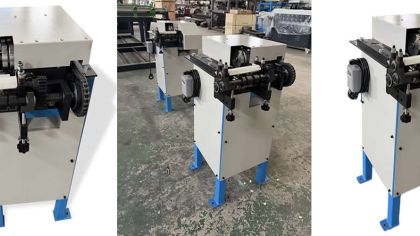
How to Choose a Pittsburgh Lock Former
Company News
How to Choose a Pittsburgh Lock Former
For every HVAC contractor, the quality of the ductwork is a crucial part of their operation. A reliable and properly formed seam ensures that ducts are strong, airtight, and easy to assemble on site.
In this article, we focus on an important topic: how to choose a Pittsburgh lock former and what factors you should consider before purchasing one.
How to Choose a Pittsburgh Lock Former
Watch our video guide on how to choose a Pittsburgh lock former for HVAC duct fabrication. In this video, we explain the difference between 3/8″ and 1/2″ Pittsburgh locks, review profile options, and share what to look for when selecting a reliable lockformer for your shop.
Video by Stan Roll Forming Machines.
1 – Size of the Lock
The first thing you need to consider when choosing a Pittsburgh lock former is the size of the Pittsburgh lock you want to produce.
Common sizes in HVAC fabrication:
- 3/8 inch
- 1/2 inch
Both sizes are widely used, but they are typically selected depending on duct size and metal gauge.
3/8″ Pittsburgh Lock
The 3/8″ Pittsburgh lock is commonly used for smaller ducts and lighter gauge material (24–26 gauge).
Advantages:
- Requires less material
- Easier to close on thin metal
This makes it a good choice for square downspouts and smaller sheet metal components.
1/2″ Pittsburgh Lock
The 1/2″ Pittsburgh lock is the industry standard and the most widely used option in HVAC shops.
Best suited for:
- Heavier gauge metal (up to ~18 gauge)
- Residential duct systems
- Commercial ductwork
- Applications requiring higher strength
Another advantage is compatibility with standard seam closers and accessories, making the closing process easier and more consistent.
2 – Set of Profiles
Another key factor is the number of profiles the machine can produce. Modern Pittsburgh lock formers are multifunctional and can significantly increase productivity.
Common additional profiles:
- C-Drive
- L-profile (90° flange)
For example, different machines may offer different capabilities:
LC10 Drive:
- Pittsburgh Lock
- C-Drive
- L-profile
- Lock for round ductwork
- Z-profile
- Radial L-profile
S-Cleat Machine:
- Pittsburgh Lock
- C-Drive
- S-Cleat
- Radial L-profile
It is important to evaluate which profiles you actually need in your daily production.
Tip: If you mainly use TDF systems, you may not need S-cleat. If you already form L-profiles on a brake, the function is optional—but having it can speed up production.
3 – Choosing a Reliable Brand
The final factor is the manufacturer and supplier. A lockformer is a long-term investment, so reliability and support are critical.
What to evaluate:
- Manufacturer experience
- Industry reputation
- Spare parts availability
- Technical support and training
- Warranty conditions
At Stan Roll Forming Machines, we work with trusted partners whose equipment has been used in the industry for over 30 years. Their machines are known for durability, consistent profile quality, and long service life.
Important: Choosing an established manufacturer ensures long-term availability of spare parts and service support.
If you would like to learn more about Pittsburgh lock formers or see these machines in action, feel free to contact us directly.
Content reviewed by the Stan Roll Forming Machines Inc. team.
Tags
pittsburgh lock former guide, HVAC duct fabrication equipment, sheet metal seam machines, lockformer selection tips, ductwork manufacturing tools, HVAC production optimization, roll forming machinery