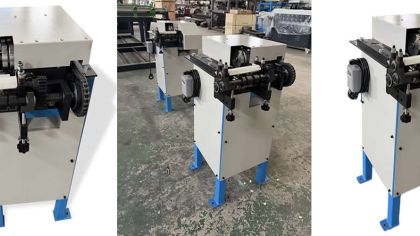
Decoiler Machines - Motorized & Hydraulic Coil Uncoilers
- Decoiler Machines for Sheet Metal Coil Handling in Canada
- What Is a Decoiler Machine?
- Why Is a Decoiler Important for Roll Forming?
- Manual vs Motorized Decoilers
- Manual Decoilers
- Motorized Decoilers
- Heavy-Duty Decoilers for Larger Coils
- How to Choose the Right Decoiler
- 1. Coil Weight
- 2. Coil Width
- 3. Inner Coil Diameter
- 4. Material Type
- 5. Production Speed
- 6. Available Floor Space
- Decoilers for Roofing Panel Production
- Decoilers for Standing Seam and Roll-Forming Equipment
- Safety Is a Key Part of Coil Handling
- Why Canadian Businesses Need the Right Coil-Handling Equipment
- StanGroup Decoilers for Canadian Customers
-
- Manual, Motorized or Hydraulic: Which Should You Choose?
- The Right Decoiler Is Part of the Complete Production System
- Why Work With a Machinery Supplier?
- FAQ — Decoiler Machines for Sheet Metal Production in Canada
- 1. What is a decoiler machine?
- 2. What is a decoiler used for?
- 3. What is the difference between a manual and motorized decoiler?
- 4. How do I choose a decoiler machine in Canada?
- 5. What is the best decoiler for a roll forming machine?
- 6. What is a sheet metal decoiler?
- 7. What is a coil uncoiler?
- 8. When should I choose a motorized decoiler?
- 9. When is a hydraulic decoiler better than a manual decoiler?
- 10. What is a heavy-duty decoiler?
- 11. What coil weight can a decoiler handle?
- 12. Can a decoiler be used for roofing panel production?
- 13. Which decoiler is suitable for standing seam roofing?
- 14. Do I need a decoiler for a standing seam machine?
- 15. Can a decoiler handle galvanized steel?
- 16. Can a decoiler be used with aluminum coils?
- 17. What is a double decoiler?
- 18. What is a motorized decoiler with VFD control?
- 19. What information should I provide when requesting a decoiler?
- 20. Does StanGroup manufacture decoilers?
- 21. Can StanGroup help me choose a decoiler machine?
- 22. What is the best decoiler machine for a small roofing company?
- 23. What is the best decoiler for heavy steel coils?
- 24. Where can I buy a decoiler machine in Canada?
Decoiler Machines for Sheet Metal Coil Handling in Canada
When sheet metal production starts with a coil, the first important step is controlled and reliable material feeding. A decoiler machine holds the coil, allows it to rotate and unwinds the material at a controlled rate so it can be processed by a roll forming machine, shear, straightener, feeder or other production equipment.
For roofing contractors, metal fabricators and manufacturers, choosing the correct decoiler can have a direct impact on production speed, material handling, operator safety and the overall efficiency of the production line.
StanGroup is a Canadian sheet metal machinery supplier offering a range of manual, motorized and hydraulic decoilers for different coil sizes, materials and production requirements. We are a supplier, not the manufacturer of every machine in our catalogue. Our role is to help Canadian customers identify equipment that matches their material, coil dimensions, production volume and existing machinery.
What Is a Decoiler Machine?
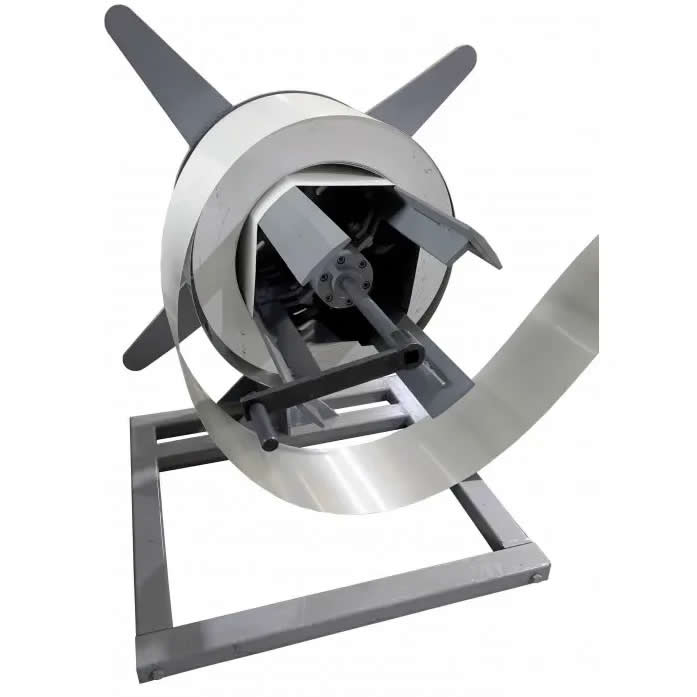
A decoiler, also called an uncoiler or coil unwinding machine, is equipment designed to hold a coil of sheet material and release it in a controlled manner.
Metal coils can weigh hundreds or thousands of pounds. Trying to unwind them manually without appropriate equipment can create unnecessary handling difficulties and safety risks.
A properly selected decoiler provides a stable support for the coil and allows the material to feed smoothly into the next stage of production.
Depending on the model, a decoiler may include:
-
An expandable arbor or coil holder;
-
Manual or powered rotation;
-
Friction braking;
-
Coil alignment and limiters;
-
Speed control;
-
Forward and reverse operation;
-
Variable-frequency drive (VFD);
-
Hydraulic coil loading;
-
Loading carts;
-
Automatic start/stop functions.
The exact configuration depends on the machine model and intended application.
Why Is a Decoiler Important for Roll Forming?
A roll forming machine can produce roofing panels, wall panels, siding, gutters, downspouts and many other profiles. However, the roll former needs a consistent supply of material.
The decoiler performs this important role between the coil and the forming machine.
A good coil-handling system helps:
Maintain controlled material feeding.
The coil should unwind smoothly instead of releasing material unpredictably.
Reduce unnecessary manual handling.
The operator can focus on machine operation rather than repeatedly controlling the coil.
Improve production workflow.
A suitable decoiler creates a more organized connection between material storage and the forming process.
Support consistent production.
Stable coil positioning helps maintain proper alignment as material enters the next machine.
Improve workplace safety.
Heavy coils should be loaded, secured and unwound using equipment designed for their weight and dimensions.
Manual vs Motorized Decoilers
.jpg)
One of the first decisions when choosing a decoiler is whether manual or motorized operation is more appropriate.
Manual Decoilers
Manual decoilers are a practical solution for smaller production operations, workshops and applications where the coil does not need powered unwinding.
Their main advantages include:
-
Simple construction;
-
Lower equipment cost;
-
No motor required;
-
Minimal maintenance;
-
Easy integration with smaller machines;
-
Suitable for lower-volume production.
For example, the Manual Decoiler D200 is designed for coils up to 2,000 lb and up to 26 inches wide, with an inner coil diameter range specified by the product. It can be used for metal, plastic, paper and other sheet materials.
Manual equipment can be an excellent choice when production volume is moderate and the operator can safely manage the material feeding process.
Motorized Decoilers
A motorized decoiler uses a powered drive to rotate the coil.
This becomes especially useful when:
-
Coils are heavier;
-
Production speed is higher;
-
Material feeding needs to be more consistent;
-
The decoiler works directly with a roll former;
-
The operator should have greater control over unwinding;
-
Production runs are longer.
The Motorized Decoiler D200M, for example, is designed for coils up to 2,000 lb and widths up to 26 inches, and provides powered unwinding for applications requiring more controlled material handling.
Motorized systems can also be configured with speed control and other automation features depending on the model.
Heavy-Duty Decoilers for Larger Coils
Not every production line uses small coils.
Large roofing, agricultural, industrial and sheet-metal operations may require equipment capable of handling substantially heavier and wider coils.
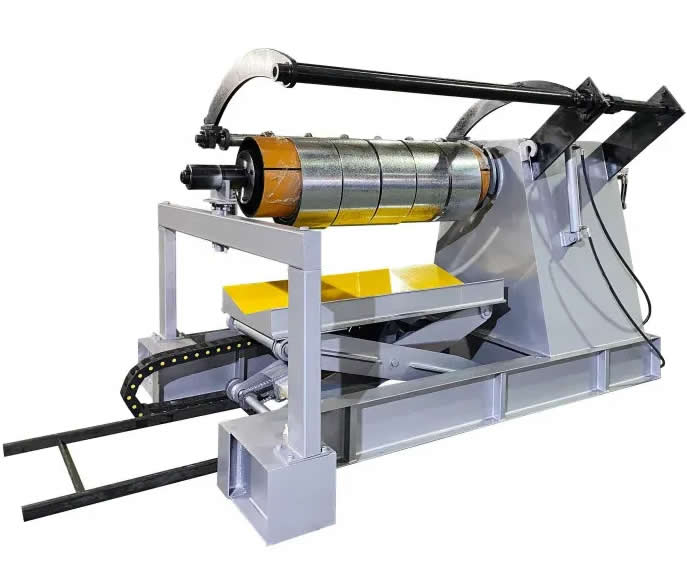
StanGroup's Canadian decoiler range includes larger manual and powered solutions, including the Manual Decoiler 51/8, Manual Decoiler 60/8, Hydraulic Decoiler 6000 lbs, Hydraulic Decoiler with Loading Cart 10k lbs and other heavy-duty configurations.
For example, the Manual Decoiler 51/8 is designed for coils up to 51 inches wide and is intended for larger coil-handling applications.
The Manual Decoiler DC500 is designed for coils up to 4,000 lb and up to 16 inches wide, with an expandable self-centering coil holder and friction brake.
For larger production environments, hydraulic loading can provide an additional advantage because positioning a heavy coil manually can be difficult and potentially unsafe.
How to Choose the Right Decoiler
The most important mistake to avoid is selecting a decoiler based only on price.
The correct machine should be selected according to the actual coil specification and production process.
1. Coil Weight
First determine the maximum weight of the coils you intend to process.
For example:
-
Small coils may be suitable for compact manual equipment;
-
Medium-weight coils may require a stronger manual or motorized decoiler;
-
Heavy industrial coils may require hydraulic loading and powered rotation.
Never select equipment with a capacity below the actual coil weight.
2. Coil Width
The maximum coil width is equally important.
A machine designed for a narrow coil cannot automatically be used for a wider coil. Always compare your coil width with the technical specification of the decoiler.
3. Inner Coil Diameter
The inside diameter of the coil must match the arbor or coil holder.
Some decoilers use an expandable arbor that adjusts to the internal diameter of the coil.
For example, the SS4EDC uses an expandable arbor reel and is designed for coil inner diameters within its specified range. It can also be mounted as an overhead reel holder on certain SS4E-15 series roofing machines.
4. Material Type
Decoilers can be used with different materials depending on the machine configuration.
Applications may include:
-
Galvanized steel;
-
Pre-painted steel;
-
Aluminum;
-
Copper;
-
Stainless steel;
-
Plastic;
-
Paper;
-
Other coil materials.
However, compatibility should always be confirmed before purchasing.
5. Production Speed
A small workshop producing occasional roofing panels may not need the same decoiler as a high-volume manufacturing facility.
Higher production rates generally increase the value of powered unwinding and speed control.
6. Available Floor Space
Compact manual decoilers may be appropriate where workshop space is limited.
Large hydraulic systems require additional space for:
-
Coil loading;
-
Operator access;
-
Material feeding;
-
Maintenance;
-
Safe movement around the equipment.
Planning the complete material flow before purchasing is important.
Decoilers for Roofing Panel Production
One of the most common applications for coil decoilers is metal roofing and wall-panel production.
A typical production line can include:
Coil → Decoiler → Roll Former → Cutoff → Run-Out Table → Finished Panel
The decoiler supplies the metal coil to the roll former. The roll-forming machine gradually shapes the material into the required profile, while the cutoff system produces panels of the required length.
This configuration can be used for many roofing and siding applications.
A properly matched decoiler helps create a smoother production workflow and reduces unnecessary interruptions caused by manual coil handling.
Decoilers for Standing Seam and Roll-Forming Equipment
Standing seam roofing machines, corrugated panel machines, ribbed panel roll formers and other roll-forming equipment all depend on controlled material feeding.
The decoiler must be compatible with:
-
Coil width;
-
Coil weight;
-
Material thickness;
-
Coil inner diameter;
-
Machine speed;
-
Direction of feeding;
-
Required production volume.
For mobile roofing production, the size and weight of the decoiler are also important. A portable roll-forming system may require a compact coil-handling solution, while a factory production line can use a heavier hydraulic system.
Safety Is a Key Part of Coil Handling
A sheet-metal coil can contain a significant amount of stored mechanical energy. If the coil is not correctly secured, uncontrolled movement can cause serious damage or injury.
Operators should follow the equipment manufacturer's operating and safety instructions.
Important principles include:
-
Verify the maximum rated coil weight;
-
Confirm the coil dimensions;
-
Secure the coil correctly on the arbor;
-
Use appropriate lifting equipment;
-
Check the brake before operation;
-
Keep unauthorized personnel away from the coil;
-
Never exceed the machine's rated capacity;
-
Inspect the equipment before operation;
-
Maintain a clear material-feeding path;
-
Use appropriate personal protective equipment.
Some StanGroup decoilers use friction brakes, expandable arbors and coil limiters to help control the unwinding process. The specific safety equipment depends on the model.
Why Canadian Businesses Need the Right Coil-Handling Equipment
Canadian metalworking businesses may operate in very different environments, from small workshops to large industrial facilities and remote construction sites.
The right decoiler can help businesses adapt their production process to:
-
Roofing panel manufacturing;
-
Agricultural building construction;
-
Commercial roofing;
-
Wall-panel production;
-
Gutter and downspout manufacturing;
-
Sheet-metal fabrication;
-
Industrial production;
-
Custom roll-forming applications.
For Canadian customers, equipment selection should also consider available electrical power, workshop layout, transportation requirements, seasonal operating conditions and access to technical support.
StanGroup Decoilers for Canadian Customers
StanGroup provides a range of decoiler solutions for Canadian sheet-metal and roll-forming applications.
The catalogue includes compact manual machines, motorized models, larger manual coil holders, double decoilers, hydraulic systems and motorized hydraulic equipment.
Available equipment includes models such as:
-
Manual Decoiler 60/8;
-
Manual Decoiler DC16;
-
Manual Decoiler DC500;
-
Manual Decoiler DC115;
-
Double Manual Decoiler SS4E-DMDC;
-
Hydraulic Decoiler with Loading Cart 10k lbs;
-
Motorized Hydraulic Recoiler MR10.
This range makes it possible to compare different approaches instead of forcing every customer into one standard machine.
| Model | Drive Type | Max. Coil Weight | Max. Coil Width | Coil ID | Main Application |
|---|---|---|---|---|---|
| Manual Decoiler D200 | Manual | 2,000 lbs / 900 kg | 26" / 680 mm | 12–20" | Roofing, siding, gutters, downspouts |
| Motorized Decoiler D200M | Motorized | 2,000 lbs / 900 kg | 26" / 680 mm | 13–18" | Roofing, siding, gutters, downspouts |
| Motorized Decoiler DC60M | Motorized | — | — | — | Powered coil unwinding |
| Manual Decoiler 51/8 | Manual | 13,000 lbs / 6,000 kg | 51" / 1,250 mm | 16–24" | AG/R panels, cutting and shearing |
| Manual Decoiler 60/8 | Manual | 10,000 lbs / 4,535 kg | 60" / 1,500 mm | 14–25" | AG/R panels, cutting and shearing |
| Manual Decoiler SS4EDC | Manual | 3,000 lbs / 1,400 kg | 26" / 670 mm | 18–24" | Roofing and roll forming |
| 5' Motorized Double Decoiler | Motorized / Double | — | 60" / 1,500 mm class | — | Continuous coil-fed production |
| Manual Decoiler DC16 | Manual | — | — | — | Coil handling |
| Manual Decoiler DC500 | Manual | 4,000 lbs / 1,814 kg | 16" | — | Sheet-metal coil handling |
| Manual Decoiler DC115 | Manual | — | — | — | Heavy-duty coil handling |
| Hydraulic Decoiler 6000 lbs | Hydraulic | 6,000 lbs / 2,722 kg | — | — | Heavy coil handling |
| Double Manual Decoiler SS4E-DMDC | Manual / Double | — | — | — | Roofing and roll forming |
| Motorized Decoiler DC115M with VFD Controls | Motorized / VFD | — | — | — | Controlled-speed coil feeding |
| Hydraulic Decoiler with Loading Cart 10k lbs | Hydraulic | 10,000 lbs / 4,535 kg | — | — | Heavy coils with easier loading |
| Motorized Hydraulic Recoiler MR10 | Motorized / Hydraulic | 10,000 lbs / 4,535 kg | 60" / 1,524 mm | 17.7–20.5" | Industrial recoiling and heavy-duty applications |
Manual, Motorized or Hydraulic: Which Should You Choose?
A simple way to approach the decision is:
Choose a manual decoiler when your operation has moderate production volumes, smaller or manageable coils and a preference for simple equipment.
Choose a motorized decoiler when you need powered unwinding, higher production efficiency or better control over material feeding.
Choose a hydraulic decoiler when heavy coils and easier loading are major priorities.
Choose a double decoiler when minimizing coil-change downtime and improving production continuity are important.
The final selection should always be based on the actual coil dimensions and the machine that will receive the material.
The Right Decoiler Is Part of the Complete Production System
A decoiler should not be selected independently from the rest of the production line.
The best result comes from matching:
Coil → Decoiler → Feeder/Straightener → Roll Former → Cutoff → Run-Out
When these components are properly matched, material handling becomes more predictable and production can operate more efficiently.
For this reason, customers should provide the supplier with as much information as possible before requesting a quotation.
Useful information includes:
-
Maximum coil weight;
-
Coil width;
-
Inner coil diameter;
-
Material type;
-
Material thickness;
-
Required production speed;
-
Existing roll-forming machine;
-
Available power supply;
-
Workshop dimensions;
-
Manual or automated operation;
-
Required loading method.
Why Work With a Machinery Supplier?
Purchasing coil-handling equipment is not simply about finding the lowest price.
The machine must match the actual production process.
As a Canadian machinery supplier, StanGroup can help customers review available decoiler configurations and determine which specifications are relevant to their application. StanGroup does not manufacture every machine in its catalogue; instead, the company supplies equipment from available machinery manufacturers and focuses on helping customers identify suitable solutions.
This approach is particularly useful when a customer is unsure whether a manual, motorized or hydraulic decoiler is appropriate.
A decoiler is one of the most important pieces of supporting equipment in a coil-fed sheet-metal production line.
It provides the connection between the raw material coil and the machine that processes it.
The right equipment can make coil handling easier, improve material feeding, reduce unnecessary manual work and support a more organized production process.
But the correct decoiler is not necessarily the largest or most expensive model.
The right machine is the one that matches your coil weight, coil width, inner diameter, material, production speed and existing equipment.
For Canadian roofing contractors, roll-forming companies and metal fabricators, StanGroup offers a range of manual, motorized and hydraulic decoilers for different production requirements.
If you are unsure which model is appropriate, provide the coil specifications and information about your existing machinery. A proper equipment comparison can help you avoid paying for capacity you do not need—or selecting a machine that is too small for your production requirements.
Explore the StanGroup decoiler range and compare coil-handling solutions for Canadian sheet-metal production.
FAQ — Decoiler Machines for Sheet Metal Production in Canada
1. What is a decoiler machine?
A decoiler machine, also called a coil uncoiler, is equipment used to hold and unwind a coil of sheet material before it enters a roll forming machine, shear, slitter, straightener or other processing equipment. A properly selected decoiler provides controlled material feeding and helps improve the efficiency and safety of coil handling.
2. What is a decoiler used for?
A decoiler is used to unwind steel, aluminum and other coil materials for further processing. Common applications include roofing panels, siding, gutters, agricultural panels, wall systems and general sheet metal fabrication.
3. What is the difference between a manual and motorized decoiler?
A manual decoiler relies on the material being pulled by the downstream machine, while a motorized decoiler uses an electric drive to actively unwind the coil. Manual models can be suitable for smaller production operations, while motorized decoilers are generally more appropriate for higher production volumes and applications requiring controlled material feeding.
4. How do I choose a decoiler machine in Canada?
When choosing a decoiler machine in Canada, consider the maximum coil weight, coil width, inside diameter, material thickness, material type, required production speed and the roll forming equipment that will receive the material. The decoiler's rated capacity should always meet or exceed the actual coil specifications.
5. What is the best decoiler for a roll forming machine?
The best decoiler for a roll forming machine depends on the complete production setup. A compact manual decoiler may be appropriate for smaller roofing operations, while motorized or hydraulic equipment can be better suited to heavier coils and higher-volume production. Compatibility between the decoiler and roll former is essential.
6. What is a sheet metal decoiler?
A sheet metal decoiler is a coil-handling machine designed to support and unwind sheet metal before it enters another piece of production equipment. It can be used with galvanized steel, pre-painted steel, aluminum and other compatible coil materials.
7. What is a coil uncoiler?
A coil uncoiler is another common name for a decoiler. Its primary function is to securely hold a coil and allow the material to unwind in a controlled manner during production. The terms decoiler, uncoiler and coil unwinder are often used interchangeably.
8. When should I choose a motorized decoiler?
A motorized decoiler can be a good choice when production requires powered coil unwinding, consistent material feeding or higher operating efficiency. It can be particularly useful when the decoiler is integrated with a roll forming machine and production runs are frequent or continuous.
9. When is a hydraulic decoiler better than a manual decoiler?
A hydraulic decoiler can be advantageous when handling heavier coils or when easier coil loading is important. Hydraulic systems can reduce the amount of manual handling required when positioning large and heavy coils. The correct capacity should be selected according to the actual coil weight.
10. What is a heavy-duty decoiler?
A heavy-duty decoiler is designed for applications involving larger or heavier coils than those typically handled by compact manual machines. These systems may include reinforced construction, powered rotation, hydraulic loading or other features intended for demanding industrial production.
11. What coil weight can a decoiler handle?
The maximum coil weight depends on the specific model. StanGroup offers decoilers for different capacities, including compact systems and heavy-duty models designed for coils weighing up to 10,000 lbs. Always compare the machine's rated capacity with the maximum loaded coil weight before operation.
12. Can a decoiler be used for roofing panel production?
Yes. Roofing panel production is one of the common applications for decoilers. A typical production setup consists of a coil, decoiler, roll forming machine, cutoff system and run-out table. The decoiler supplies the sheet material to the roll former, which produces the required roofing profile.
13. Which decoiler is suitable for standing seam roofing?
The appropriate standing seam roofing decoiler depends on the coil dimensions and the standing seam roll forming machine being used. Compact systems such as the SS4EDC can be suitable for certain roofing applications, while larger production systems may require motorized or hydraulic equipment.
14. Do I need a decoiler for a standing seam machine?
Not necessarily in every configuration, but a decoiler is highly useful for coil-fed standing seam production. It provides controlled support and unwinding of the metal coil before the material enters the standing seam roll former.
15. Can a decoiler handle galvanized steel?
Many decoilers can be used with galvanized steel coils, provided that the coil dimensions and material specifications are compatible with the particular machine. The maximum coil weight, width, inside diameter and material thickness should be checked before selecting the equipment.
16. Can a decoiler be used with aluminum coils?
Yes, depending on the machine configuration and coil specifications. Aluminum coil handling equipment should be selected carefully because aluminum is lighter and can behave differently during unwinding and forming than steel. Confirm material compatibility with the supplier before purchasing.
17. What is a double decoiler?
A double decoiler is designed to hold two coils. This configuration can help reduce downtime associated with changing coils because another coil can be prepared while the first one is being processed. Double decoilers can be useful for production environments where minimizing changeover time is important.
18. What is a motorized decoiler with VFD control?
A motorized decoiler with VFD control uses a variable frequency drive to control the motor speed. This can provide more precise control of coil unwinding and allows the decoiler to be better matched to the requirements of the downstream production equipment.
19. What information should I provide when requesting a decoiler?
When requesting a decoiler quotation, provide:
- Maximum coil weight;
- Minimum and maximum coil width;
- Coil inside diameter;
- Material type;
- Material thickness;
- Required production speed;
- Existing roll forming machine;
- Available electrical power;
- Manual or powered operation requirements;
- Preferred loading method.
The more complete the information, the easier it is to identify a suitable machine.
20. Does StanGroup manufacture decoilers?
StanGroup is a Canadian sheet metal machinery supplier. The company supplies and offers different decoiler configurations for Canadian customers; it is not the manufacturer of every machine represented in its equipment catalogue. This allows customers to compare different equipment solutions according to their production requirements.
21. Can StanGroup help me choose a decoiler machine?
Yes. If you are unsure which decoiler machine for Canada is appropriate, provide your coil specifications and information about your existing production equipment. StanGroup can help you compare available manual, motorized, double and hydraulic configurations according to your application.
22. What is the best decoiler machine for a small roofing company?
For a smaller roofing company, a compact manual or motorized decoiler may be more practical than a large industrial hydraulic system. The decision should be based on coil weight, production frequency, available space and the type of roofing roll former being used rather than simply choosing the largest machine.
23. What is the best decoiler for heavy steel coils?
For heavy steel coils, a hydraulic or heavy-duty motorized decoiler may be the appropriate solution. Models with hydraulic loading can make handling large coils easier and can be better suited to industrial production environments.
24. Where can I buy a decoiler machine in Canada?
Canadian contractors and metal fabrication companies can compare decoiler machines in Canada through StanGroup's equipment catalogue. The available range includes manual, motorized, double and hydraulic decoilers for different sheet metal and roll forming applications.