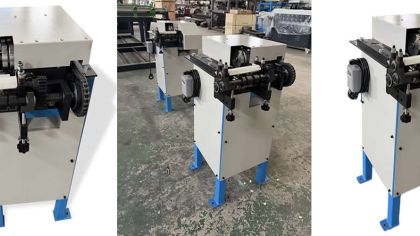
Spiral duct making machine: advantages and choice
Spiral Duct Making Machine: Advantages and Choice
Overview
Spiral ducts play a crucial role in HVAC systems, providing efficient and consistent airflow. Traditional methods of fabricating spiral ducts are time-consuming and labor-intensive, limiting productivity and precision. However, with the advent of spiral duct making machines, manufacturers can streamline their production processes and meet the growing demand for high-quality spiral ducts. This article explores the sections of a spiral duct making machine, highlighting its features, benefits, and its potential to revolutionize the airflow system manufacturing industry.

Production Technology of Air Ducts
The production technology of air ducts involves several steps and processes to ensure high-quality fabrication. Although specifics vary based on duct type, material, and manufacturing requirements, the general process includes:
-
Design and Planning:
-
Engineers and designers create the layout and specifications for the air duct system, considering required airflow, dimensions, and layout.
-
-
Material Selection:
-
Materials are chosen based on HVAC system requirements, durability, insulation properties, and cost. Common materials include galvanized steel, stainless steel, aluminum, and flexible ducting.
-
-
Cutting and Shaping:
-
Selected materials are cut into appropriate sizes and shapes using shears or automated cutting machines. Depending on design requirements, the material may be cut into straight sections or pre-formed parts.
-
-
Joining and Connecting:
-
Duct sections are joined and connected using welding, riveting, or specialized connectors. Sealing tapes or adhesives ensure airtight connections.
-
-
Insulation:
-
Insulation materials like fiberglass, foam, or elastomeric insulation are added to prevent heat transfer, reduce condensation, and improve energy efficiency.
-
-
Reinforcement:
-
Reinforcement techniques, such as adding stiffeners or using ribs, enhance structural integrity when necessary.
-
-
Surface Treatment and Coating:
-
Processes like galvanization, painting, or powder coating protect ducts against corrosion, improve aesthetics, or meet specific application requirements.
-
-
Quality Control and Testing:
-
Quality checks ensure compliance with industry standards. Tests include visual inspections, pressure testing, leak testing, and performance testing to verify airflow and airtightness.
-
Advantages of Spiral Duct Making Machines
Spiral duct making machines provide numerous advantages over traditional fabrication methods:
-
Increased Productivity:
-
Automation significantly enhances production rates, reducing manual labor and saving time. This enables manufacturers to meet tight deadlines and handle large-volume orders efficiently.
-
-
Precision and Consistency:
-
Machines ensure precise dimensions and uniform spiraling, eliminating human errors. High-quality ducts improve airflow performance and energy efficiency in HVAC systems.
-
-
Customization Options:
-
Machines offer flexibility to adjust sizes, dimensions, and spiraling patterns, meeting specific project requirements seamlessly.
-
-
Material Efficiency:
-
Optimized material usage minimizes wastage and reduces costs, contributing to sustainable manufacturing practices.
-
-
Streamlined Workflow:
-
Integration with CAD/CAM software enables seamless design-to-production workflows, enhancing productivity and reducing errors.
-
-
Reduced Labor Requirements:
-
Automation minimizes the need for manual labor, reducing costs and creating a more efficient working environment.
-
-
Improved Airtightness and Energy Efficiency:
-
Precision fabrication reduces air leakage, optimizing HVAC system performance and energy consumption.
-

Choosing the Right Spiral Duct Making Machine
To select the ideal spiral duct making machine for your needs, consider the following factors:
-
Production Capacity:
-
Assess your production targets and ensure the machine’s output capacity aligns with your needs.
-
-
Spiral Duct Specifications:
-
Evaluate the machine’s ability to produce the required range of duct sizes, diameters, lengths, and spiral pitches.
-
-
Automation and Control Features:
-
Look for features like automatic material feeding, cutting, forming, and spiraling to enhance efficiency and reduce human error.
-
-
Precision and Quality:
-
Ensure the machine consistently delivers high-quality ducts with accurate dimensions and uniform spiraling.
-
-
Material Compatibility:
-
Verify that the machine supports the materials you plan to use, such as galvanized steel, stainless steel, or aluminum.
-
-
Flexibility and Customization:
-
Check for options to accommodate different designs and features like flanges, insulation, or special connectors.
-
-
Maintenance and Support:
-
Consider the machine’s maintenance requirements and ensure reliable after-sales support, including spare parts and troubleshooting assistance.
-
Spiral duct making machines have revolutionized HVAC system manufacturing, offering unmatched efficiency, precision, and flexibility. By understanding their production technology, benefits, and key selection criteria, you can choose the right machine to enhance your manufacturing capabilities and stay ahead in the competitive market.
Spiral duct making machine Canada, spiral duct machine advantages, spiral duct manufacturing equipment, choosing spiral duct machines, spiral duct production Canada, benefits of spiral duct machines, industrial duct forming machines, HVAC duct making equipment, portable spiral duct machines, automated spiral duct machines, best spiral duct machines Canada, spiral duct machinery suppliers, duct fabrication equipment Canada, energy-efficient duct machines, spiral duct forming process, spiral duct machine features, spiral duct making tools, metal duct production machines, spiral duct technology Canada, industrial HVAC equipment Canada.